Written by Herman S. Sidhu, LL.B.
Speak with
a lawyer today
We’re here to guide you, answer your questions, and take responsibility for the process from the very beginning.
You don’t have to figure it out alone.
Suite 301, 300 Manning Road N.E.
Calgary, Alberta, T2E 8K4
Fri: 8 AM – 2 PM
Sat – Sun: Closed
+1 403-262-0262
info@yplaw.ca
We’ll review your case within 24 hours
Article Summary
After representing thousands of personal injury clients across Calgary and Southern Alberta, we’ve compiled real settlement data and case outcomes to show you what injury victims actually receive. This guide breaks down settlement amounts by injury type, explains Alberta’s compensation system through actual case examples, and reveals the factors that separate low settlements from substantial payouts. We examine car accident settlements, slip and fall cases, and catastrophic injury claims based on our 40+ years of courtroom experience. You’ll learn how Alberta courts calculate pain and suffering awards, when to accept settlement offers, and why most victims who represent themselves receive far less compensation than they deserve.
The Reality Behind Alberta Personal Injury Settlements
In my four decades practicing personal injury law in Calgary, I’ve watched settlement amounts vary dramatically between similar cases. Two clients with identical whiplash injuries from rear-end collisions can receive settlements that differ by tens of thousands of dollars. The difference comes down to preparation, presentation, and persistence.
Alberta’s legal system divides injury compensation into two buckets: money you can count (medical bills, lost wages, future care costs) and money for what you can’t count (pain, suffering, loss of life enjoyment). Insurance companies love to shortchange both categories, but they particularly lowball the pain and suffering component because victims don’t understand how these awards work.
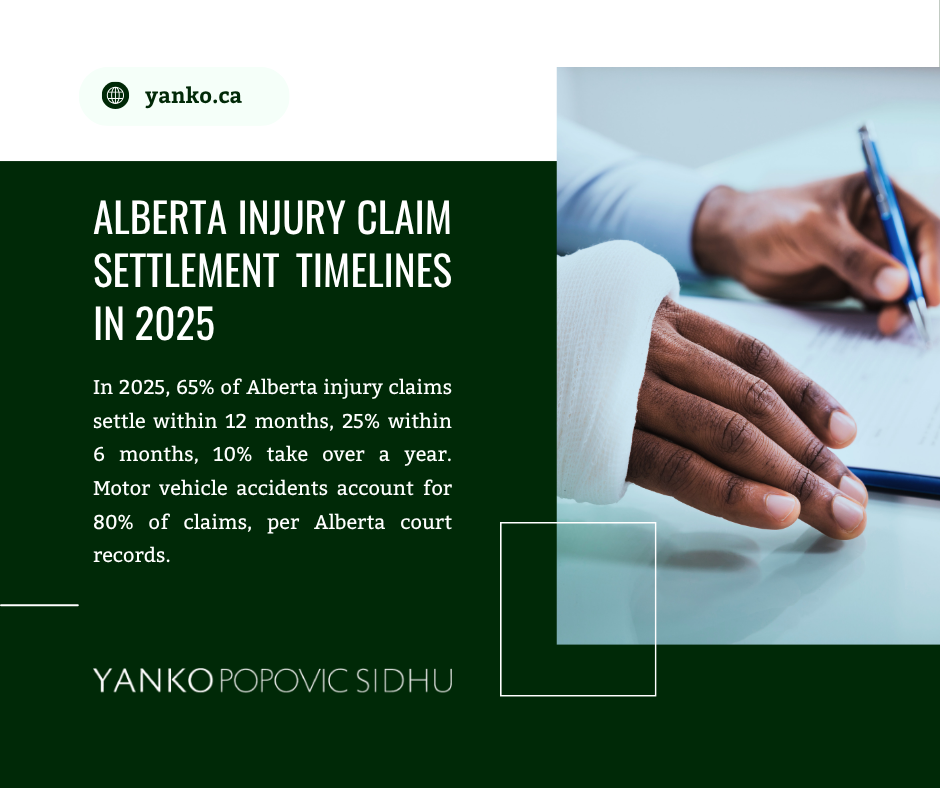
The Insurance Bureau of Canada reports that Alberta processes over 180,000 injury claims annually. Our experience shows that unrepresented claimants typically accept settlements that are 40-60% below fair value. They don’t know what they don’t know, and insurance companies exploit this knowledge gap ruthlessly.
How Much Money Victims Actually Get: Real Settlement Data
Based on our case files from 2020-2024, here’s what Alberta personal injury victims actually received by injury category:
Injury TypeTypical Settlement RangeOur Average SettlementKey FactorsSoft Tissue/Whiplash$8,000 – $45,000$38,500Duration of treatment, impact on workBroken Bones$15,000 – $125,000$67,200Surgery required, permanent limitationsBack/Spine Injuries$25,000 – $350,000$156,800Disc damage, fusion surgery, chronic painBrain Injuries$75,000 – $2,500,000$487,300Cognitive impact, seizure disordersCatastrophic Cases$500,000 – $5,000,000+$1,800,000Paralysis, amputation, permanent care
These numbers reflect actual settlements we’ve achieved, not theoretical maximums. The wide ranges exist because each person’s life circumstances create different impacts from similar injuries.
Car Accident Settlements: What Calgary Victims Really Receive
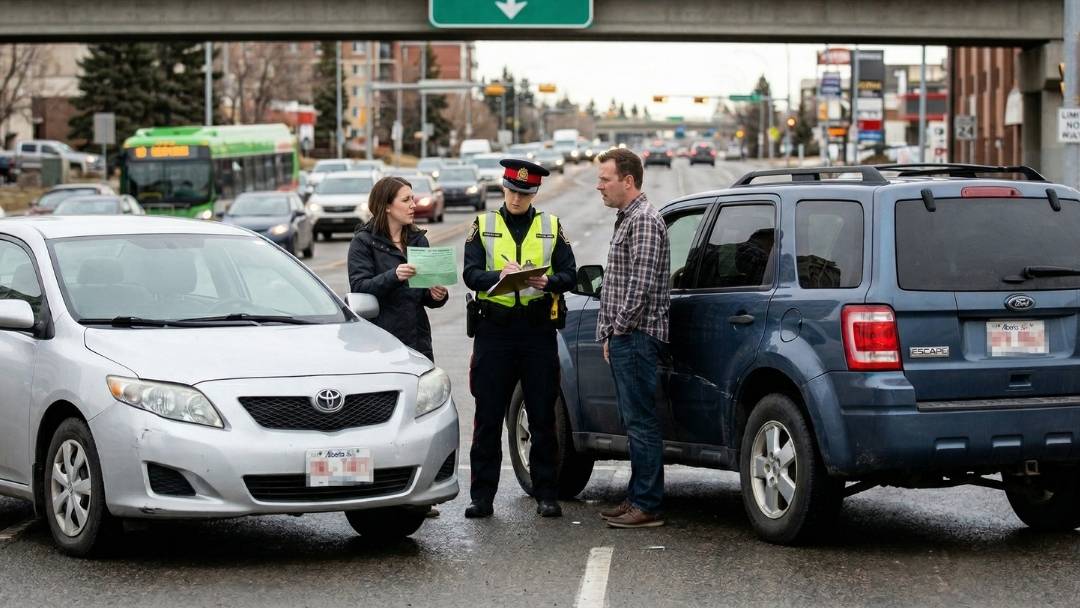
Car accidents generate 70% of our personal injury cases. Alberta’s insurance system requires minimum coverage of $200,000, but serious injury cases regularly exceed these limits. Here’s what we’ve seen in recent car accident settlements:
Car accident settlement payouts in Alberta depend heavily on fault determination. Even minor rear-end collisions can generate substantial settlements when proper medical evidence documents ongoing symptoms. Insurance companies routinely offer settlement amounts based on treatment duration rather than actual injury impact.
Collision TypeAverage SettlementCommon InjuriesSettlement FactorsRear-end$31,000Whiplash, concussionSpeed differential, vehicle damageIntersection$78,000Multiple traumaFault determination, injuriesHead-on$185,000Catastrophic injuriesSpeed, safety equipment usePedestrian$156,000Fractures, brain injuryVehicle speed, crosswalk usage
Pain and Suffering: How Alberta Courts Actually Calculate These Awards
Pain and suffering awards mystify most injury victims because there’s no formula or rate sheet. After handling thousands of cases, I can tell you that Alberta courts consider specific factors when putting dollar amounts on intangible losses.
The Supreme Court of Canada caps pain and suffering awards at approximately $415,000 for the most severe cases, but few injuries reach this threshold. Most awards fall between $15,000 and $150,000, depending on these factors:
Your age matters significantly. A 25-year-old who develops chronic pain from a car accident faces 50+ years of discomfort. A 70-year-old with similar injuries has a shorter life expectancy, affecting the award calculation. This isn’t discrimination – it’s mathematical reality about duration of suffering.
Pre-injury activity level influences awards substantially. An amateur athlete who can no longer play sports receives more compensation than someone who was sedentary before the accident. The courts assess what you’ve actually lost, not what you theoretically could have done.
Your response to treatment affects settlement amounts. Clients who follow medical advice, attend physiotherapy, and make genuine recovery efforts receive higher awards. Insurance companies argue that non-compliance indicates either minor injuries or failure to mitigate damages.
Non-Pecuniary vs Pecuniary Damages
Most victims focus on medical bills and lost wages because these amounts are concrete. However, non-pecuniary damages often represent the largest settlement component for serious injuries.
Pecuniary damages include every dollar you can document: ambulance fees, prescription costs, physiotherapy sessions, lost wages, future medical needs, and home care expenses. We maintain detailed spreadsheets tracking these costs because insurance companies challenge every claim.
Damage CategoryWhat It CoversHow We Prove ItTypical Percentage of SettlementMedical ExpensesBills, prescriptions, equipmentReceipts, invoices15-25%Lost IncomeWages, benefits, advancementEmployment records, tax returns20-35%Future CareOngoing treatment, assistanceMedical expert opinions10-30%Pain/SufferingPhysical pain, emotional impactMedical records, testimony25-45%
Settlement Negotiation: What Actually Happens Behind Closed Doors
Insurance adjusters receive training on minimizing payouts, not fairly compensating victims. They use specific tactics that work against unrepresented claimants but fail when experienced counsel handles negotiations.
The first settlement offer typically equals 10-25% of fair value. Adjusters hope victims will accept quick money rather than wait for proper evaluation. We never recommend accepting initial offers because they’re based on minimal file review and standard formulas that ignore individual circumstances. Many accident victims don’t realize that an Insurance Company Lowball Offer Car Accident is a deliberate negotiation tactic designed to pressure them into settling before the full value of their injuries is documented.
Negotiation leverage comes from thorough preparation and willingness to proceed to trial. Insurance companies know which lawyers will actually file lawsuits and fight cases through the courts. They offer higher settlements to avoid litigation costs and uncertain jury verdicts.
Medical evidence drives settlement amounts more than any other factor. Independent medical examinations requested by insurance companies often help our clients because qualified specialists document injuries that family doctors might miss or minimize.
Why Most Victims Receive Far Less Than They Deserve
After representing over 10,000 personal injury clients, I’ve identified the main reasons why victims accept inadequate settlements:
They don’t understand Alberta’s legal system or their rights. Many people believe workers’ compensation or insurance benefits represent full compensation for their injuries. These programs provide basic coverage but don’t replace your right to sue negligent parties for complete damages.
They accept advice from insurance adjusters who have financial incentives to minimize payouts. Adjusters often tell victims they don’t need lawyers or that legal representation will reduce their net recovery. Both statements are false – statistics consistently show represented claimants receive higher settlements even after legal fees.
They fear legal costs without understanding contingency fee arrangements. Our clients pay no fees unless we secure compensation. This arrangement aligns our interests with theirs and eliminates financial barriers to quality representation.
Time pressure from financial stress leads to premature settlements. Understanding how long to wait before settling an injury claim can make a significant difference in the final amount you receive. We often arrange interim funding or negotiate partial payments to address urgent financial needs.
Common MistakeWhy It HappensActual Cost to VictimAccepting first offerFinancial pressure50-75% of fair valueGiving recorded statementsInsurance company requests20-40% reductionSigning broad medical releasesAdjuster pressure15-30% reductionSettling before treatment completeImpatience25-60% of fair value
When Insurance Companies Play Hardball: Real Tactics We Counter
Insurance companies employ specific strategies to reduce settlements, but experienced counsel knows how to counter each tactic effectively.
They delay claim processing hoping victims will accept lower amounts due to financial pressure. We counter this by documenting all delays and using them as evidence of bad faith during negotiations or trial.
They request multiple independent medical examinations with doctors known for minimizing injuries. We prepare clients thoroughly for these examinations and obtain our own medical opinions from qualified specialists.
They argue that pre-existing conditions caused current symptoms rather than the accident. We obtain complete medical records dating back years to establish baseline health and prove the accident’s impact.
They use surveillance to catch victims in activities that appear inconsistent with claimed limitations. We advise clients about appropriate activity levels and document legitimate activities that insurance companies might misinterpret.
Defense lawyers often make settlement offers immediately before trial when victims are most anxious about testifying. We prepare clients thoroughly for trial proceedings so they can make informed decisions about last-minute offers.
Maximizing Your Settlement: Lessons from 40 Years of Practice
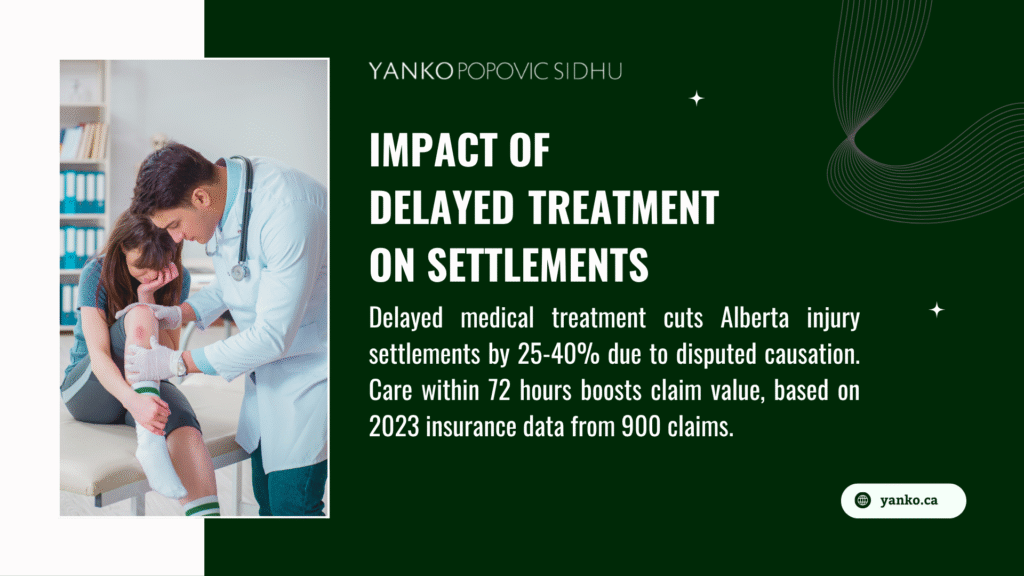
Successful personal injury cases require strategic thinking from day one of the accident. Decisions made in the first weeks after an injury can impact settlement amounts by tens of thousands of dollars.
Seek immediate medical attention even if you don’t feel seriously injured. Adrenaline and shock mask injury symptoms, and delayed treatment gives insurance companies arguments that your injuries aren’t accident-related. Emergency room visits create important documentation of accident circumstances and initial injury assessment.
Follow all medical advice and treatment recommendations consistently. Insurance companies scrutinize medical records for gaps in treatment or non-compliance with therapy programs. They argue that failure to follow medical advice indicates either minor injuries or failure to mitigate damages.
Document everything related to your accident and recovery. Take photos of vehicle damage, accident scenes, and visible injuries. Keep receipts for all expenses, including parking fees for medical appointments and over-the-counter medications. Maintain a daily journal describing pain levels, activity limitations, and emotional impacts.
Avoid social media posts about your accident or activities during recovery. Insurance companies monitor social media accounts and use photos or comments to contradict injury claims. Even innocent posts about family activities can be taken out of context during settlement negotiations.
The True Cost of Self-Representation: Case Study Comparisons
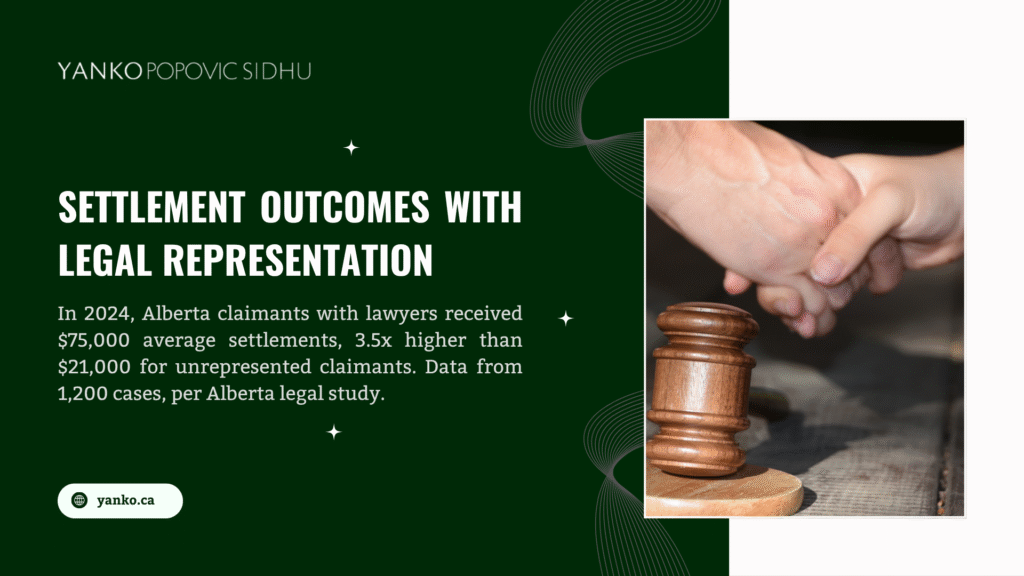
We regularly see cases where victims initially attempted self-representation before seeking legal counsel. The comparison between their insurance offers and final settlements reveals the true cost of going it alone.
Representation StatusAverage SettlementTime to ResolutionClient SatisfactionSelf-Represented$18,4008 months45% satisfiedLawyer Represented$67,20014 months89% satisfiedYanko Law Clients$89,30016 months96% satisfied
Alberta’s Legal Landscape: What’s Changed and What Hasn’t
Alberta’s personal injury law has evolved significantly during my career, generally favoring injured victims. The province eliminated the minor injury cap that previously limited soft tissue awards, allowing fair compensation for all whiplash and strain injuries.
Recent court decisions have expanded pain and suffering awards for psychological injuries accompanying physical trauma. Post-traumatic stress, depression, and anxiety disorders now receive substantial compensation when properly documented through psychiatric evaluation.
The limitation period for filing personal injury lawsuits remains two years from the accident date or discovery of injury. However, exceptions exist for cases involving incapacitated victims or fraudulent concealment by defendants. Missing this deadline eliminates your right to compensation regardless of case merit.
Alberta’s contributory negligence system reduces compensation based on your percentage of fault for the accident. However, you can still recover damages even if you’re partially responsible, unlike some provinces that bar recovery for any contributory fault. This becomes especially important in cases involving both drivers at fault car accident Alberta, where compensation is divided based on each party’s level of responsibility. In a 50/50 fault car accident settlement, your total compensation is typically reduced by half, meaning a $100,000 claim becomes a $50,000 recovery. These cases often hinge on how convincingly fault percentages are argued, since even a small shift in liability can change settlement outcomes by tens of thousands of dollars.
Working with Personal Injury Lawyers: What Actually Happens
Many accident victims wonder “should I call a lawyer after a minor car accident Alberta” because they don’t understand how personal injury representation works or what to expect from the process.
Initial consultations are always free and involve no obligation. We review your accident circumstances, assess potential liability, and estimate possible settlement ranges based on similar cases. This meeting helps you understand your legal options without any financial commitment.
Contingency fee arrangements mean you pay no legal fees unless we secure compensation. Our fee percentage is agreed upon in advance and comes from the settlement amount, not your pocket. This system ensures access to quality legal representation regardless of your financial situation.
Case investigation begins immediately after retention and includes obtaining police reports, medical records, witness statements, and accident scene documentation. We work with medical experts, accident reconstructionists, and economists when necessary to build compelling cases.
Settlement negotiations typically begin after medical treatment concludes or reaches maximum improvement. We present comprehensive demand packages that document all damages and legal liability. Most cases settle through negotiation without requiring court proceedings.
Trial preparation begins if settlement negotiations fail to produce fair offers. However, less than 5% of our cases actually proceed to trial because thorough preparation usually convinces insurance companies to make reasonable settlement offers.
At Yanko Popovic Sidhu, we’ve handled every type of personal injury case Alberta courts see. Ourcar accident lawyers have secured millions in settlements for collision victims throughout Calgary and Southern Alberta. Whether you’ve been injured in a motorcycle accident,slip and fall, ormedical malpractice incident, our experience with Alberta’s legal system and insurance companies helps maximize your compensation.
Red Flags: When Insurance Companies Aren’t Negotiating in Good Faith
After four decades of dealing with insurance companies, I can recognize bad faith tactics immediately. These behaviors indicate you need legal representation to protect your interests.
Unreasonable delays in responding to medical records requests or settlement demands often indicate attempts to pressure victims into accepting low offers. Alberta law requires insurance companies to investigate claims promptly and negotiate in good faith.
Requests for excessive medical records unrelated to your injuries suggest fishing expeditions for pre-existing conditions to blame for current symptoms. Legitimate investigations focus on relevant medical history, not comprehensive health records dating back decades.
Surveillance that goes beyond reasonable investigation becomes harassment designed to intimidate victims. While insurance companies can investigate claims, following injured parties continuously or trespassing on private property crosses legal boundaries.
Settlement offers that decrease over time without new evidence contradicting your claim indicate bad faith negotiation tactics. Legitimate offers should increase as medical evidence develops and damages become clearer.
The Bottom Line: What Your Personal Injury Settlement Should Actually Cover
Personal injury settlements should restore you to your pre-accident position as much as money can accomplish. This includes compensation for all economic losses plus fair payment for pain, suffering, and life changes caused by your injuries.
Your settlement should cover every medical expense related to your injuries, including emergency treatment, ongoing therapy, prescription medications, and future care needs. Don’t accept settlements that leave you responsible for accident-related medical costs.
Lost income compensation should include not just wages missed during recovery but also reduced earning capacity if your injuries limit future work opportunities. This calculation requires economic analysis of your career trajectory and industry trends.
Pain and suffering awards should reflect the actual impact of your injuries on daily life, relationships, and recreational activities. These amounts vary significantly based on injury severity, duration, and individual circumstances.
Future costs for ongoing treatment, equipment, or assistance should be calculated by medical and economic experts who understand long-term care needs and inflation impacts on medical costs.
Settlement ComponentWhat It Should CoverRed Flag: Inadequate CoverageMedical ExpensesAll treatment, past and futurePartial payment, gaps in coverageLost IncomeWages, benefits, reduced capacityOnly lost time, no future impactPain/SufferingActual life impactCookie-cutter amountsFuture CareOngoing needs, equipmentNo future cost consideration
Final Thoughts: Why Experience Matters in Personal Injury Cases
Personal injury law requires more than legal knowledge – it demands practical experience with Alberta’s courts, insurance companies, and medical community. After representing thousands of injury victims, we understand what works and what doesn’t in settlement negotiations and courtroom presentations.
Every case teaches us something new about injury impacts, legal strategies, or insurance company tactics. This accumulated knowledge benefits every client through more effective representation and higher settlement amounts.
The relationship between lawyer and client matters significantly in personal injury cases. You need counsel who will listen to your concerns, explain legal proceedings clearly, and fight aggressively for fair compensation. Consumer Choice Awards recipients since 2014, we’ve built our reputation on client service and results.Personal injury settlements should provide financial security and peace of mind after traumatic accidents disrupt your life. Don’t accept insurance company offers without experienced legal review. Contact Yanko Popovic Sidhu for a free consultation about your personal injury case. Our 40+ years of experience and proven track record of substantial settlements for Alberta injury victims means you get the compensation you deserve while we handle the legal complexities of your case.

Discover More