Written by Herman S. Sidhu, LL.B.
Speak with
a lawyer today
We’re here to guide you, answer your questions, and take responsibility for the process from the very beginning.
You don’t have to figure it out alone.
Suite 301, 300 Manning Road N.E.
Calgary, Alberta, T2E 8K4
Fri: 8 AM – 2 PM
Sat – Sun: Closed
+1 403-262-0262
info@yplaw.ca
We’ll review your case within 24 hours
Before diving into laws, insurance tactics, and dollar figures, let’s clarify what this article delivers. You will learn what a construction injury settlement actually covers in Alberta, how liability works on a multi-employer jobsite, and the relationship between WCB benefits and civil claims.
Additionally, you will also learn how settlements are valued in Calgary courts, and the legal time limits that control your right to claim. You’ll also see how courts divide fault, what damages are recoverable, and how a specialized injury lawyer builds evidence to maximize your net recovery.
This guide is written for injured workers, families, and site professionals in Calgary and Southern Alberta who want a practical, Alberta-specific explanation without legal jargon.
Construction Injury Settlement and Liability on Alberta Jobsites
A jobsite has owners, prime contractors, multiple employers, and suppliers. Alberta’s safety regime puts coordination on the prime contractor when two or more employers operate. Where safety breaks, fault can split across companies.
In court, judges apportion percentages under the Contributory Negligence Act, often using causal potency and blameworthiness to divide losses. Your construction injury settlement rises or falls with that apportionment, because each party pays by its share.
Liability LayerWhat It Means for a Construction Injury SettlementPrime contractorCoordinates health and safety across employers; failures can anchor fault at the top tier.Owner/property controllerOwes duties for a safe site; exposure grows with site control and hazard knowledge.Employers/subcontractorsSpecific breaches (guarding, fall protection, supervision) move percentages.Worker conductCourts may reduce recovery for contributory negligence (e.g., bypassing PPE).Product makersDefects in tools/materials add a product liability path that can lift total recovery.
WCB Benefits and Civil Lawsuits: How They Interact in a Construction Injury Settlement
In Alberta, most construction employers and workers are covered by the Workers’ Compensation Board (WCB). This coverage provides medical benefits and wage replacement but also restricts lawsuits between covered employers, co-workers, and employees.
You cannot sue your own WCB-covered employer or a fellow worker for negligence, but you can pursue a third-party claim against others responsible for the incident, such as a subcontractor, site owner, or manufacturer of defective equipment.
If you file a lawsuit against a third party, WCB may require you to complete an election or assignment process so it can protect its right to recover benefits it already paid. Any construction injury settlement must therefore account for WCB’s reimbursement claim, ensuring the net amount you receive reflects those deductions.
Skilled personal injury counsel will coordinate both files so your statutory benefits continue uninterrupted while the civil claim proceeds. This dual approach avoids gaps in treatment and income support and protects your overall compensation.
Time Limits That Control a Construction Injury Settlement
Alberta’s Limitations Act sets a general two-year deadline to start a personal injury lawsuit. The clock begins when you knew, or should have known, that your injury was caused by someone’s wrongdoing and that it was serious enough to warrant legal action.
This “discoverability” rule matters because many construction injuries, such as chronic back trauma or mild brain injuries, only show full impact months after the event.
A second category of deadlines applies when additional parties are added later, such as subcontractors or equipment suppliers. Contribution and indemnity claims have their own shorter limitation periods, which means delay can close doors permanently.
Fatal injury cases have the same two-year limit under the Fatal Accidents Act, but the estate must act promptly to protect family rights. The safest practice is to get legal advice early; waiting for WCB decisions or medical clarity often causes limitation issues that cannot be fixed later.
Deadline TopicCalgary-Specific NoteBasic two-year limitRuns from discoverability, not always the accident date; do not risk the margin.Adding parties laterContribution/third-party claims have distinct timing traps in construction files.Fatal claimsParallel limitation analysis applies, with Fatal Accidents Act heads of loss.
What a Construction Injury Settlement Covers in Alberta
Alberta uses recognized heads of damage. The construction injury settlement package usually includes the categories below. Non-pecuniary damages sit under a national cap from the Supreme Court of Canada’s Andrews trilogy, indexed over time.
Head of DamageWhat It Pays ForKey ProofIncome loss (past)Net loss from accident to settlementROEs, CRA summaries, medical off-work notesFuture earning capacityLoss of competitive advantage and future incomeVocational assessments, functional capacity, labor dataMedical & rehabTreatment, therapy, meds, devices, mileageExpert treatment plans, receipts, prognosesHousekeeping/amenitiesLoss of capacity to maintain a household and enjoy lifeOT reports, activity logs, family affidavitsPain and sufferingNon-pecuniary loss subject to the SCC capMedical narrative quality, chronicity, and comparative caselaw.Out-of-pocket costsParking, braces, equipment, home modsInvoices, contractor quotesFamily claims (fatal)Bereavement (fixed amounts) + dependencyStatutory amounts, economist reports
How Fault Apportionment Shapes the Value of a Construction Injury Settlement
In Calgary, very few construction cases involve one clear wrongdoer. A single accident may result from design errors, supervision lapses, or missing safety devices across several entities. When multiple defendants are found liable, the court assigns percentages of responsibility. A worker found 25 percent at fault would see the award reduced accordingly.
This proportioning process has real financial consequences. A $600,000 gross award, reduced by 25 percent fault, becomes $450,000 before accounting for WCB recovery. In catastrophic cases, that reduction can mean hundreds of thousands of dollars.
Proper accident reconstruction, witness statements, and occupational safety evidence can shift those percentages significantly in your favor. That is why an experienced construction accident lawyer focuses early on collecting prime-contractor directives, safety manuals, inspection reports, and toolbox talk records.
Safety Duties That Decide Construction Cases
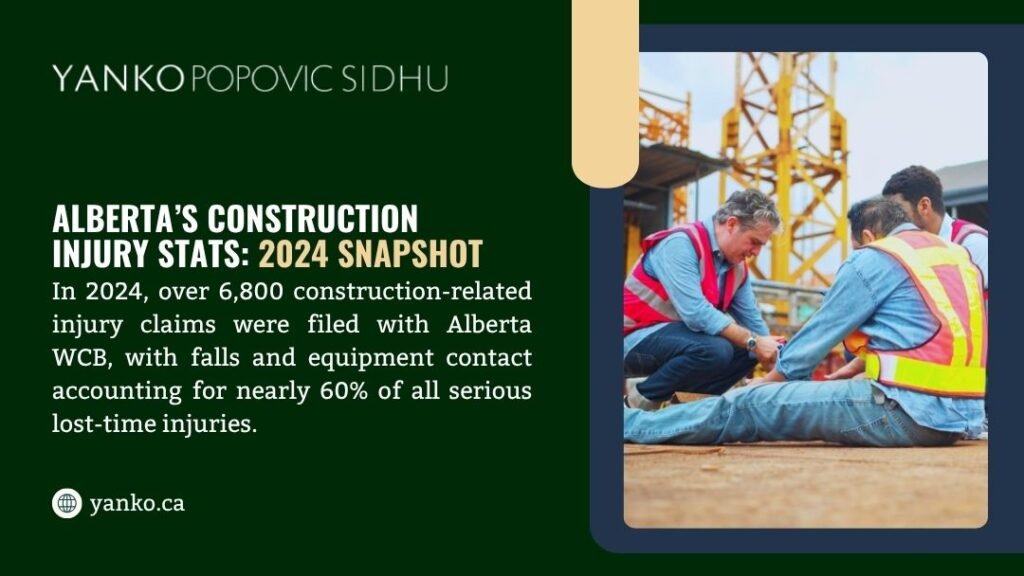
Alberta assigns a coordination role to the prime contractor on multi-employer sites; each employer still bears its own OH&S duties. When a trench collapse or fall happens, we test whether the prime contractor managed site-wide controls and whether the employer supervised task-level hazards. Failures at either level move liability, and your construction injury settlement, significantly.
Duty HolderTypical Breach That Moves ValuePrime contractorFragmented safety planning across trades; gaps in hazard communication.EmployerMissing fall/arrest controls; poor lock-out; weak supervision records.Owner/controllerAllowing unsafe sequencing or access, ignoring near-miss trends.Supplier/manufacturerDefective guards, anchors, slings, or misleading manuals.
Medical Evidence and Settlement Valuation
A Calgary construction injury settlement tracks the quality of medical proof as much as fault splits. Spine, brain, and complex orthopedic cases need clear diagnosis, future care plans, and solid function testing. Non-pecuniary damages tie back to the national cap, but future care and income loss are evidence-heavy and carry most of the value in serious files.
Injury ClassEvidence That Moves NumbersTraumatic brain injuriesNeuropsych, imaging, vestibular testing; caregiver logs; return-to-work failuresSpinal cord and severe orthoSurgeon reports, assistive tech needs, life-care planner outlinesChronic pain syndromesConsistent longitudinal charting; corroborated function limitsBurns and scarsPlastic surgery input; scar maps; psychosocial impact records
How is a Construction Injury Settlement Calculated?
Insurers price risk; lawyers price proof. Your construction injury settlement is a sum of heads of damage affected by fault shares and WCB recoveries. We model ranges, then negotiate to the high end where the evidence is clean.
Valuation StepHow the Number FormsLiability modelAssigns defendable percentages to each party with OH&S and site evidence in viewMedical narrativeConverts diagnosis to limits on function and employability with credible expertsEarnings engineBuilds past and future income models with the economist’s supportCost of careTotal life-care plan items and inflation with present value methodsNon-pecuniaryAnchors to the SCC cap, adjusted by comparablesWCB & tax filtersDeducts WCB recoveries where required; models tax on certain heads
Settlement Procedure in Calgary Construction Claims
Most Calgary construction injury settlement files run on two tracks: WCB (statutory) and tort (civil). The timing below is typical; urgent steps may compress or extend the path.
PhaseCore TasksPractical WindowTriagePreserve photos, witness lists, incident, and prime-contractor records; start WCB formsDays to weeksEarly medicalSpecialist referrals; imaging; initial rehab; time-loss documentation1–3 monthsLiability buildOH&S requests, site documents, contracts, safety plans, toolbox talksParallel with carePleadingsFile Statement of Claim; serve defendants; push for defense productionsBefore the 2-year limitDiscoveryExchange records; question parties; expert retention and reportsADR windowMediation or Judicial Dispute Resolution to target a construction injury settlementTrial prepOnly if ADR fails, preserve settlement leverage with ready experts
Pain and Suffering: The National Cap Explained
Canada’s Supreme Court capped non-pecuniary damages in Andrews v. Grand & Toy in 1978 and its companion cases. Courts index the cap for inflation, and they use injury comparables to place awards under that ceiling. This does not limit your wage loss, future care, or out-of-pocket claims; those often carry the majority of a serious construction injury settlement.
MisconceptionCalgary Reality“The cap limits my whole case.”No. It only limits non-pecuniary damages. Income loss and care can be much higher.“The cap never moves.”It’s inflation-indexed; counsel uses up-to-date figures and comparables.
Fatal Construction Accidents and Family Compensation
When a construction death occurs, Alberta’s Fatal Accidents Act adds fixed bereavement amounts for specific relatives and allows dependency and service losses. These are separate from any WCB fatal benefits. A Calgary construction injury settlement for a fatality blends statutory amounts and tort dependency calculations, then adjusts for fault and WCB subrogation.
HeadFamily RecoveryBereavementFixed statutory sums to defined relatives (reviewed by the province)DependencyLost income/services to dependants (economist and household work models)Funeral and related costsReasonable expenses with proof
Costs, Fees, and Net Recovery: What Arrives in Your Hands
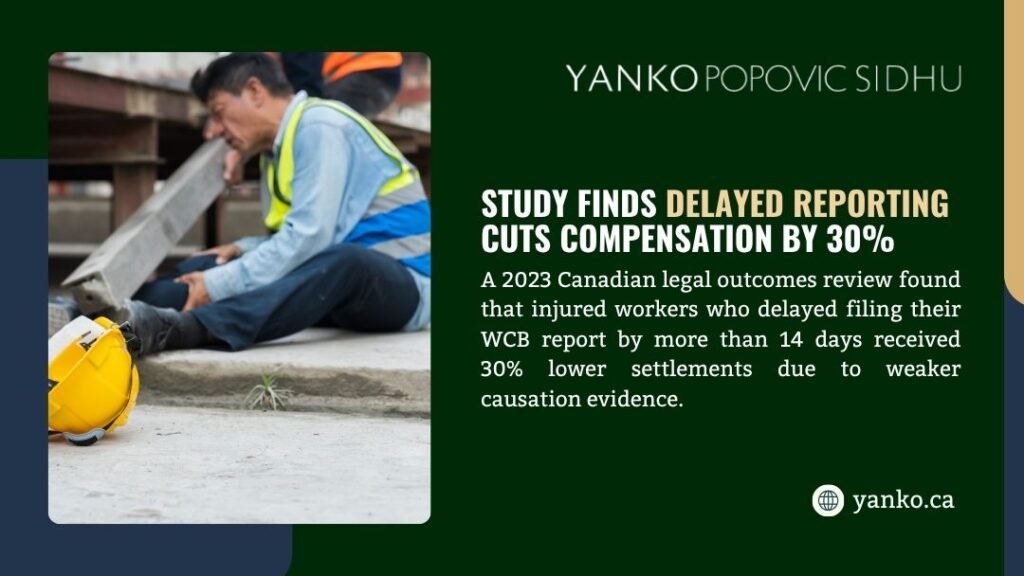
Clients care about the net. Your construction injury settlement must account for contingency fees, disbursements (experts, records), WCB recovery, and tax treatment by head of damage.
ItemCalgary NoteFeesYanko Popovic Sidhu runs no upfront fees; fees are contingency-based and discussed in retainer.DisbursementsExpert reports and records; advanced by the firm in most cases and handled for resolution.WCB recoveryWCB seeks reimbursement from tort funds for statutory benefits it paid.Tax filtersNon-pecuniary is non-taxable; other heads can have different treatments, plan with counsel.
Evidence That Strengthens a Construction Injury Settlement
Insurers raise value when the evidence is complete. The Calgary package below is what we assemble early:
Evidence ClassExamplesSite and safetyPrime contractor directives, hazard assessments, toolbox talks, and near-miss logs.ContractsPrime/sub agreements, control clauses, indemnitiesWitness and photosCo-worker statements, site pics, time-stamped videoMedical platformSpecialist reports, function tests, life-care plansEarningsROEs, T4s/NOAs, employer letters; vocational assessments
Settlement Strategies That Work in Alberta Construction Cases
Calgary construction tort files reward focused ADR. We do the following to push a construction injury settlement to the top of the range:
TacticWhy It WorksEarly liability memoGives insurers a clear apportionment risk picture with OH&S anchorsExpert stagingTime medical and vocational reports for mediation, not afterComparable matrixNon-pecuniary awards mapped to the SCC cap and Alberta caselaw.WCB-tort alignmentNet modeling that already accounts for WCB recovery avoids late friction.
Real Alberta Law That Backs Your Construction Injury Settlement
A few core authorities shape most construction outcomes:
TopicAuthorityTwo-year limitation and discoverabilityLimitations Act cases explain the knowledge trigger for claims.Non-pecuniary capAndrews v. Grand & Toy and companion cases (cap, inflation-indexed).Contributory negligenceContributory Negligence Act and causal potency scholarship.WCB bar and third-party pathWCB worker handbook and procedures on elections and legal action.Fatal claimsFatal Accidents Act—bereavement and dependency frameworks.Prime contractor dutiesAlberta OHS materials on coordination at multi-employer sites.
You can review next steps with a Calgary construction accident lawyer who has managed complex fault splits, WCB overlaps, and high-value negotiations.
Sample Settlement Models for Typical Construction Injuries
Every file is different, but patterns help set expectations for a construction injury settlement. The examples below show how evidence and fault shares change outcomes.
ScenarioMedical & Work ImpactLiability NotesIllustrative Range*Fall from height with shoulder surgery and permanent restrictionsJob change to light duty; moderate chronic painPrime contractor failed to enforce tie-offs; employer supervision gapMid- to high-six figures pre-faultCrush injury to the foot with complex regional pain syndromeSignificant work loss; ongoing careShared fault between the equipment supplier and the site logisticsHigh-six to low-seven figures pre-faultScaffolding collapse with mild TBI and cervical fusionReduced earnings capacity; cognitive issuesThe engineering and erection contractor is jointly at faultLow- to mid-seven figures pre-fault
Illustrative only; actual outcomes depend on diagnosis strength, functional evidence, fault apportionment, and WCB adjustments.
The Clear Path Forward After a Construction Injury in Calgary
A serious construction injury changes daily life and future earning power. Alberta law provides multiple layers of protection, but navigating them alone is risky. Yanko Popovic Sidhu has represented injured construction workers across Calgary and Southern Alberta for over four decades, securing millions in compensation through both negotiation and litigation.
Each case receives individualized attention from lawyers who know Alberta courts, WCB procedures, and the local construction industry. If you or a family member were hurt on a jobsite, reach out to a dedicated construction accident lawyer in Calgary at Yanko Popovic Sidhu.You will receive a confidential consultation without cost or obligation, a clear explanation of your legal options, and a plan to protect evidence before deadlines expire. Visit the construction accident lawyer to arrange a detailed case review today.

Discover More