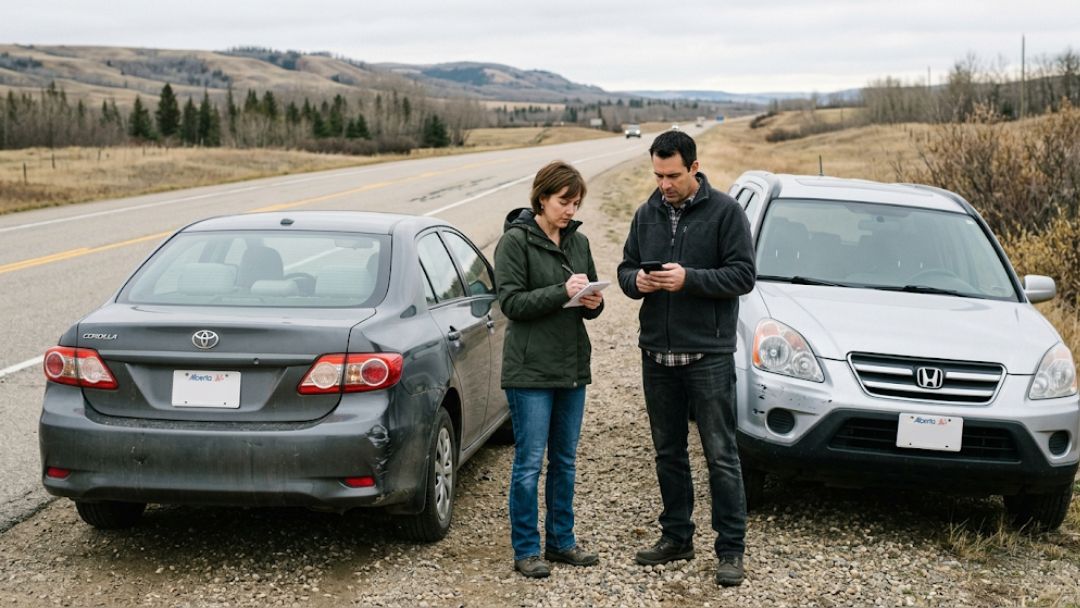
Written by Herman S. Sidhu, LL.B.
Speak with
a lawyer today
We’re here to guide you, answer your questions, and take responsibility for the process from the very beginning.
You don’t have to figure it out alone.
Suite 301, 300 Manning Road N.E.
Calgary, Alberta, T2E 8K4
Fri: 8 AM – 2 PM
Sat – Sun: Closed
+1 403-262-0262
info@yplaw.ca
We’ll review your case within 24 hours
A serious impairment car accident Alberta decides whether your pain and suffering are capped or fully compensable. The distinction shapes settlement value, evidence strategy, and insurer behavior. This guide explains the rules, the proof, and what changes outcomes.
Serious Impairment Car Accident Alberta
In a serious impairment car accident Alberta claim, a few words can change everything. Alberta’s insurance framework draws a firm line between injuries that are labeled minor and those that qualify as a serious impairment. That line determines whether non-pecuniary damages, pain, suffering, and loss of enjoyment of life are capped or assessed without a ceiling. For injured drivers, passengers, cyclists, and pedestrians across Alberta, that distinction can mean the difference between a modest award and compensation that reflects the true cost of a life altered.
The system did not appear by accident. Alberta’s Minor Injury Regulation (MIR) was designed to control costs for common soft-tissue injuries expected to resolve. But the regulation never intended to limit recovery where an injury lingers, worsens, or blocks essential daily functions. Understanding how serious impairment is defined, proven, and challenged is the hinge on which most Alberta car accident settlements turn.
The framework behind Alberta’s injury rules
Alberta operates under a tort-based accident insurance model. Fault matters. Damages matter. And classification matters most of all. The Minor Injury Regulation defines a narrow class of injuries, typically sprains, strains, and certain whiplash-associated disorders (WAD I and II), that trigger a cap on non-pecuniary damages.
It is important to note that the cap is not a static number. As of 2024, the cap sits at $6,061. For accidents occurring on or after January 1, 2026, the maximum minor injury amount is $6,306.
Provincial publications outline the purpose and scope of the regulation, emphasizing that it applies only where recovery is expected and daily function returns. The regulation does not cap income loss, medical costs, or future care. It caps only pain and suffering, and only when the injury remains minor by legal definition. Alberta’s own open data confirms this structure and the annual indexation mechanism.
How the Minor Injury Regulation operates in practice
The Minor Injury Regulation works like a gate. Insurers often attempt to close it early. They assess initial medical notes, look for language consistent with a sprain or strain, and apply the cap before a full picture develops.
A critical component of this early stage is the Diagnostic and Treatment Protocols (DTP). These protocols allow for immediate access to physiotherapy or chiropractic care without waiting for insurer approval, and the “protocol window” is commonly treated as a 90-day framework in Alberta practice.
That said, it’s risky to treat DTP timelines as a medical finish line. A claim does not become minor forever because someone started care under a protocol. If symptoms persist and begin to create a substantial inability to work, study, or manage daily life beyond the early recovery period, the serious impairment analysis becomes much more relevant.
The annual cap, updated with inflation, sets a ceiling for non-pecuniary damages when the injury remains minor. Recent commentary tracking the indexation explains how the figure changes year to year and why early labels often mislead.
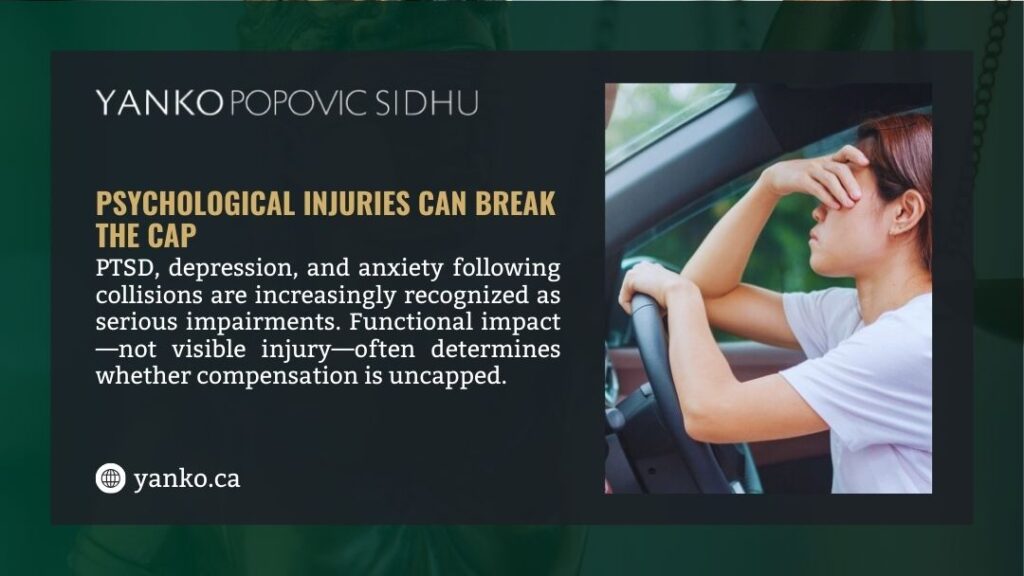
What the regulation does not do is freeze a claim in time. An injury can begin as a soft-tissue complaint and later evolve into something far more serious. Chronic pain, neurological symptoms, psychological sequelae (such as PTSD), or functional decline can move a claim out from under the cap. That evolution is central to many serious impairment car accident Alberta.
What qualifies as a serious impairment under Alberta law
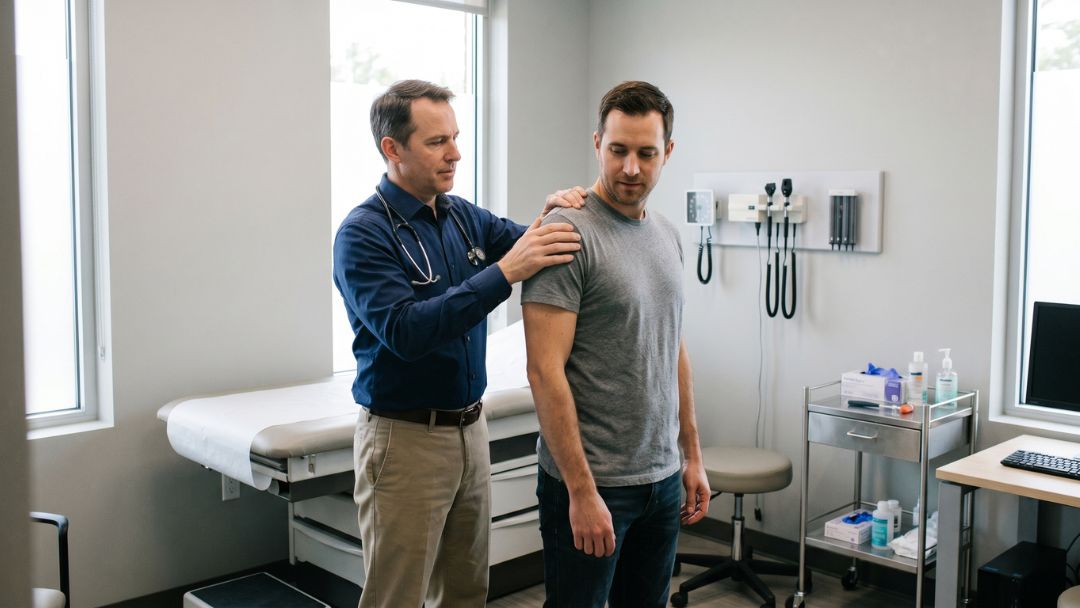
Alberta courts do not decide serious impairment by simply reviewing medical labels. The legal Functional Test is the gold standard: does the injury result in a physical or cognitive function that is not expected to improve substantially? Many injuries appear manageable at first but evolve into long-term limitations that affect work, independence, or basic daily activities. The law recognizes that impact matters more than diagnosis alone.
To qualify as a serious impairment under Alberta legislation and court precedent, several functional thresholds must usually be met. These criteria determine whether an injury falls outside the Minor Injury Regulation and becomes eligible for broader compensation.
Legal Criteria for Serious Impairment in Alberta
Legal RequirementExplanationReal-World ExamplesSubstantial inability to perform essential work dutiesThe injury must significantly restrict the ability to carry out core job tasksA construction worker is unable to lift or climb after a spinal injurySubstantial inability to perform daily living activitiesBasic tasks such as dressing, cooking, driving, or childcare become limitedChronic back injury is preventing independent household maintenanceOngoing impairmentThe limitations must continue since the accident, and not be resolved quicklyPersistent nerve pain lasting years after a collisionNo substantial expected recoveryMedical evidence shows that function is unlikely to return to the pre-accident levelPermanent mobility restrictions from joint or nerve damagePhysical or cognitive functional lossIncludes mental, neurological, or emotional impairmentPTSD or depression that prevents social integration or return to work
If an insurance company disputes whether injuries meet this threshold, Alberta law allows either party to request a certified examiner when there is a disagreement about whether an injury is minor. These certified examiner opinions can carry significant legal weight, but they are not automatically unchallengeable. Courts may give the examiner’s conclusion special weight unless rebutted with other evidence.

Minor injury vs serious impairment: where claims diverge
The difference between a capped and uncapped claim shows up most clearly at valuation. Non-pecuniary damages under a minor injury are limited to the indexed cap. Under serious impairment, the court assesses damages using established principles for pain, suffering, and loss of enjoyment of life, subject only to the Supreme Court of Canada’s general cap on non-pecuniary damages.
FeatureMinor InjurySerious ImpairmentLegal classificationSprain, strain, certain WADFunctional impairmentPain and sufferingIndexed cap appliesNo minor-injury capIncome lossClaimableClaimableFuture careClaimableClaimableSettlement rangeCapped at the applicable maximum (e.g., $6,306 for accidents on/after Jan 1, 2026)Case-specific
This divergence explains why insurers look at serious impairment allegations so closely.
Why serious impairment reshapes compensation
In car accident settlements Alberta, the cap can compress the value of pain and suffering into a narrow band. When serious impairment is established, that compression disappears. Courts then consider duration, intensity, psychological impact, and lifestyle change.
In cases of serious impairment, claimants may also be eligible for Housekeeping Capacity damages, compensation for the inability to perform chores, depending on the evidence and the way the losses are framed. These heads of damages are not excluded by the minor injury cap; rather, the cap specifically targets non-pecuniary damages, and other losses still require proof and proper valuation.
The result is not automatic windfalls. It is proportionality. A serious impairment car accident Alberta claim aligns compensation with reality.
Damage categoryMinor injury treatmentSerious impairment treatmentNon-pecuniary damagesIndexed capAssessed on evidencePast income lossEvidence-basedEvidence-basedFuture income lossEvidence-basedEvidence-basedCost of careEvidence-basedEvidence-based
Evidence that moves a claim past the cap
The role of the certified examiner cannot be overstated, but it must be stated precisely. Alberta’s MIR framework allows a certified examiner’s opinion where there is disagreement about whether an injury is minor. Courts may treat the conclusion of that opinion as having special legal weight unless rebutted, meaning preparation matters, and rebuttal evidence must be organized carefully when the conclusion goes against the claimant.
Key Evidence Used to Prove Serious Impairment:
Evidence TypePurposeLegal ImportanceLongitudinal medical recordsDemonstrate symptoms and treatment progression over timeCourts prefer consistent records spanning 12–24 monthsFunctional Capacity Evaluations (FCE)Measures physical ability to perform work or daily tasksProvides objective testing that supports disability claimsSpecialist medical opinionsConfirms the permanence and severity of injuryCarries strong weight in settlement negotiations and trialsVocational assessmentsEvaluates the ability to return to employmentEstablishes lost earning capacityTestimony from family or employersShows behavioral or personality changesHelps demonstrate real-life functional decline
Timing also affects serious impairment claims. Alberta’s limitation law generally requires injured individuals to file a Statement of Claim within two years of the accident. Waiting to see whether symptoms worsen can create legal risk. Missing this deadline can eliminate the right to pursue compensation entirely, regardless of injury severity.
The insurer’s playbook and how claims get challenged
Insurers often deploy familiar tactics. They emphasize initial improvement or suggest pre-existing conditions (such as age-related degeneration) are the true cause of your pain. A common defense is Malingering or Symptom Magnification, where the insurer hires a private investigator to film you performing physical tasks to contradict your claims of impairment.
Insurers often deploy familiar tactics. They emphasize initial improvement. They suggest treatment non-compliance. They frame symptoms as subjective. These moves aim to keep the injury within the minor category. Alberta-focused analysis of insurance adjuster tactics explains how early offers anchor expectations and why first numbers rarely reflect full value.
When a claim involves neurological or cognitive symptoms, consultation with a brain injury lawyer can help translate medical nuance into legal proof.
Serious impairment across different accident contexts
Serious impairment analysis varies depending on the type of collision. Different accidents produce unique injury patterns that affect how courts and insurers evaluate claims.
Injury Patterns That Often Lead to Serious Impairment
Accident TypeCommon Injury ProgressionLegal SignificanceMotorcycle collisionsSevere abrasions, nerve damage, and permanent scarringDisfigurement often qualifies as an exception to minor injury capsPedestrian accidentsMulti-system trauma, CRPS, orthopedic damageComplex regional pain syndrome frequently falls outside the cap rulesRear-end collisionsDisc herniation, ligament tears, chronic painInjuries initially labeled whiplash may later qualify as serious impairmentTruck collisionsHigh-impact trauma, brain injuriesIncreased force often produces catastrophic outcomesATV and recreational crashesSpinal and neurological injuriesRecreational cases follow the same impairment tests
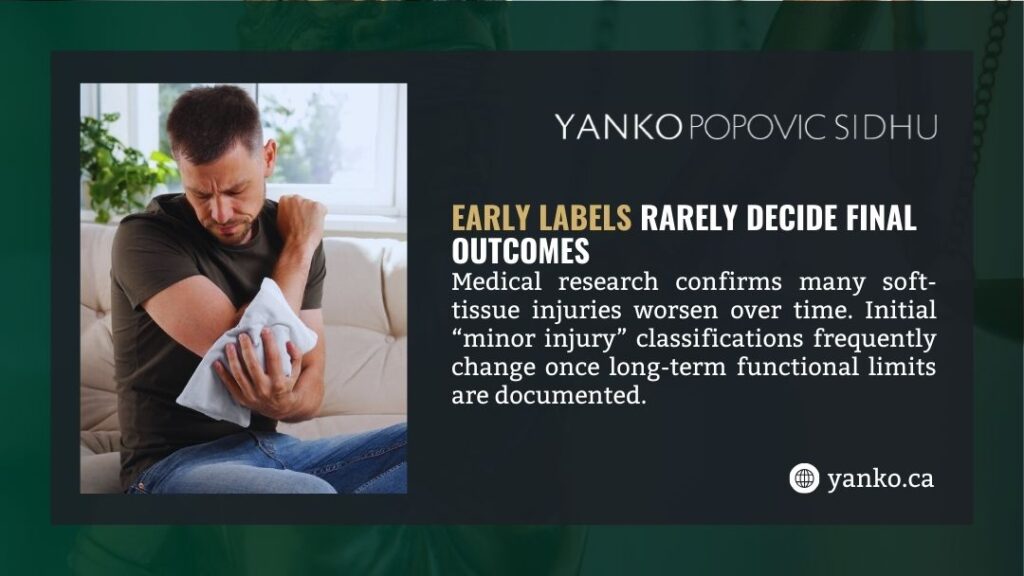
In many claims, the seriousness of an injury becomes apparent months after the collision. Courts recognize that a delayed diagnosis does not reduce legitimacy when medical evidence confirms the condition developed from accident trauma.
When serious impairment overlaps with catastrophic injury
Some serious impairment cases cross into catastrophic injury territory. Catastrophic injuries typically involve permanent loss of major bodily function, severe neurological damage, or lifelong care requirements. These claims often involve extensive future care costs, home modifications, rehabilitation, and long-term income replacement.
In Alberta practice, catastrophic cases commonly involve severe traumatic brain injury, paralysis or spinal cord injury, amputation, serious burns, or profound psychological impairment that prevents independent function. While every catastrophic injury will meet the serious impairment test, not every serious impairment becomes catastrophic, and that distinction often changes the level of expert evidence required; life-care planners, occupational therapists, and long-horizon income modelling become central in catastrophic valuation.
How contributory negligence interacts with serious impairment
Even when an injury clearly qualifies as serious, Alberta’s contributory negligence rules may reduce compensation if the injured person shares responsibility for the accident. Alberta courts assign fault percentages to each party involved.
For example, if a claimant is found 25% responsible for a collision, their overall compensation award may be reduced by that same percentage. This reduction applies across damages, including income loss, future care costs, and pain and suffering awards.
Insurance companies frequently attempt to increase the claimant’s share of fault. They may argue distraction, speeding, or failure to take evasive action. In practice, fault disputes often turn on objective evidence such as scene photos, vehicle damage patterns, black-box data, independent witnesses, and collision reconstruction, particularly where impairment damages are serious, and the insurer’s exposure rises.
Settlement timing and strategic decisions
Serious impairment claims often require patience. Early settlement discussions may occur before the full medical picture develops. Accepting compensation too soon may prevent recovery for long-term limitations discovered later.
Settlement Timing Considerations in Serious Impairment Claims
Settlement StageRisk LevelStrategic ConsiderationEarly settlement (within months)High risk of undervaluationInjuries may not reach maximum medical improvementMid-treatment settlementModerate riskSome medical clarity exists, butthe future impact is uncertainPost-stabilization settlementLower riskLong-term prognosis is typically clearerTrial or arbitration stageHigher legal cost but potential full valuationOften pursued when insurers dispute the seriousness of impairment
Settlement decisions must balance medical certainty with limitation deadlines. Skilled legal guidance helps determine when settlement discussions should begin and when litigation is necessary.
Beyond vehicle collisions: Related impairment claims
Serious impairment is not limited to motor vehicle accidents. The same legal threshold applies to injuries caused by negligence in other environments. Slip and fall accidents, workplace incidents, medical negligence, and product defects can all result in impairments that affect daily function.
For example, a surgical error causing nerve damage may prevent a patient from working or performing routine tasks. Similarly, a defective product causing severe burns or orthopedic damage may result in permanent limitations. Alberta courts evaluate these claims using similar functional impairment criteria, focusing on how injuries alter the individual’s quality of life.
Why Documentation Changes Outcomes
Documentation shapes nearly every serious impairment claim. Medical records, therapy notes, imaging studies, and employment records create a timeline that demonstrates injury progression. Courts often rely on consistency between records and testimony to assess credibility.
Incomplete or inconsistent documentation may weaken a claim even when injuries are genuine. Regular treatment, follow-up appointments, and honest reporting of symptoms help establish a reliable medical history. Courts view this continuity as evidence that the injury persists rather than fluctuates temporarily.
Detailed documentation also supports expert testimony. Medical specialists, occupational therapists, and vocational consultants rely on records to form reliable opinions. These opinions often become critical in serious impairment litigation.
One practical point many injured people miss: gaps in care are not always fatal, but they do invite arguments. If a gap happens, waitlists, finances, and caregiving duties must be explained clearly and backed by records where possible.
Moving forward with clarity and support
Serious impairment claims can feel overwhelming, especially when insurers challenge injury severity or attempt to limit compensation. Alberta law provides a pathway for injured individuals to seek fair recovery when accidents permanently change their lives. Understanding the legal threshold, collecting strong medical evidence, and acting within limitation deadlines are essential steps toward protecting your rights.
Yanko Popovic Sidhu has built its reputation on direct lawyer-to-client representation, ensuring injured individuals receive guidance from experienced counsel at every stage of the claim process. If an accident has affected your ability to work, live independently, or enjoy daily activities, speaking with a knowledgeable legal professional can clarify your options and strengthen your case.
If you suspect your injury is more than minor, don’t let an adjuster’s label decide your future. A properly built serious impairment car accident Alberta claim depends on timing, evidence, and strategy, things that are much harder to fix after the fact. Speak directly with an experienced lawyer, get a clear plan, and protect your right to full compensation before deadlines close the door.

Discover More