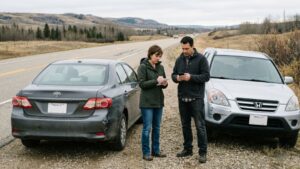
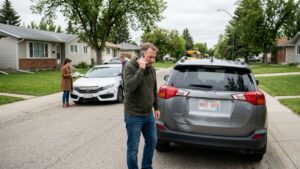
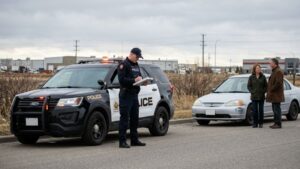
If you are asking, “How long do I have to report a car accident in Alberta,” the safest answer is this: report it as soon as possible when anyone is hurt, the combined damage appears to be over $5,000, a driver leaves the scene, a vehicle cannot be driven, or police reporting is otherwise required. You should also contact your insurer promptly, even if you believe the crash was not your fault. Waiting can create problems with police records, repair approvals, accident benefits, fault disputes, and any later injury claim.
In this article, we explore when Alberta drivers must report a collision, how police and insurance timelines differ, and what injured people should do to protect a potential claim.
At Yanko Popovic Sidhu, injured Albertans work directly with experienced personal injury lawyers, not layers of case managers. That direct lawyer-to-client approach can make the reporting, insurance, and injury claim process easier to understand from the start.
How Long Do I Have to Report a Car Accident in Alberta?
Alberta uses different reporting duties for different parts of the process. A crash may need to be reported to police right away or as soon as possible. Your insurer should be notified promptly. If you are hurt, injury benefit forms may need attention quickly. If compensation for injuries becomes necessary, there is also a legal deadline to start a claim.
Here’s the thing: the reporting clock often starts before you know how serious the crash really is. A sore neck can turn into weeks of treatment. A dented bumper can hide damage that pushes the repair estimate over the reporting threshold. A driver who seems cooperative at the roadside may later give a different version to the insurer. That is why a careful report can help protect both your legal position and your peace of mind.
In Alberta, a collision report is generally required when someone is injured, when a driver lacks required documents, when a vehicle cannot be driven, or when the involved vehicles have $5,000 or more in combined damage. Alberta’s official automobile collision guidance also says drivers should note the police file number after the report is made.
The key point is not to wait for the other driver, a repair shop, or an insurance adjuster to decide whether the crash matters. If the facts suggest that reporting is required, treat it as required.
When Alberta Law Requires a Collision Report
A collision report matters because it creates an official record of what happened. It can identify the vehicles, drivers, location, time, damage, injuries, and police file number. For someone later dealing with an at-fault car accident dispute, an injury claim, or a low settlement offer, that record may become important.
Alberta’s current property damage reporting threshold is $5,000 in combined damage. That means the total damage to all involved vehicles and property, not just the damage to your own vehicle.
If anyone is hurt, the crash should be reported. Do not dismiss pain at the scene just because adrenaline has taken over. Many people feel worse later in the day or the next morning. If your injuries involve your head, neck, back, chest, or mobility, medical care should come before paperwork. Once urgent care is handled, the report and insurance notice can follow.
A hit and run should also be reported. That applies when the other driver leaves the scene, refuses to provide information, or damages your parked vehicle and disappears. In those cases, the report may be essential for insurance purposes and for any later legal step. If the crash involved a pedestrian, cyclist, motorcycle rider, commercial truck, impaired driver, or serious injury, do not treat it like a minor fender bender.
| Situation | Who should be contacted | How soon to act | Why it matters |
| Someone is injured | Emergency services or Alberta Police | Right away, once safe | Injury crashes need official documentation and medical care |
| Combined damage appears over $5,000 | Police or approved collision reporting process | As soon as possible | Alberta requires reporting when the damage threshold is met |
| Hit and run | Police or local collision reporting centre | As soon as possible | A report can support the insurance claim and investigation |
| Vehicle cannot be driven | Police or emergency services if needed | Right away | Disabled vehicles can create traffic hazards and need documentation |
| Minor damage under threshold with no injuries | Insurer, and police only if required | Promptly | Insurance advice may still be needed |
| Injury benefits claim | Insurer | Promptly after the crash | Accident benefit forms and treatment records can affect recovery support |
| Personal injury lawsuit | Legal counsel | Well before the limitation date | Waiting can weaken evidence and risk the claim deadline |
Calgary Accident Report Rules
A Calgary accident report is required when the crash meets the legal reporting criteria. In plain terms, if someone is hurt, the damage appears to exceed $5,000, a vehicle cannot be driven, the collision involves a hit and run, or the situation has safety concerns, do not leave it as a handshake agreement.
Calgary traffic can make even a small crash feel chaotic. A rear-end collision on Deerfoot Trail, a winter slide at an icy intersection, or a parking lot impact near a shopping centre can all raise the same question: should this be reported? During Alberta’s winter months, ice, low visibility, and sudden braking can also turn what looks like a routine crash into a more complicated injury or insurance claim. If the vehicle damage looks close to the threshold, it is better to get proper direction than to guess low at the roadside.
The Calgary Police Service explains that collision stickers are required when damage exceeds $5,000 and that an A-Form is the standard Alberta form used for vehicle collision reports. Their collision reporting page also notes that insurance companies may ask for a police file number, a brief description of the incident, and photos of the scene. That is practical information. Insurers often build their first assessment around the earliest records available. You can confirm local reporting details through the Calgary Police Service traffic and collision reporting page.
For injured people in Calgary, direct legal advice can also be useful before conversations with adjusters become too detailed. A person who needs help after a crash can speak with a Calgary car accident lawyer through Yanko Popovic Sidhu.
Edmonton Car Accident Reporting Rules
An Edmonton car accident may need to be reported through an Edmonton collision centre when the crash meets the reporting threshold, and no emergency response is required. Edmonton Police Service states that when involved vehicles have $5,000 or more in combined damage, and the crash does not involve emergency factors, the collision must be reported to a Collision Reporting Centre as soon as possible. EPS also notes that failure to report can result in a $405 fine.
For anyone searching “car accident Edmonton” or “Edmonton car accident” after a crash, the first question should be whether the scene is safe. If someone is seriously hurt, if a driver appears impaired, if there is a threat, if a vehicle is dangerously blocking traffic, or if emergency help is needed, call 911. If it is a reportable collision without those emergency factors, the collision reporting centre process may apply.
The details you bring matter. Driver’s licence information, registration, insurance documents, photos, the other driver’s information, witness names, and the involved vehicle itself can help complete the report. If the vehicle is drivable and safe to take to the centre, bring it. If it is not, keep records of the tow, photos, and repair estimate.
| City or area | Common reporting path | Useful documents | Practical note |
| Calgary | Police reporting process or approved online option when eligible | Licence, registration, insurance, photos, other driver details | A Calgary accident report may be needed for insurance and repairs |
| Edmonton | Edmonton Collision Reporting Centre when eligible | Licence, registration, insurance, vehicle, photos, witness details | EPS says report $5,000-plus damage as soon as possible |
| Other Alberta communities | Local police, RCMP, or approved provincial reporting option | Same core documents | Reporting rules still depend on injury, damage, hit and run, and safety facts |
| Online eligible reports | Alberta’s Report My Collision service | Alberta.ca account, collision details, images, vehicle information | Online reporting is limited to eligible non-injury collisions |
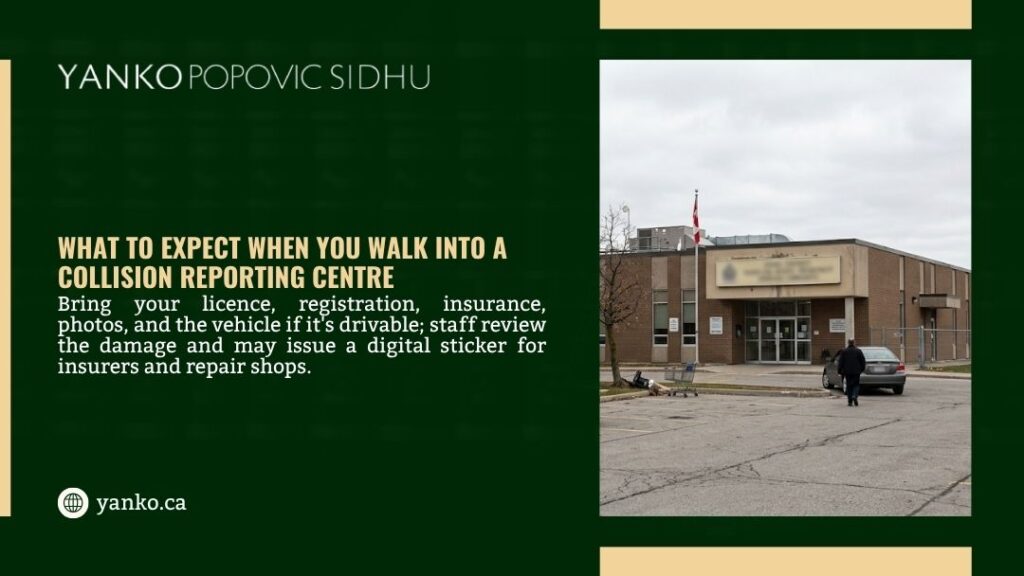
For eligible online reports, Alberta’s Report My Collision system may issue a digital damage sticker after law enforcement review. That sticker can be shown to insurers and auto body shops so repairs and claims can move ahead.
What Happens If I Don’t Report a Car Accident in Alberta?
Failing to report a car accident in Alberta can create more than one problem. There may be a fine or demerit consequences where reporting was legally required. A repair shop may also need a damage sticker before completing work on a vehicle with damage over the threshold. Alberta’s official guidance states that auto body shops cannot make collision repairs over $5,000 without a damage sticker.
The insurance side can be just as important. A late report gives an insurer room to ask uncomfortable questions. Why was the delay so long? Did the damage happen in this crash or later? Were the injuries reported right away? Were there witnesses? Did the other driver change their story after the fact?
That does not mean a late report automatically destroys a claim. It does mean the claim may need more careful handling. Evidence gets weaker with time. Photos disappear. Dashcam clips get overwritten. Witnesses forget details. In a serious injury claim, those gaps can affect how an adjuster views the case.
If an insurance company uses a late report to deny or reduce a claim, the next step should be measured, not panicked. Yanko Popovic Sidhu’s resource on what to do when an insurer refuses a claim may help if your insurance denied my car accident claim.
Should I Report the Crash If I Wasn’t at Fault?
Yes. If the crash meets Alberta’s reporting rules, you should report it even if you believe the other driver caused it. Many people search, “I got in an accident, and it wasn’t my fault,” because they assume the not-at-fault driver has fewer duties. That assumption can cause trouble.
Fault and reporting are separate issues. A report records that the crash happened. It does not, by itself, decide every legal or insurance issue. Alberta’s official insurance guidance states that police do not determine liability for a collision. Insurers assess fault as part of the claims process, and fault may be challenged in court.
That distinction matters after an at-fault car accident dispute. Maybe the other driver says you stopped too fast. Maybe they claim the light was yellow. Maybe the weather was poor, and both vehicles slid. Without prompt reporting and proper evidence, the clean story you had at the scene can become messy later.
If fault is disputed, it can help to understand how Alberta insurers and lawyers analyze responsibility. Yanko Popovic Sidhu provides insight into how fault is determined in Alberta.
How Soon Should I Tell My Insurance Company?
Your insurer should be told as soon as possible after the crash, even if you were not at fault. The police report and the insurance report serve different purposes. Police reporting deals with legal documentation. Insurance reporting deals with your policy, vehicle damage, accident benefits, and claim handling.
Alberta’s official automobile collision guidance puts it clearly: “After reporting the collision to the police, advise your insurance company, regardless of which driver was at fault, as soon as possible.”
That quote is worth paying attention to. It cuts through one of the most common myths after a crash: that only the at-fault driver needs to report to insurance. In reality, your own insurer may need to open a file, explain your benefits, arrange repairs, respond to the other insurer, or provide forms for injury treatment.
Still, be careful with what you say. You can report the facts without guessing, apologizing for things you did not do, or making medical statements before you have seen a doctor. If an adjuster asks for a recorded statement and you are hurt, unsure about fault, or under pressure, it may be wise to get legal advice first.
If an adjuster seems to be pushing hard, information on insurance adjuster tactics may help clarify common insurer behaviour after a crash.
How Long Do I Have to File an Injury Claim After a Car Accident?
Reporting a crash is not the same as filing a personal injury claim. That difference is easy to miss.
In Alberta, most personal injury claims are subject to a two-year limitation period. In many car accident cases, that means the injured person must start a lawsuit within two years of the accident date, although limitation issues can be complex and should be reviewed by a lawyer. The safer approach is not to wait until the deadline is close. Legal files need time for medical records, expert reports, insurer communication, and settlement talks.
This matters for car accident settlements Alberta-wide. A person may report the crash, attend physiotherapy, speak to an adjuster, and believe everything is moving along. Then, months pass. The insurer asks for more records. Treatment continues. Work is missed. Pain does not settle. Suddenly, the two-year mark is not far away.
Car accident settlement payouts Alberta claimants receive can depend on many factors, including the injury type, length of recovery, treatment evidence, income loss, future care needs, fault, and credibility. A rushed file near the limitation date is rarely ideal. When the injuries are serious, early legal guidance can help protect the claim before evidence fades.

What to Do in the First 24 Hours After an Alberta Crash
The first day after a crash can feel scattered. There is the vehicle, the other driver, the police report, the insurer, work, family, pain, and maybe a tow truck sitting nearby while you try to think straight. The goal is not to handle everything perfectly. The goal is to avoid the mistakes that are hard to fix later.
Start with safety. If anyone needs urgent help, call 911. Move out of traffic if it is safe. Do not argue with the other driver at the roadside. Exchange the required information, take photos, and write down the location, time, road conditions, weather, and visible damage.
Medical care should not wait because you feel “mostly fine.” Soft tissue injuries, concussions, back pain, and shoulder injuries may not fully show themselves at the scene. If you have pain, dizziness, numbness, headache, confusion, or limited movement, get checked. Medical records can also connect your symptoms to the collision, which may matter if the insurer later disputes the claim.
Then deal with reporting. If the collision meets the Alberta reporting rules, report it through the proper police or collision reporting process. After that, contact your insurer. Keep the police file number, claim number, repair estimate, medical receipts, and any treatment notes in one place.
| First-day step | Why it helps | Common mistake to avoid |
| Get medical help | Protects health and creates early treatment records | Waiting weeks before seeing a doctor |
| Photograph the scene | Preserves damage, road, weather, and vehicle position evidence | Taking only one close-up photo of the bumper |
| Exchange information | Helps with the police report and insurance claim | Relying on a phone number only |
| Report when required | Creates an official Alberta collision report | Assuming the other driver will handle it |
| Contact your insurer | Opens the claim and benefit process | Waiting until the repair shop asks for a file number |
| Keep records | Supports compensation and settlement review | Deleting texts, photos, receipts, or estimates |
Documents You Need for a Car Accident Report in Alberta
A proper Alberta collision report depends on basic but important details. The more complete your information is, the less room there is for confusion later.
You will usually need your driver’s licence, vehicle registration, proof of insurance, licence plate number, the other driver’s name and contact information, the other vehicle’s details, photos, the crash location, and a clear description of what happened. If witnesses were nearby, collect their names and phone numbers. If police attend the scene, ask for the file number.
For injury claims, keep more than vehicle documents. Save ambulance records, emergency room notes, family doctor records, physiotherapy receipts, prescriptions, employer notes about missed work, and any messages from the insurer. If pain affects your daily life, write short notes while events are fresh. Courts and insurers often look closely at consistency.
If your claim later involves car accident compensation, those records may help show the difference between a small inconvenience and a serious disruption to work, health, sleep, family life, or long-term care needs.
Common Reporting Mistakes That Can Hurt Your Claim
One common mistake is assuming the damage is below $5,000 because the vehicle still drives. Modern vehicles can hide expensive damage behind plastic bumpers, sensors, cameras, alignment systems, and safety features. A crash that looks minor at the roadside can turn into a much larger repair estimate.
Another mistake is letting the other driver talk you out of reporting. Someone may say they will pay cash, that their insurance will go up, or that reporting is a hassle. That might sound harmless in the moment. But if they later deny involvement or refuse payment, you may wish you had made the report from the start.
A third mistake is giving too much opinion too early. Saying “I’m sorry” out of politeness is one thing. Guessing about speed, fault, injuries, or repair costs is another. Stick to what you know. If you are unsure, say you are unsure.
A fourth mistake is waiting too long for medical care. Insurers often look for gaps in treatment. A delay does not always mean the injury is fake, but it can give the insurer an argument. This becomes especially important when the claim involves neck pain, back pain, concussion symptoms, or ongoing work limitations.
Alberta Car Accident Reporting FAQ
Do I have 24 hours to report a car accident in Alberta?
Do not rely on a blanket 24-hour rule. If the crash must be reported because of injury, hit and run, undriveable vehicle, missing documents, public safety concerns, or $5,000 or more in combined damage, report it as soon as possible. Some local processes may refer to prompt or next-day reporting in practical terms, but the safest approach is not to wait when the legal reporting criteria are met.
Do I need a police report for a minor accident?
Not always. A minor accident with no injuries, no hit and run, no impaired driver concerns, no missing documents, no undriveable vehicle, and damage clearly below the reporting threshold may not require a police report. Still, you should contact your insurer and keep photos, names, insurance details, and repair estimates. If the damage later appears higher than expected, take steps to report it properly.
Does filing a Calgary accident report increase insurance?
The report itself does not decide your premium. Insurance consequences usually depend on the claim, fault assessment, policy terms, driving history, and insurer rules. A Calgary accident report creates a record. It does not automatically mean you are at fault. If the insurer blames you unfairly, get advice before accepting that assessment.
Where do I report an Edmonton car accident?
If the crash involves emergency concerns, call 911. If it is a reportable non-emergency collision in Edmonton, the Edmonton collision centre process may apply. Bring the involved vehicle if it is safe and drivable, along with your licence, registration, insurance, photos, and the other driver’s information.
Can I still claim compensation if I reported late?
Possibly. A late report does not always end a claim, but it can make the claim harder. The insurer may question the timing, the cause of the damage, the injury connection, or the reason for delay. If injuries are involved, speak with a lawyer before giving broad statements or accepting a settlement.
What if the other driver says we do not need to report it?
The other driver does not get to waive Alberta’s reporting rules. If the crash meets the reporting criteria, report it. A private agreement at the roadside can fall apart quickly, especially once repair costs, injuries, or fault disputes appear.
What if I was in a pedestrian, bicycle, motorcycle, or truck accident?
These crashes often involve higher injury risk and more complex claims. Report the collision if anyone is hurt or if the reporting rules are triggered. A person hit while walking may need guidance from a pedestrian accident lawyer. A cyclist can review this bicycle accident lawyer resource. Motorcycle riders can learn more from Yanko Popovic Sidhu’s motorcycle accident lawyer, and those hurt in commercial vehicle crashes may want to review information about a truck accident claim.
Speak With a Lawyer Before the Deadline Becomes the Problem
So, how long do I have to report a car accident in Alberta? If the crash is reportable, act as soon as possible. If someone is hurt, damage appears to meet the threshold, the other driver leaves, a vehicle cannot be driven, or the facts feel uncertain, do not wait for the situation to sort itself out.
The legal problem is rarely just the report. It is what happens after the report. The insurer may dispute fault. Repairs may cost more than expected. Symptoms may last longer than you hoped. A settlement offer may arrive before the full medical picture is clear. That is when a hands-on legal team can make a real difference.
Yanko Popovic Sidhu offers a free consultation, giving injured Albertans a chance to understand their options before an insurance delay, missed report, or settlement pressure creates a bigger problem.
If you were hurt in a crash, reported late, feel pressured by an adjuster, or are unsure what your claim may be worth, speak with Yanko Popovic Sidhu before the deadline becomes the issue. A timely conversation can help you understand your rights, avoid preventable mistakes, and take the next step with confidence.