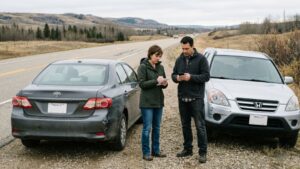
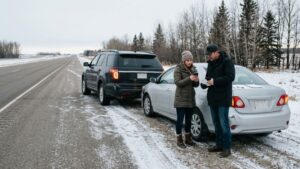
Disputing fault car accident Alberta cases can feel overwhelming, especially when an insurance company decides you caused the crash. The truth is, fault decisions are not always final. With the right evidence and a clear strategy, many drivers successfully challenge these decisions and protect their right to compensation. This guide explains how fault is determined, how to dispute it effectively, and what steps can strengthen your position under Alberta law.
Disputing Fault Car Accident Alberta: How It Works
Disputing fault in a car accident in Alberta starts with understanding how the system operates. Alberta follows a fault-based insurance model. That means the person responsible for the motor vehicle accident must cover damages through their insurer.
But here’s the problem. Insurance companies often assign fault quickly, sometimes before all the evidence has been reviewed. Their goal is simple: reduce payouts. And that’s where disputes begin.
When disputing fault in car accident cases in Alberta, you are essentially challenging the insurer’s version of events. You are saying the initial decision does not reflect what actually happened. This process relies heavily on evidence, legal interpretation, and how convincingly your case is presented.
How Is Fault Determined in a Car Accident in Alberta?
Determining fault in an accident in Alberta involves several layers of analysis. Insurers examine police reports, statements from the parties involved, and physical evidence from the scene. Road and weather conditions also play a role, especially in winter when icy roads can affect driver control.
Witness statements often carry significant weight. A neutral third party can confirm how the accident unfolded. At the same time, vehicle damage patterns help reconstruct the sequence of events. Below is a simplified breakdown of what insurers rely on:
| Factor | Impact on Fault Decision |
| Police reports | Strong influence on initial decision |
| Witness statements | Adds credibility to claims |
| Vehicle damage | Helps reconstruct the accident |
| Road conditions | May reduce or shift liability |
| Driver behavior | Central to determining fault |
Fault is rarely black and white. In many cases, insurers assign partial responsibility to both drivers. This is known as contributory negligence.
How to Dispute Fault in a Car Accident (Step-by-Step)
Disputing fault car accident Alberta cases is not a one-step process. It usually unfolds over time, and how you handle each stage can shape the outcome.
It starts with clarity. Before pushing back, you need to understand exactly why the insurance company decided you were at fault. Ask for their written explanation. This document often reveals gaps, assumptions, or missing evidence that you can later challenge.
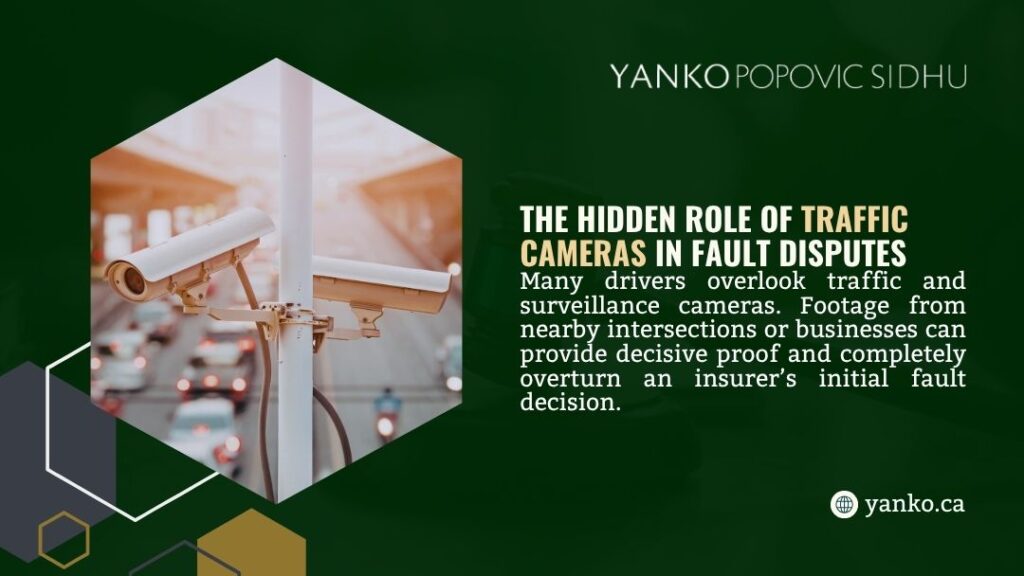
Once you have that, shift your focus to reconstruction. Think of the accident as a sequence of events that must be rebuilt from the ground up. Go beyond basic photos. Look for traffic camera footage, nearby business surveillance, or dashcam recordings. Even a small detail, like the timing of a traffic light, can change how fault is viewed.
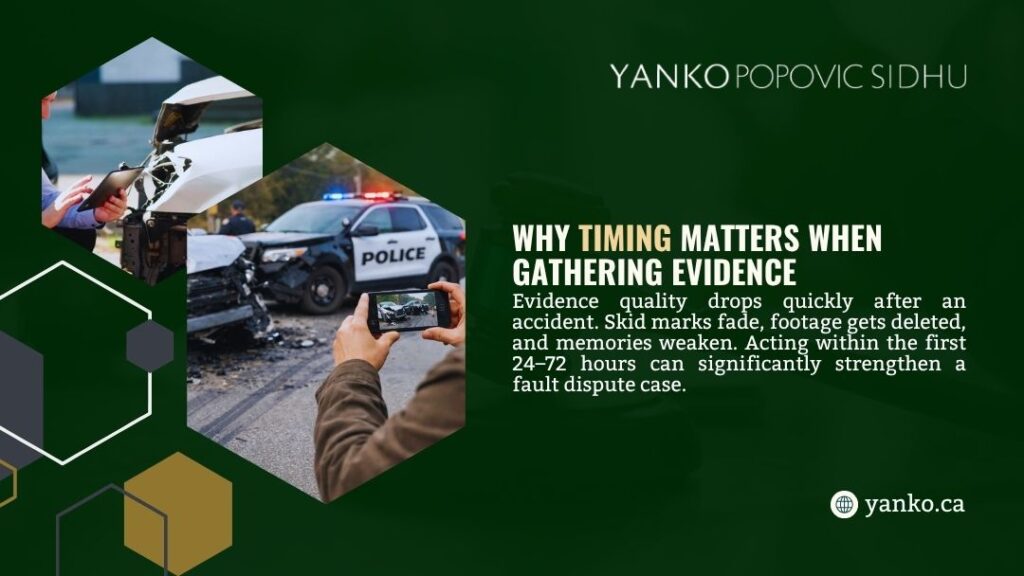
Next comes documentation. Write your own account while the memory is still fresh. Include speed, position, road conditions, and what each driver did before impact. If there were witnesses, follow up with them quickly. People tend to forget details over time, and early statements carry more weight.
After gathering your material, present it in a structured way. Don’t just send scattered evidence. Build a clear narrative that explains why the initial decision doesn’t hold up. This is where many people fall short; they have strong evidence but fail to connect the dots.
If the insurer still stands by their decision, escalation may be necessary. This could mean requesting a formal review or preparing for legal proceedings. At this stage, many individuals realize that disputing fault is not just about facts; it’s about how those facts are argued.
What Evidence Helps You Dispute Fault Successfully?
Evidence is the backbone of disputing fault car accident Alberta claims. Without it, the insurer’s decision often stands.
The strongest cases rely on objective proof rather than personal opinion. A dashcam recording, for example, can instantly clarify what happened. Independent witnesses provide another layer of credibility. Here’s how different types of evidence compare:
| Evidence Type | Strength Level |
| Dashcam footage | Very high |
| Independent witnesses | High |
| Police report | High |
| Driver statements | Moderate |
| Verbal claims only | Low |
Medical records also play a role in personal injury claims. They help establish the severity of harm and connect injuries to the accident.
Contributory Negligence in Alberta: What If You Are Partially at Fault?
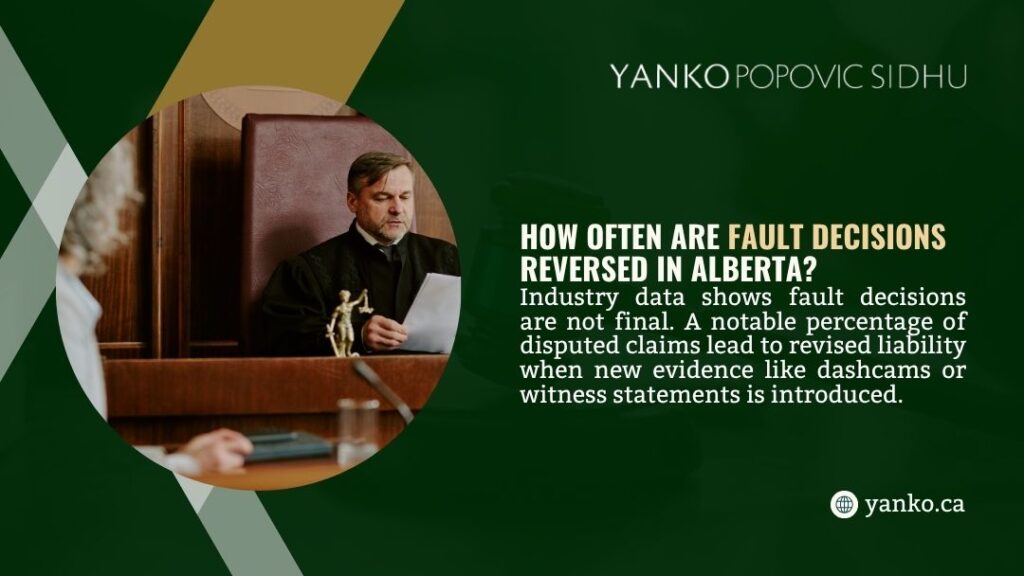
Disputing fault car accident Alberta cases become more complex when both drivers share responsibility. Alberta law allows for contributory negligence, meaning you can still pursue compensation even if you are partially at fault. The key factor is percentage. Compensation is reduced based on your share of fault.
| Fault % | Compensation Impact |
| 0% | Full compensation |
| 25% | Reduced by 25% |
| 50% | Reduced by half |
| 75% | Limited recovery |
So here’s what matters. Even if you are partially at fault, disputing fault can still increase your compensation significantly. A small shift in percentage can lead to a major financial difference.
Common Insurance Company Tactics When You Dispute Fault
Insurance companies rarely admit mistakes easily. When disputing fault car accident Alberta, many drivers face resistance.
One common tactic involves delays. The longer the process takes, the more pressure builds on the injured person to accept a lower settlement. Another tactic involves selective evidence use. Insurers may highlight details that support their decision while ignoring others.
Low settlement offers also appear early in the process. These offers often arrive before the full extent of injuries becomes clear.
Understanding these strategies can make a difference. Understanding insurance adjuster tactics after a crash highlights how insurers typically handle and evaluate claims. It shows the common methods used to assess liability, manage payouts, and protect company interests during the claims process.
When Should You Contact a Personal Injury Lawyer?
There’s a point where handling a dispute alone stops being practical. Disputing a fault car accident in Alberta can quickly become technical, especially when injuries are serious or liability is unclear.
If your case involves conflicting witness statements, unclear police reports, or multiple parties involved, things can get complicated fast. Insurance companies know this. They often rely on confusion to maintain their position.
A personal injury lawyer steps in with a different approach. Instead of reacting to the insurer, they build a case from the ground up. They know how to interpret evidence, question assumptions, and bring in experts when needed. In some situations, accident reconstruction specialists or medical professionals can provide insights that shift the fault entirely.
There’s also a practical side. When injuries affect your ability to work or recover, dealing with paperwork, deadlines, and negotiations can become overwhelming. Legal support removes that burden and keeps your claim on track.
If you feel the process is moving against you, or if the insurer is not taking your evidence seriously, it may be time to involve an experienced car accident lawyer in Calgary.
What Happens If You Win Your Fault Dispute?
Winning a fault dispute does more than correct the record. It changes the entire direction of your claim.
Once a fault is reassigned, the financial responsibility shifts. The other driver’s insurance company may now be required to cover your losses. This can include medical expenses, rehabilitation costs, lost income, and damage to your vehicle.
But here’s where it becomes more significant. A successful dispute can also affect long-term compensation. In Alberta, certain damages, especially those related to pain and suffering, depend heavily on how fault is assigned. Even a partial reduction in your liability percentage can lead to a noticeable increase in what you recover.
There’s also a timeline factor. When a fault is unresolved, claims tend to stall. Once liability is clarified, negotiations often move faster. Insurers are more willing to discuss settlement when responsibility is clearly established.
To better understand what may be included, car accident compensation in Alberta covers different types of damages, with amounts determined based on factors such as injury severity, financial losses, and long-term impact.
Real Scenario: Disputing Fault in a Rear-End Collision
Rear-end collisions seem straightforward at first glance. The driver behind is usually blamed. That’s the assumption most insurance companies start with. But reality doesn’t always follow that pattern.
Imagine a situation where traffic is flowing normally, and the lead driver suddenly brakes for no apparent reason. There’s no obstacle, no traffic signal, no visible hazard. The driver behind reacts but cannot stop in time. At first glance, it looks like a simple rear-end crash.
Now consider additional details. The lead vehicle may have had faulty brake lights. Or perhaps it reversed unexpectedly in traffic. In some cases, road conditions, like black ice, play a role in how quickly a vehicle can stop. These factors can shift how fault is assigned.
When disputing fault car accident Alberta claims in these scenarios, the focus turns to evidence. Skid marks, vehicle damage patterns, and timing all become important. Even small inconsistencies in the lead driver’s account can open the door to a different interpretation.
Understanding these nuances is critical. Information on rear-end collision fault rules shows how these cases are evaluated under Alberta law, particularly how liability is typically assigned to the trailing driver while still considering specific circumstances that may influence the outcome.
Mistakes That Can Hurt Your Case
Even strong claims can weaken due to avoidable errors. These mistakes often happen early, sometimes without people realizing their impact.
Before looking at the details, it helps to understand that small decisions, what you say, what you document, and when you act, can shape the entire outcome of your dispute.
| Mistake | Why It Matters |
| Admitting fault at the scene | Can be used against you later, even if incorrect |
| Delaying evidence collection | Key details may disappear or become unreliable |
| Trusting the insurer’s version | Their goal is to limit payouts, not confirm accuracy |
| Not seeking medical attention | Weakens the link between injury and accident |
| Providing incomplete statements | Leaves room for misinterpretation |
Avoiding these missteps can strengthen your position significantly. A careful, informed approach often makes the difference between a denied claim and a successful dispute.
FAQs
What should I do if someone sues me for a car accident in Alberta?
Stay calm and notify your insurance company immediately. Do not respond directly to the claim without guidance. Your insurer will typically assign legal representation, but seeking independent legal advice can help you understand your position more clearly.
How long does an at-fault accident stay on your record in Alberta?
Most insurers consider at-fault accidents for up to six years. During that time, your premiums may remain higher depending on your driving history.
How to contest an at-fault accident?
Start by requesting the insurer’s reasoning, then gather evidence that contradicts their conclusion. A structured challenge supported by documentation gives you the best chance of success.
What is the hardest injury to prove?
Soft tissue injuries are often the most difficult. They may not appear on imaging tests, which makes them easier for insurers to question.
Why should you never admit fault?
Fault is a legal determination, not a personal opinion. Even a simple apology can be interpreted as an admission and used against you later.
What are the four things required to prove negligence?
You must show duty of care, breach of that duty, causation, and resulting damages. All four must be present for a successful claim.
Is it worth appealing an insurance claim?
In many cases, yes. If the initial decision overlooks key evidence or misinterprets events, an appeal can lead to a different outcome.
What not to say to an insurance adjuster?
Avoid speculation, guessing, or accepting blame. Stick to facts and avoid statements that could be interpreted as admissions.
Can I dispute fault after accepting an insurance decision?
It is possible, but more difficult. Acting before accepting a settlement gives you a stronger position.
How long do I have to dispute fault in Alberta?
There is no single fixed timeline, but delays can weaken your case. Acting promptly improves your chances of success.
Take Control of Your Claim Before It’s Too Late
Disputing fault car accident Alberta claims is about more than correcting a mistake. It’s about protecting your ability to recover, physically, financially, and legally.
A well-prepared case can shift outcomes, but timing matters. The longer you wait, the harder it becomes to challenge the insurer’s position.
If you’re dealing with a fault dispute and need clear direction, the team at Yanko Popovic Sidhu offers direct lawyer-to-client support, no intermediaries, no confusion. You speak with experienced lawyers who handle your case from start to finish and focus on achieving the result you deserve.