




Worth knowing
A recent case, handled from start to finish

Existing tort claims will run for years
Claims arising from accidents up to December 31, 2026 will continue to be litigated under the current rules well beyond that date. The two systems will operate alongside each other for a considerable period.
Benefit levels sit in regulations, not the Act
The Act sets the framework; the amounts and much of the detail are set by regulation. Figures published in advance of the regulations being finalised should be treated as indicative. We do not publish specific benefit amounts on this page for that reason.
Do not wait to see how the new system works
If you were injured in a collision before January 1, 2027, waiting does not move you into the new benefits regime. It only risks your existing rights. The limitation period continues to run.
Housing and transport are part of the claim
Adapted accommodation and adapted transport are frequently the difference between independence and dependence. They are proper heads of loss and should be assessed by someone qualified to specify them.
.webp)
Ask about the route before you assume
People injured on construction sites frequently assume either that they can sue, or that workers' compensation is their only option. Both assumptions are wrong often enough that the question deserves an answer from a lawyer rather than a guess. It costs nothing to ask and the answer shapes everything else.
.webp)
Site evidence has a short life
Scaffolding is struck, equipment is repaired or returned, and the site itself changes within days. Photographs taken immediately, the names of witnesses, and a written record of the equipment involved are worth more than anything reconstructed later.
.webp)
Occupational health and safety records are useful but separate
An OHS investigation or order is not a finding of civil liability, and a regulatory outcome does not decide a claim. That said, the investigation record, inspection history and the applicable Code requirements — for scaffolds and temporary work platforms, powered mobile equipment, or control of hazardous energy, depending on the incident — are frequently valuable evidence of what the standard required and whether it was met.
.webp)
Alberta has no dog-bite compensation statute
Alberta's dangerous dog legislation allows a justice to order that a dog be controlled or destroyed. It creates no civil liability and provides an injured person with nothing. Compensation comes from a negligence or scienter claim, from occupiers' liability where the attack happened on the defendant's premises, and from the owner's insurance.
.webp)
Municipal bylaws are evidence, not a cause of action
Calgary's responsible pet ownership bylaw imposes obligations on owners, including control and licensing requirements. A breach is useful evidence that the standard of care was not met — but it does not itself create a claim, and animal services records of prior complaints are frequently more valuable than the bylaw charge itself.
.webp)
Scarring and psychological injury are the real loss
Bite claims are often settled on the basis of the immediate treatment. Where there is permanent facial or visible scarring, anticipated future revision surgery, or a lasting fear of dogs that changes how someone lives — particularly a child — the claim is worth considerably more than the emergency room record suggests.
.webp)
Keep the product, the packaging and the receipt
Nothing else on this page matters as much. The physical item is the evidence. Once it has been discarded, returned to the retailer, repaired or altered, establishing what failed and why becomes extremely difficult and sometimes impossible.
.webp)
Suing the retailer is not the same as suing the manufacturer
A purchaser has contractual protections against the seller they bought from — implied conditions that goods be of merchantable quality and reasonably fit for their purpose. Those protections do not extend to the manufacturer, and they do nothing for someone who did not buy the product. The negligence claim is what reaches the party that designed or made it.
Recalls and prior incidents matter
Evidence that a manufacturer knew of a failure mode — through recalls, service bulletins, complaints or prior claims — bears directly on whether it met the standard of care and on whether its warnings were adequate. That material is worth looking for early.
Municipal claims carry very short notice deadlines — and there are two of them
Where the claim is against a municipality, Alberta's Municipal Government Act imposes written notice requirements. For snow, ice or slush on a road or sidewalk, notice is required within 21 days, and liability is limited to gross negligence — a materially harder test than ordinary negligence. For failure to keep a road, public place or public work in a reasonable state of repair, notice is required within 30 days. An action can still proceed despite missed notice where there is a reasonable excuse and no prejudice, where death resulted, or where the municipality waives notice in writing — but none of that should be relied on.
.webp)
A private occupier is judged differently
A fall on private property — a store, a restaurant, an apartment building, a parking lot — is governed by the Occupiers' Liability Act and the ordinary standard of reasonable care. There is no 21-day notice requirement and no gross negligence threshold. Whether you fell on a municipal sidewalk or on adjacent private property can therefore change both the deadline and the test, which is why establishing exactly where you fell matters.

Evidence of the system, not just the hazard
Proving there was ice or a wet floor is rarely enough on its own. What usually decides these claims is the occupier's inspection and maintenance record: how often the area was checked, what was logged, what was done, and whether the hazard had been reported before. Those records exist, and they need to be requested.
.webp)
Do not assume you have until the child turns 18
Medicine involves risk that materialises without fault. Complications that were disclosed and that occur despite competent care do not found a claim. The question is always whether the care met the standard, assessed against what was known at the time rather than with hindsight.
.webp)
Regulatory complaints and civil claims are different things
A complaint to a regulatory college can result in discipline. It cannot result in compensation to you, and a discipline finding is not determinative of civil liability. If your objective is compensation, the civil claim is the route — though the two can proceed in parallel.
.webp)
These claims take time, and that is usually appropriate
Obtaining records, securing expert review and establishing causation is slow work. A claim that resolves quickly is often one that has not been properly investigated. That said, the limitation period runs regardless, so early advice matters even where the claim itself will take years.
.webp)
Consent is a separate question from competence
Even competently performed treatment can found a claim where a material or unusual risk was not disclosed and a reasonable patient in your position would have declined the treatment had they known. Consent documentation matters, but a signed form is not the end of the analysis.
.avif)
Delayed diagnosis claims turn on the record over time
Where an abnormality developed over a series of appointments, the claim depends on what was recorded, what was visible on imaging, and what a reasonably competent practitioner should have done at each point. Practitioners frequently attribute a delay to patient non-attendance, and the record either supports that or it does not.
.webp)
A regulatory complaint will not compensate you
As with any health profession, a complaint to the regulatory college can lead to discipline but cannot award you anything. The two processes are independent.
.webp)
Do not assume you have until the child turns 18
Limitation periods are suspended while a claimant is a minor. But a potential defendant can start the clock running against a child by serving a notice to proceed on the child's guardian and on the Public Trustee and paying the prescribed fee — after which the ordinary periods begin to run. This is a step a hospital's or physician's insurer can take, and families who assume they have until the child reaches adulthood can find they are out of time years earlier. Separate rules may also continue to suspend time past 18 where the claimant's impairment meets the statutory definition of a disability
.webp)
A genetic or other explanation is not the end of the inquiry — nor is it a formality
Providers frequently attribute cerebral palsy to a cause unrelated to delivery, and they are often right. But that is a position that should be tested against the record rather than accepted or dismissed. An independent expert review is the only way to know.
.webp)
Diagnosis often comes years after the birth
Cerebral palsy is frequently not diagnosed until well after delivery. That gap matters for limitation purposes, because knowledge of attribution is part of the test — but it does not mean time is not running, and outer limits apply. This should be assessed early.
.webp)
Do not assume you have until the child turns 18
Limitation periods are suspended while a claimant is a minor. But a potential defendant can start the clock running against a child by serving a notice to proceed on the child's guardian and on the Public Trustee and paying the prescribed fee — after which the ordinary periods begin to run. This is a step a hospital's or physician's insurer can take, and families who assume they have until the child reaches adulthood can find they are out of time years earlier. Separate rules may also continue to suspend time past 18 where the claimant's impairment meets the statutory definition of a disability.

Not every difficult birth involves negligence
Shoulder dystocia, cord compression and fetal distress can occur and be managed competently, and injuries can result despite appropriate care. Equally, the fact that a clinician says an injury was unavoidable is a position, not a finding. Both propositions need to be tested against the record by someone qualified to read it.
.webp)
The care claim can be the largest part of the claim
Where a child has a permanent injury, the damages that matter most over a lifetime are the cost of future care, therapy, equipment and accommodation, and the loss of earning capacity. Those are proved with life care planning and economic evidence, and they take time and cost money to establish properly.
.webp)
Bereavement damages are fixed, and they are not the whole claim
Alberta sets bereavement damages at fixed amounts for a spouse or adult interdependent partner, for parents, and for each child, awarded without proof of damage. They are deliberately modest, and they are not intended to value the life. Loss of financial dependency and loss of the services the person provided are usually the larger part of the claim.
.webp)
Grief counselling is recoverable
Alberta expressly allows recovery of the cost of grief counselling for the spouse or partner, parents, children and siblings of the deceased. Families frequently do not know this and do not claim it.
.webp)
The two claims cover different periods
The estate's claim covers losses to the moment of death. The family's claim covers what the family loses from that moment forward. They do not overlap, and both should be considered.
.webp)
Do not resolve early
Spinal cord injury claims resolved in the first year are almost invariably resolved for a fraction of their value, because neither the neurological recovery nor the care requirement is yet known. Settlement is permanent.
Fund the rehabilitation now
Available benefits, existing coverage and public programs can often fund equipment and rehabilitation while the claim proceeds. Identifying them early changes outcomes, not just the claim.
.webp)
Timing
The claim should not be resolved until the prognosis is understood. Resolving early is the most common and most costly error in these files, and it cannot be undone.
%20(1).webp)
The quality of the evidence, not the volume
What determines the outcome is a coherent, well-supported account of what this person needs and what they have lost — not the quantity of records. Building it takes coordination between several disciplines.
.webp)
How the funds are managed
In substantial claims, the structure of the resolution matters. Where an injured person has cognitive impairment or will need support over decades, arrangements for managing the funds are part of doing the job properly.
.webp)
Preserve the source
Where a fire or burn was caused by a product, an appliance or an electrical fault, the physical evidence is what establishes the claim. Insurers and investigators may want to remove it. Nothing should be discarded, repaired or released without advice.
.webp)
Where a landlord or occupier may be responsible
Fires caused by defective wiring, faulty heating equipment or missing smoke alarms raise questions about the occupier's or landlord's obligations, including the minimum standards residential premises must meet. Inspection and maintenance records are central.
.webp)
The claim runs longer than the treatment record
Burn claims are frequently valued on treatment completed rather than treatment anticipated. Where further reconstructive work is expected, that expectation needs to be documented by a treating specialist and built into the claim.
.webp)
You do not have to lose consciousness
A traumatic brain injury can occur without any loss of consciousness and without striking your head directly. The absence of either in the ambulance record is not evidence that no injury occurred, though it will certainly be raised.
Normal imaging does not mean no injury
CT and standard MRI frequently appear normal after a mild traumatic brain injury. The diagnosis rests on the mechanism, the clinical history and neuropsychological assessment. Expect the point to be argued and prepare for it.

Keep a record from the beginning
A contemporaneous record of symptoms — kept by the injured person or by a family member — is often the most valuable evidence in the file. Memory for the course of one's own cognitive symptoms is, unsurprisingly, unreliable.
Hours of service rules differ by carrier
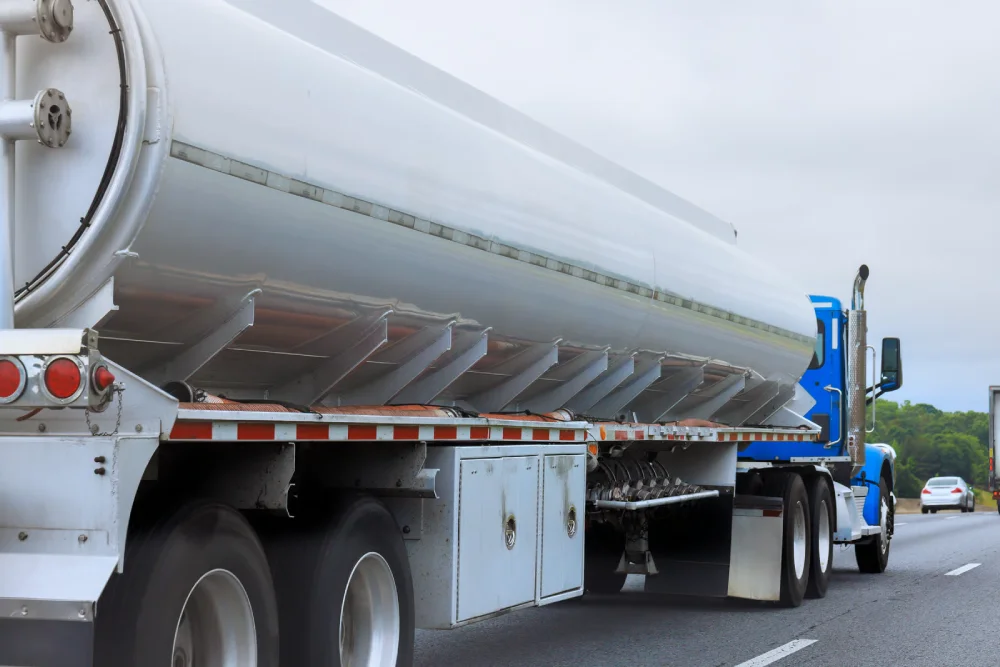
Which set of hours-of-service rules applies depends on whether the carrier operates across provincial boundaries or only within Alberta. Extra-provincial carriers are federally regulated; a purely intra-provincial Alberta operation is governed by Alberta's own regulation, and the limits are not the same. Applying the wrong standard is a common error.
Evidence disappears on a schedule
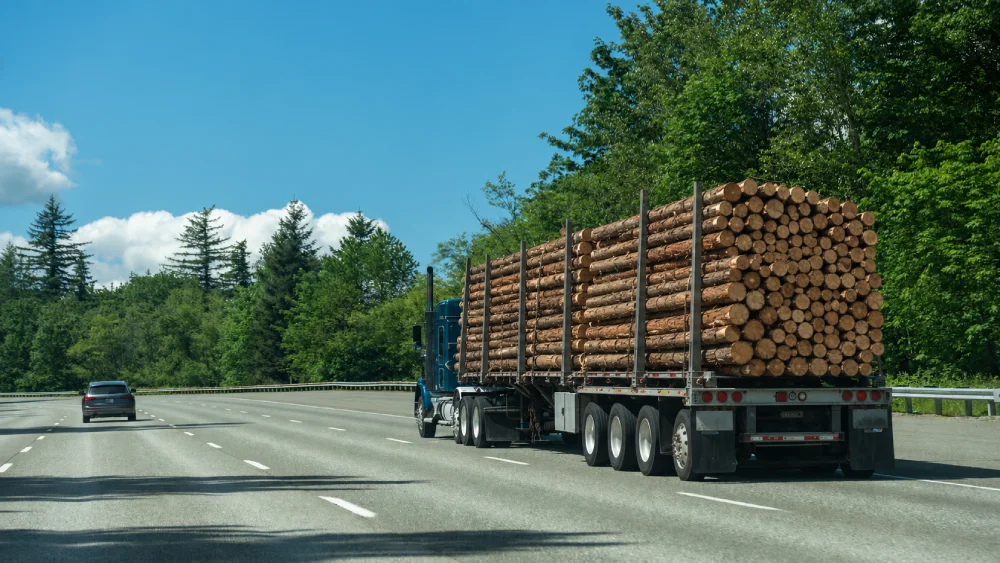
Electronic logging device data, dispatch records and maintenance files are often retained only for a set period. A preservation demand sent early is frequently the difference between a provable claim and an argued one.
Weight, load and dimension compliance
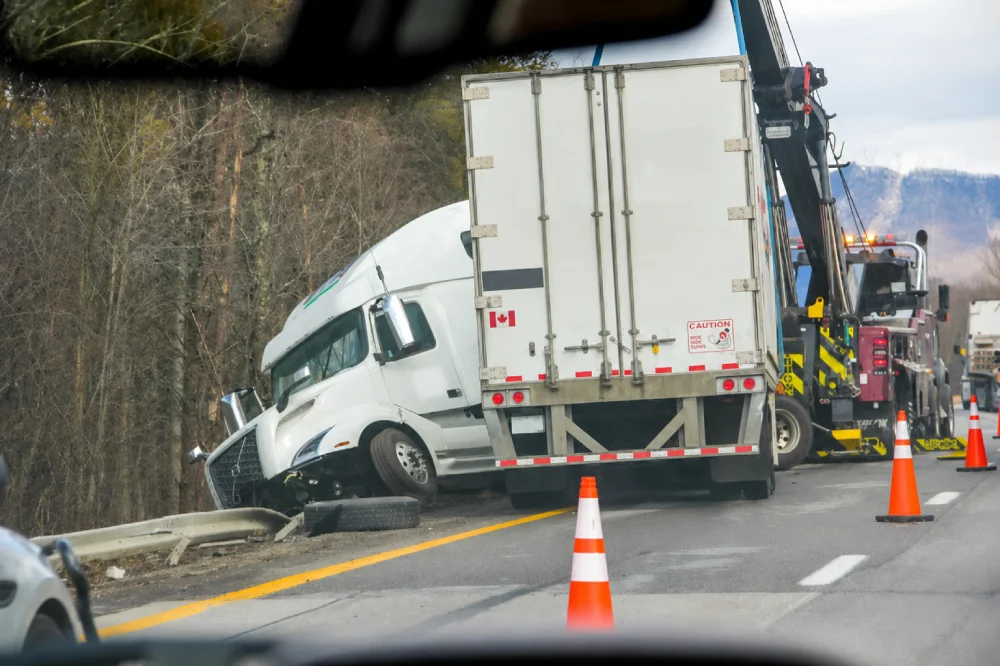
Overloaded, improperly distributed or unsecured loads change how a vehicle behaves. Alberta regulates commercial vehicle weights and dimensions, and non-compliance can be relevant evidence of a failure to meet the standard of care — though it is evidence, not automatic liability.
.webp)
A driver's duty is not limited to crosswalks
Alberta requires drivers to yield to pedestrians crossing within a crosswalk, and prohibits overtaking a vehicle stopped at a crosswalk for a pedestrian. Outside a crosswalk the pedestrian yields — but a driver still owes a duty to exercise due care for pedestrian safety. Being outside a crosswalk is not an answer to a claim.
.webp)
If the driver left the scene, notice is due in 90 days
Where the driver cannot be identified, a claim against the Motor Vehicle Accident Claims Fund is possible — but written notice must be given to the Administrator within 90 days of the accident, and reasonable efforts to identify the driver are required. Alberta's own guidance is that failing to give notice can result in the claim being denied. This deadline is separate from and much shorter than the limitation period.
.webp)
Accident benefits apply even without a vehicle of your own
A pedestrian struck by a vehicle may still have access to accident benefits, through a household policy or the striking vehicle's insurer. This is worth checking immediately, because the claim form has a short deadline.
.webp)
Left-turn and lane-change collisions
The most common serious motorcycle collision involves a driver turning across a rider's path or moving into their lane. Drivers frequently say they did not see the motorcycle. Failing to see a vehicle that was there to be seen is not a defence, and the evidence usually bears that out.

Opening a door into traffic
Alberta prohibits opening a vehicle door unless it is reasonably safe to do so and it will not interfere with traffic. A rider struck by an opening door has a straightforward claim on liability, though the injuries are often anything but straightforward.

Helmet use and shared fault
Helmet use can be raised on the question of shared responsibility for head injury, but it does not end a claim. Alberta apportions damages where more than one party is at fault, and the argument only goes as far as the medical evidence supports.
.webp)
The 90-day notice deadline
For a claim involving an unidentified driver, written notice must be given to the Administrator of the Motor Vehicle Accident Claims Fund within 90 days of the accident. Alberta's own guidance states plainly that failing to notify can result in the claim being denied. In some circumstances the period can be waived or extended, but that should never be relied on. This is the single most important thing to know on this page.
Report to police and canvass for video
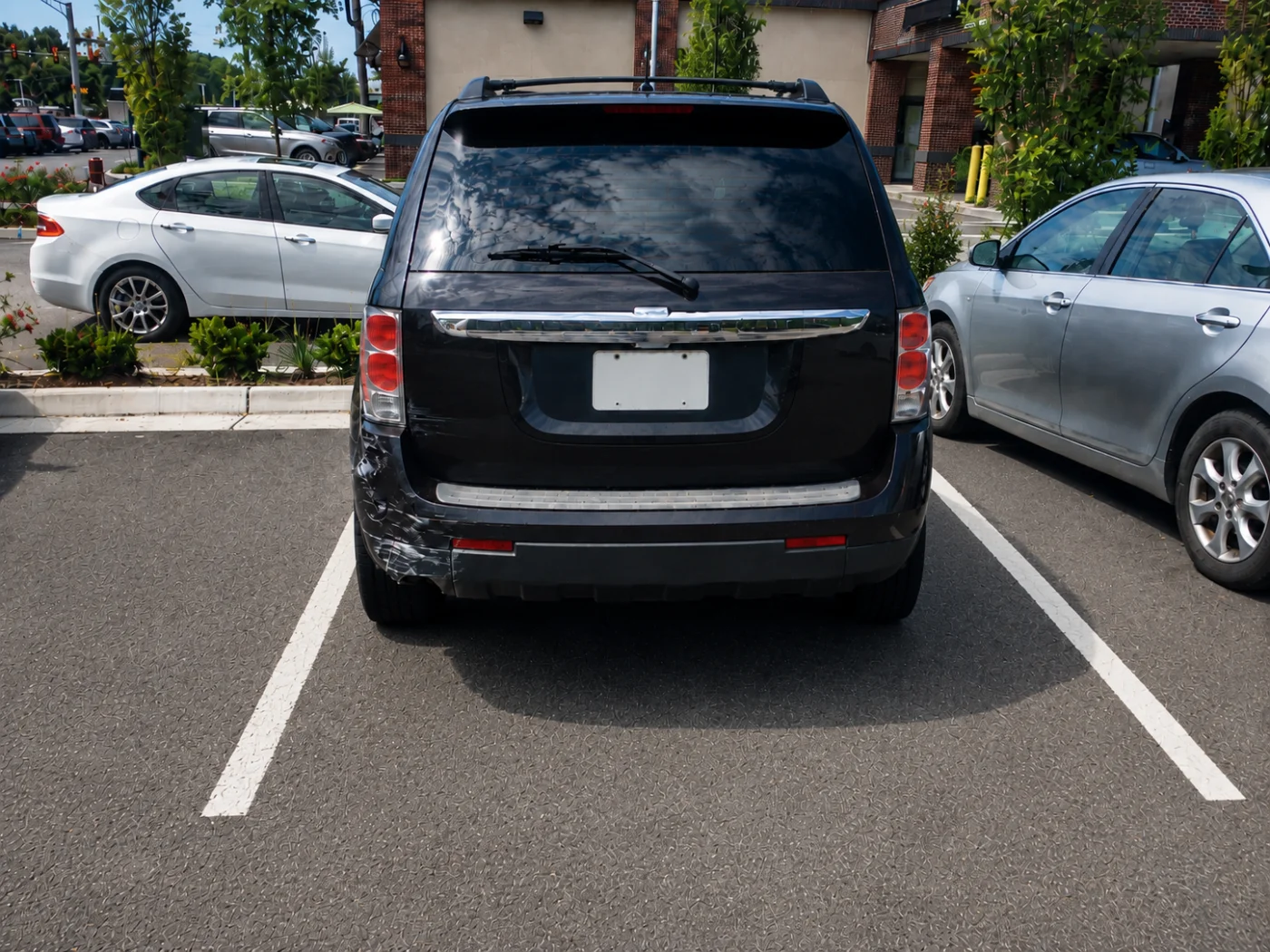
A police report supports the claim and is usually expected. Nearby businesses, residences and vehicles may have recorded the collision, and that footage is often overwritten within days or weeks. Asking early matters more than asking thoroughly later.

Notify your own insurer promptly
Coverage that responds where the other driver is uninsured or underinsured generally requires notice as soon as you are aware that may be the position. Late notice can affect access to that coverage.
.webp)
The criminal case and the injury claim are separate
Police and prosecutors decide whether criminal charges will proceed. A civil injury claim deals with the harm caused by the collision and the compensation available. A charge or conviction can be important evidence, but it does not by itself establish the full value of the claim.

Do not wait for the criminal case to finish
A criminal prosecution can take time, and it does not automatically stop the limitation period for a civil injury claim. Video, witness information, vehicle data and other evidence can also disappear. The claim should be assessed early rather than waiting for the criminal case to conclude.

Impairment does not determine the value of the claim
Compensation is based on the injuries and losses supported by evidence—not simply the driver’s blood-alcohol level, charge or sentence. Medical treatment, income loss, future care, out-of-pocket expenses and the long-term effect on daily life must each be properly documented.
Disputed and shared liability
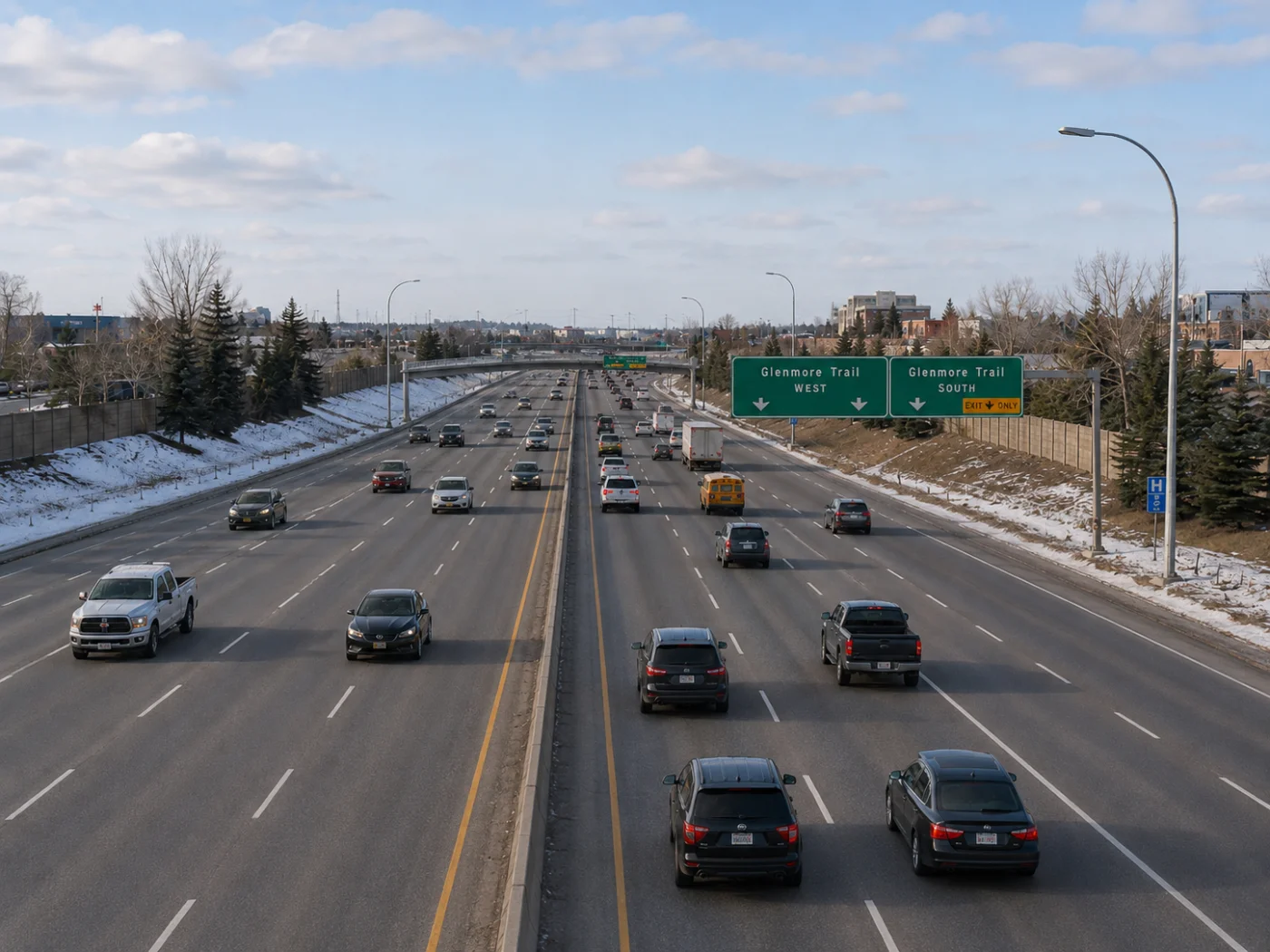
Alberta apportions damages where more than one person is at fault, so an insurer has a direct incentive to argue you contributed. Rear-end collisions, left turns and lane changes are frequently contested. The response is evidence — the collision report, vehicle damage, scene photographs and, where warranted, a reconstruction.
.webp)
The minor injury cap
Damages for pain and suffering are capped in certain minor injury claims — sprains, strains and some whiplash injuries that do not result in a serious impairment. Whether an injury meets that definition is often the central dispute. The cap does not touch income loss, cost of care or out-of-pocket expenses.
Accident benefits and the tort claim
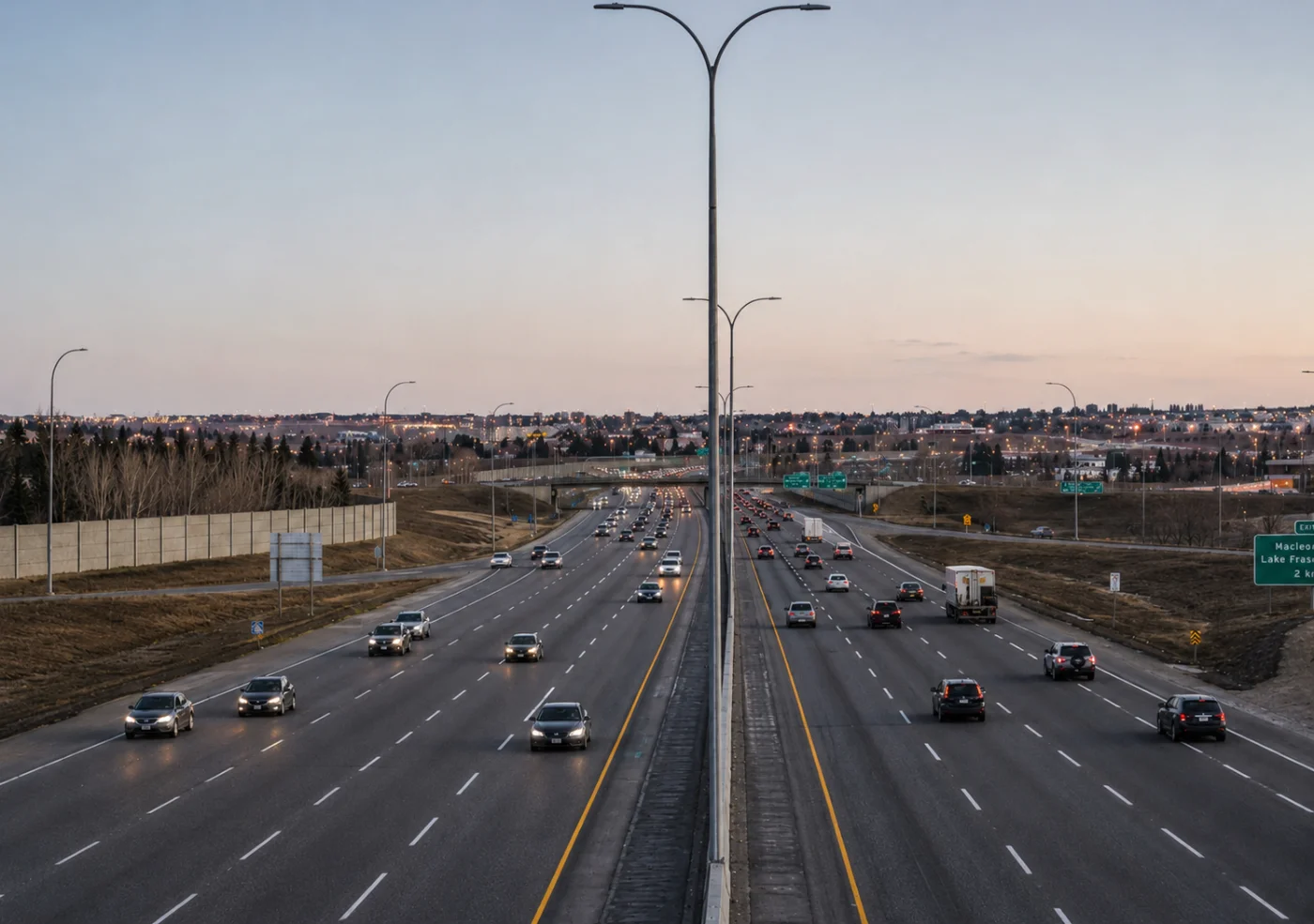
These are two separate things. Accident benefits under your own policy are available regardless of fault and have their own short deadlines. The claim against the at-fault driver is separate. Both need to be handled, and benefits received can affect the tort claim.

Claims involving a municipality can carry short notice deadlines
Where a claim is against a municipality, Alberta's Municipal Government Act imposes short written notice requirements in defined circumstances — measured in days rather than years. Whether one applies depends on the nature of the claim, and it is a question to resolve immediately rather than later.
.webp)
Carrier duty of care is a common-law standard
Alberta does not codify a special statutory duty for carriers. The obligation is the common-law duty to take reasonable care in the circumstances — but what is reasonable for an operator carrying standing passengers on a fixed route is a demanding standard, and the operational records usually show whether it was met.
.webp)
Video and telematics are decisive but temporary
Most modern buses record. That footage frequently resolves a disputed account outright — and it is frequently overwritten on a short cycle. A preservation request in the first days is worth more than months of argument later.

Fatal Capsizing on Bow River
A family lost their breadwinner when a commercial tour boat capsized during adverse weather conditions, resulting in drowning despite the use of a life jacket. The tour operator’s insurer initially disputed the extent of liability, asserting that the deceased had assumed certain risks. Our boat accident lawyers reviewed and relied on Section 140 of the Canada Shipping Act, 2001 and the Small Vessel Regulations (SOR/2010-91) to assess whether the operator met applicable safety and operational obligations, including weather-related decision-making and onboard safety measures. Through the claims process, the family pursued compensation under Alberta’s Fatal Accidents Act (RSA 2000, c F-8) to address lost financial support, funeral expenses, and counselling needs.
.webp)
Marina Fueling Station Fire
A recreational angler suffered second- and third-degree burns after a flash fire occurred during refuelling at a marina, when a neighbouring vessel’s fuel line ruptured. The marina’s insurer disputed liability, citing concerns about vessel maintenance. Our boat accident lawyers relied on expert evidence and relevant provisions of the Canada Shipping Act, 2001, including Section 106 relating to safe vessel operation, as well as Section 17 of the Marine Liability Act, to assess potential shared responsibility between the marina and the vessel owner. Through the claims process, compensation was pursued to address medical treatment, rehabilitation needs, permanent scarring, and loss of enjoyment of life.

Pontoon Collision
A family on a recreational outing was involved in a collision with a powerboat travelling at excessive speed, resulting in serious injuries to the mother and psychological distress to her children. The powerboat operator’s insurer initially disputed the extent of liability, suggesting contributory factors related to vessel positioning. Our boat accident lawyers reviewed the incident under the Canada Shipping Act, 2001, and the Collision Regulations (C.R.C., c. 1416), including requirements related to lookout and safe navigation. Through the claims process, the family was able to pursue compensation addressing medical care, psychological treatment, and property damage associated with the incident.

Doorings
Alberta prohibits opening a vehicle door unless doing so is reasonably safe and will not interfere with traffic. That obligation sits on the person opening the door. A cyclist riding lawfully in a bike lane who is struck by an opening door has a strong position on liability.

Right-Hook and Left-cross Collisions
A driver turning across a cyclist's path is among the most common serious cycling collisions. Drivers frequently say they did not see the cyclist; that is generally not an answer, and video and scene evidence usually establish what was visible.

If the driver left the scene
A claim against the Motor Vehicle Accident Claims Fund may be available where the driver cannot be identified — but written notice must be given to the Administrator within 90 days of the accident, and reasonable efforts to identify the driver are required. This deadline is far shorter than the limitation period.

The international deadline extinguishes the claim
For international carriage the convention provides that the right to damages is extinguished if an action is not brought within two years, running from the date of arrival, the date the aircraft ought to have arrived, or the date the carriage stopped. This is not an ordinary limitation period. It is not subject to the discoverability rule that governs other Alberta claims, and it is not suspended because the injured person was a child or was under a disability. Once it passes, there is nothing left to revive.

Below the threshold, the carrier's fault is not the issue
For death or bodily injury caused by an accident on board or during boarding or disembarking, the convention imposes liability on the carrier without regard to fault up to a defined limit expressed in Special Drawing Rights. The carrier cannot exclude or limit its liability below that figure. Above it, the carrier bears the burden of disproving negligence. A carrier saying it was not at fault is, below the threshold, largely beside the point.

Safety board findings are restricted in litigation
Canada's transportation safety board conducts no-blame investigations. By statute, its findings do not assign fault or determine liability, an investigator's opinion is not admissible in legal proceedings, investigators are generally not compellable as witnesses, and on-board recordings are privileged. A report can be a useful factual starting point, but a claim has to be built on independently obtained evidence.
More results across different cases
Do you want help with your case?
Calgary, Alberta, T2E 8K4
Fri: 8 AM – 2 PM
Sat – Sun: Closed