%20(1).png)
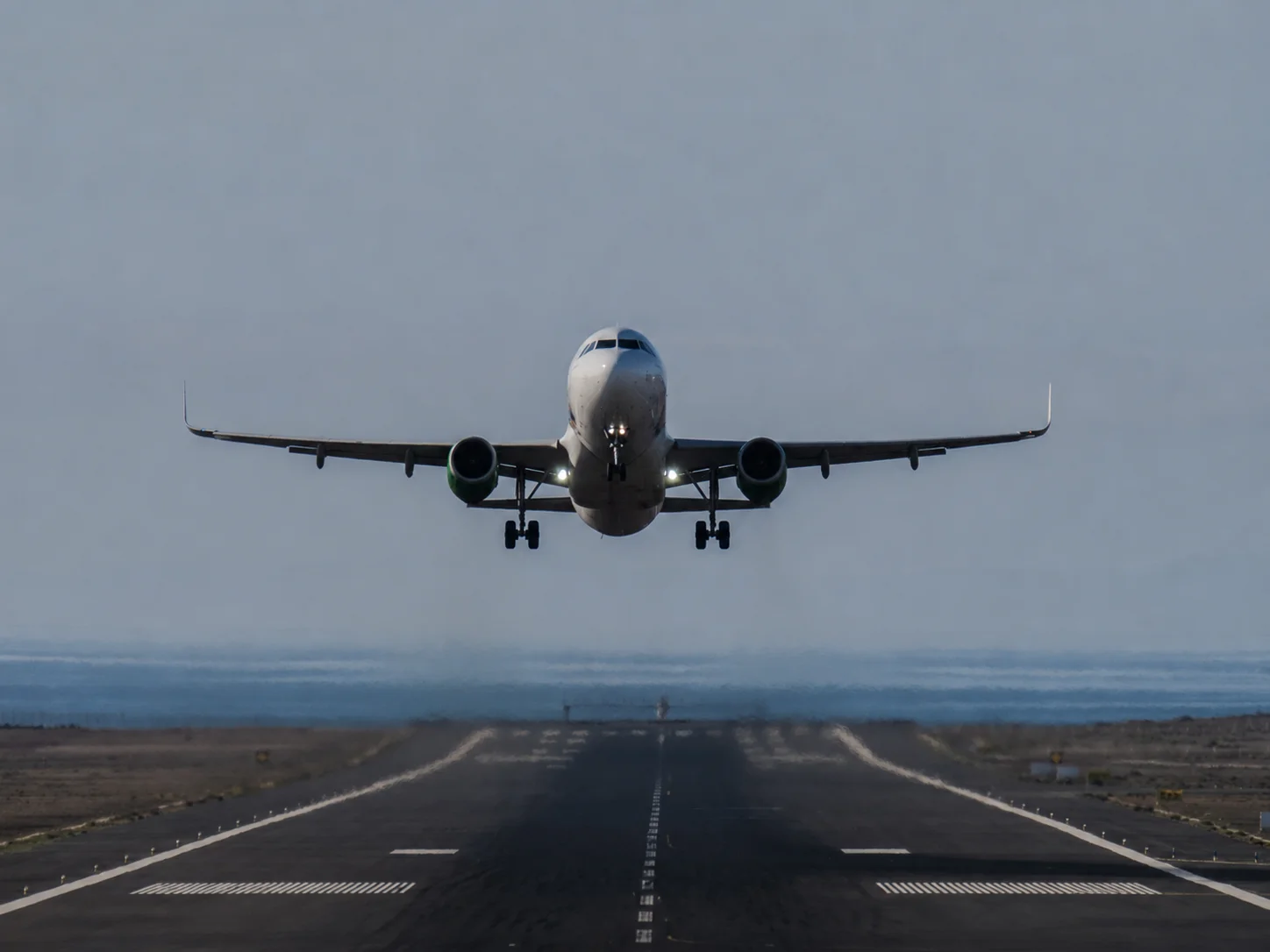
Aviation Accident Lawyer in Calgary




At Yanko Popovic Sidhu, we act for passengers and families in claims arising from aviation incidents.
.webp)
As your aviation accident lawyers
The lawyers at Yanko Popovic Sidhu have acted for injured Albertans for more than 40 years, and have represented thousands of clients over that time. Aviation claims sit in a different legal framework from any other injury claim, and the deadline that applies to an international flight is unforgiving in a way most people — and many lawyers — do not expect.
.webp)
Who we act for
We act for:
- Passengers injured on commercial flights, including in turbulence and during boarding or disembarking
- People injured in general aviation, charter and helicopter incidents
- Families of people killed in aviation accidents
- People injured by aircraft or airport ground operations
What an aviation lawyer does on your claim
 International carriage claimsFor international carriage, a convention given force of law in Canada governs and displaces ordinary negligence law. Within its scope, no action can be brought on any other basis. It has its own liability structure, its own defences and its own deadline.Get in touch
- Domestic flights and general aviationA purely domestic Canadian flight is not automatically governed by the convention. The carrier's tariff must be read, because Canadian carriers commonly adopt convention-style limits by contract. Where it does not apply, the claim proceeds in ordinary negligence.Get in touch
- Fatality claimsAviation fatalities involve dependency and estate claims alongside the aviation framework itself, and often multiple jurisdictions. These require early and careful handling.Get in touch
More than 40 years acting for injured Albertans

The international deadline extinguishes the claim
For international carriage the convention provides that the right to damages is extinguished if an action is not brought within two years, running from the date of arrival, the date the aircraft ought to have arrived, or the date the carriage stopped. This is not an ordinary limitation period. It is not subject to the discoverability rule that governs other Alberta claims, and it is not suspended because the injured person was a child or was under a disability. Once it passes, there is nothing left to revive.

Below the threshold, the carrier's fault is not the issue
For death or bodily injury caused by an accident on board or during boarding or disembarking, the convention imposes liability on the carrier without regard to fault up to a defined limit expressed in Special Drawing Rights. The carrier cannot exclude or limit its liability below that figure. Above it, the carrier bears the burden of disproving negligence. A carrier saying it was not at fault is, below the threshold, largely beside the point.

Safety board findings are restricted in litigation
Canada's transportation safety board conducts no-blame investigations. By statute, its findings do not assign fault or determine liability, an investigator's opinion is not admissible in legal proceedings, investigators are generally not compellable as witnesses, and on-board recordings are privileged. A report can be a useful factual starting point, but a claim has to be built on independently obtained evidence.
Frequently Asked Questions: Aviation Claims
I was injured by turbulence. Do I have to prove the airline did something wrong?
I was injured by turbulence. Do I have to prove the airline did something wrong? Answer 1: For international carriage, generally no. The convention makes the carrier liable for death or bodily injury caused by an accident that took place on board or during boarding or disembarking — and severe turbulence causing injury to a seated passenger is the classic example. Up to a defined limit the carrier cannot exclude or limit its liability at all, so a denial of fault does not answer the claim. Above that limit the burden shifts to the carrier to disprove negligence. Contributory negligence remains available to the carrier as a defence in either case.
How long do I have to bring an aviation claim?
For international carriage, two years — and it is genuinely absolute. The right to damages is extinguished if the action is not brought in time, running from arrival or scheduled arrival rather than from when you discovered the injury. Alberta's rules extending time for children or persons under a disability do not apply. For a domestic flight or a general aviation incident, Alberta's limitation legislation governs. Because the two are so different, the flight itself needs to be characterised at the outset.
Who can be responsible in an aviation accident?
Depending on the circumstances: the carrier or operator, the aircraft owner, a maintenance organisation, a component manufacturer, or a party responsible for ground operations. Where an international convention governs the carrier's liability, claims against parties outside its scope may proceed on different principles and different deadlines — which is one reason these claims need to be assessed as a whole rather than one defendant at a time.
What does it cost to hire a lawyer for this?
We act on a contingency fee basis, which means you pay no legal fees unless compensation is recovered. Disbursements — the out-of-pocket costs of running a file, such as medical records, expert reports and court filing fees — and applicable taxes may still apply. We will explain the arrangement in writing before you retain us.
Do you want help with your case?
Calgary, Alberta, T2E 8K4
Fri: 8 AM – 2 PM
Sat – Sun: Closed