Future care costs personal injury claims deal with one of the most important parts of any injury case: the money needed for long-term medical care, support, and recovery. If these costs are underestimated, injured individuals may struggle financially for years. This guide explains how future care costs in personal injury claims are calculated, what they include, and how to protect your rights in Alberta.
Future Care Costs Personal Injury
Future care costs personal injury refers to the projected lifetime cost of medical care, rehabilitation, and daily assistance required after an injury. These costs ensure injured individuals receive proper care long after a claim is settled.
When someone suffers a serious injury, recovery doesn’t stop after hospital discharge. In many cases, the injury requires ongoing medical care, rehabilitation, and lifestyle adjustments. That’s where future care costs personal injury claims come in.
These claims account for everything from physiotherapy and medication to full-time attendant care. Unlike immediate expenses, they project costs years, sometimes decades, into the future.
Here’s what many people don’t realize: once a settlement is finalized, you cannot go back and ask for more. If your future care costs personal injury claim is underestimated, you absorb the financial burden yourself.
What Expenses Are Included in Future Care Costs?
Future care costs personal injury claims go far beyond hospital bills. They cover everything needed to maintain quality of life after an injury.
| Category | What It Covers |
| Medical Care | Surgeries, medications, follow-ups |
| Rehabilitation | Physical therapy, occupational therapy |
| Attendant Care | In-home caregivers, nursing support |
| Assistive Devices | Wheelchairs, prosthetics, mobility aids |
| Home Modifications | Ramps, lifts, accessible bathrooms |
| Mental Health | Counselling, psychological therapy |
In serious cases, especially those involving catastrophic injuries or brain injury, the cost of future care can reach millions. Many injuries prevent individuals from returning to normal routines, requiring full-time support.
A person with a spinal injury may require lifelong attendant care, specialized equipment, and repeated medical interventions. Over time, these costs compound quickly.
How Future Care Costs Are Calculated in Personal Injury Claims
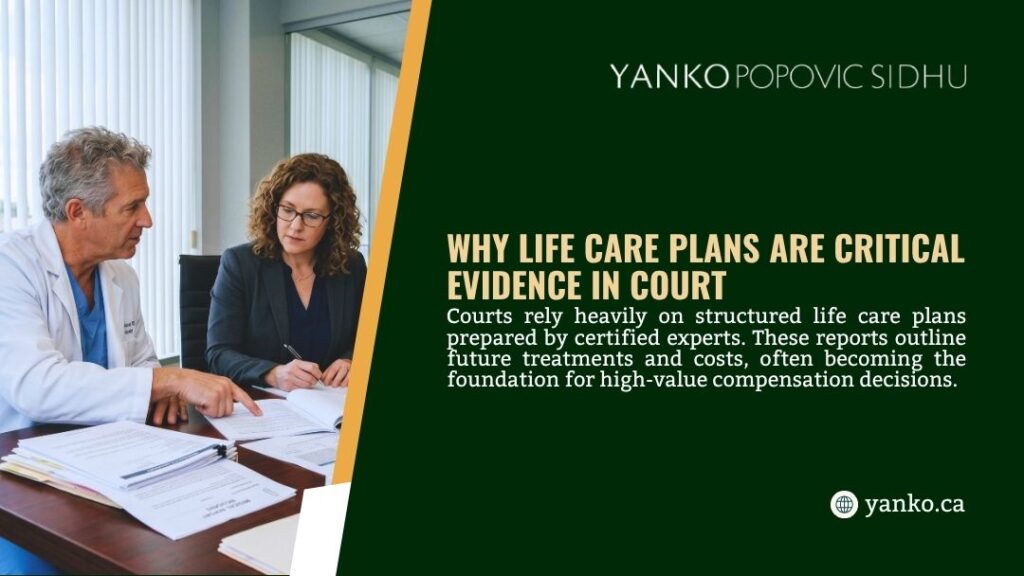
Future care costs personal injury claims rely on expert analysis rather than estimates. Medical professionals determine the care required. Economists project financial impact. Life care planners create structured reports that outline long-term needs.
According to the International Academy of Life Care Planners (IALCP) and AANLCP, a life care plan outlines all future medical and support needs of an injured person and assigns a cost to those needs over their lifetime.
This process considers life expectancy, severity of injuries, medical care requirements, and inflation and rising health care costs. Many people underestimate how quickly these costs grow. What seems manageable today may become overwhelming within a few years.
Why Future Care Costs Can Make or Break Your Settlement
Future care costs personal injury damages often represent the largest portion of compensation in serious cases. Insurance companies know this, and they act accordingly.
They may argue that certain treatments are unnecessary, care needs will decrease over time, and less expensive alternatives are sufficient. But here’s the problem: injuries don’t always improve. In many cases, they worsen or require ongoing support.
If you’ve faced an insurance company’s lowball offer in a car accident situation, you’ve already seen how insurers attempt to reduce payouts. This can leave families overwhelmed, unsure how they’ll manage long-term care costs. That’s why many people consult a car accident lawyer in Calgary early in the process, to ensure long-term costs are properly calculated and defended.

How Insurance Companies Undervalue Future Care Costs Personal Injury Claims
Insurance companies use several strategies to minimize future care costs and personal injury payouts. They may rely on internal medical reviews that downplay injury severity. They may question whether certain treatments are truly necessary. Sometimes, they push for early settlements before long-term needs become clear.
In Alberta, courts have repeatedly emphasized that future care awards must reflect realistic, medically supported needs, not insurer assumptions. The challenge is this: without strong evidence, insurers control the narrative. With proper documentation and expert input, that balance shifts.
Real Examples of Future Care Costs in Injury Cases
| Injury Type | Estimated Lifetime Cost |
| Brain Injury | $1M – $5M+ |
| Spinal Cord Injury | $2M – $6M+ |
| Severe Burns | $500K – $2M |
| Orthopedic Injury | $100K – $500K |
According to data from the Praxis Institute, spinal cord injuries alone can exceed $2 million in lifetime care costs depending on severity.
That number doesn’t include lost wages or emotional impact. For example, in Alberta, individuals with catastrophic injuries often require structured life care plans that can exceed several million dollars over their lifetime, depending on the level of care required and life expectancy.
When Should You Settle a Claim Involving Future Care Costs Personal Injury?
Timing matters more than most people think. Settling too early is one of the most common mistakes in personal injury claims. At the early stages, the full extent of injuries and future care costs may not be clear.
Here’s what often happens: a person accepts a personal injury settlement, only to discover later that their condition requires ongoing treatment they didn’t anticipate. That’s why waiting until your medical condition stabilizes is critical before finalizing any agreement.
What to Expect at an Independent Medical Exam (IME)?
In many future care costs personal injury claims, insurers request an Independent Medical Exam. This assessment is conducted by a doctor chosen by the insurance company.
The goal? To evaluate your injuries and sometimes challenge your care needs. During an IME, your medical history is reviewed, your condition is assessed, and a report is generated for the insurer
Many people don’t realize that this report can significantly influence the outcome of their claim. Preparation matters.
Common Mistakes That Reduce Future Care Compensation
A surprising number of claims fall short, not because the injury isn’t serious, but because of avoidable mistakes. Many people settle too early. Others fail to include home care or mental health support. Some don’t account for inflation, which can significantly increase long-term medical costs.
Another common issue? Not consulting specialists. Without expert reports, insurers may dispute claims, leaving injured individuals with far less than they need.
Future Care Costs vs Future Earning Capacity Claims
These two are often confused, but they serve different purposes.
| Type of Claim | Purpose |
| Future Care Costs Personal Injury | Covers medical and support expenses |
| Future Earning Capacity Claim | Compensates for the lost ability to earn income |
Both are essential in serious cases. One addresses survival; the other addresses financial independence.
How Alberta Law Handles Future Care Costs?
In Alberta, courts recognize the importance of future care costs personal injury damages as part of pecuniary losses. The goal is simple: restore the injured person, as much as possible, to their pre-accident condition.
This includes ongoing medical care, rehabilitation support, necessary assistive devices, and long-term home care. A clear distinction between pecuniary vs non-pecuniary damages helps separate measurable financial losses from the non-financial impact on quality of life.
The Yanko Popovic Sidhu Difference: Why Direct Lawyer Access Matters
At some firms, clients deal with case managers and rarely speak with the lawyer handling their case. At Yanko Popovic Sidhu, you work directly with experienced lawyers from day one.
This hands-on approach ensures your future care costs personal injury claim is handled with precision, attention, and accountability. It’s not a process-driven system; it’s a personal commitment to each client’s outcome.
When You Need a Personal Injury Lawyer
Future care costs personal injury claims can quickly become complex, especially in catastrophic cases. If your injuries require ongoing care, legal support becomes essential.
For example, a catastrophic injury lawyer can help quantify long-term care needs, a brain injury lawyer ensures neurological impacts are fully considered, and a car accident compensation claim often includes future care projections
How to Strengthen Your Future Care Costs Claim
Strong claims are built on evidence, not assumptions. Medical records must clearly show ongoing needs. Expert opinions should support every projected expense. Documentation of home care and rehabilitation plays a key role.
And here’s what often gets overlooked: consistency. If your treatment plan shows gaps, insurers may argue that certain care isn’t necessary. That’s why structured guidance, from both medical professionals and experienced personal injury lawyers, makes a difference.
FAQs About Future Care Costs Personal Injury
How do lawyers calculate future care costs in personal injury cases?
Future care costs personal injury calculations are based on medical evidence, expert reports, and life care planning. Doctors assess the care required, while specialists estimate how those needs translate into long-term financial costs.
What types of expenses are included in future care costs personal injury claims?
These claims typically include medical treatments, physical therapy, attendant care, home modifications, assistive devices, and mental health support. In serious cases, they may also cover full-time care for life.
Can future care costs increase the value of a personal injury settlement?
Yes. In many cases, future care costs personal injury damages form the largest portion of a settlement. The more extensive the long-term care required, the higher the overall compensation.
Do insurance companies dispute future care costs personal injury claims?
Yes, often. Insurance companies may argue that certain treatments are unnecessary or that care needs will decrease over time. This is why detailed medical evidence and legal guidance are critical.
When should future care costs be assessed in a personal injury claim?
Future care costs should be evaluated once your medical condition stabilizes. Settling too early can lead to underestimating long-term needs, which cannot be corrected later.
What happens if future care costs are underestimated?
If future care costs personal injury claims are undervalued, you may have to cover medical and support expenses out of pocket. Once a settlement is finalized, it is typically not reopened.
Do I need a lawyer to claim future care costs in Alberta?
While not legally required, working directly with an experienced personal injury lawyer helps ensure your future care costs are reflected in your personal injury claim, not just what insurers are willing to offer.
How does a lawyer help maximize future care costs personal injury claims?
A lawyer gathers medical evidence, works with experts, challenges insurer assumptions, and ensures every aspect of your future care is accounted for. At firms like Yanko Popovic Sidhu, clients work directly with lawyers rather than case managers, so nothing gets overlooked.

What This Means for Your Case
Future care costs personal injury claims are about more than compensation; they’re about your future stability. A rushed decision or incomplete assessment can leave you dealing with financial strain for years. If your injury requires ongoing care, don’t leave your future to guesswork.
Speaking directly with an experienced lawyer, someone who understands long-term care needs, can help ensure nothing is overlooked and that your claim reflects the full reality of your situation.