If you’re asking should I accept first settlement offer car accident, you’re already ahead of the game. The first offer often arrives before you’ve had time to fully understand your injuries, your lost income, and what you’ll need long term. In Alberta, caps and benefits can shape the number, but the paperwork you sign matters just as much as the dollar figure.
You’re here because an adjuster floated a number, and you’re tempted to take it and move on. Totally human. But here’s the thing: should I accept first settlement offer car accident is rarely a yes/no question. It’s a timing and risk question, and Alberta has its own rules that change the math.
Should I accept First Settlement Offer Car Accident
When people type should I accept first settlement offer car accident, they usually mean one of two things: either the insurance company offered a lump sum to close the injury claim, or they offered a smaller payment tied to early expenses while quietly steering you toward a full and final release.
In plain terms, the first settlement offer is often the insurer’s opening position in settlement negotiations. It’s not a moral judgment, and it’s not automatically bad. It’s a business move. Insurance adjusters work with uncertainty. Early on, they don’t know the extent of your injuries, they don’t know how long you’ll miss work, and they don’t know whether your accident claims file will turn into a larger dispute. So they price that uncertainty in their favor.
That’s why the safest way to answer should I accept first settlement offer car accident is to treat the first number as a starting point, then compare it to real-world evidence: medical records, rehab plans, wage proof, and a realistic view of pain and suffering, especially if symptoms shift over weeks or months.
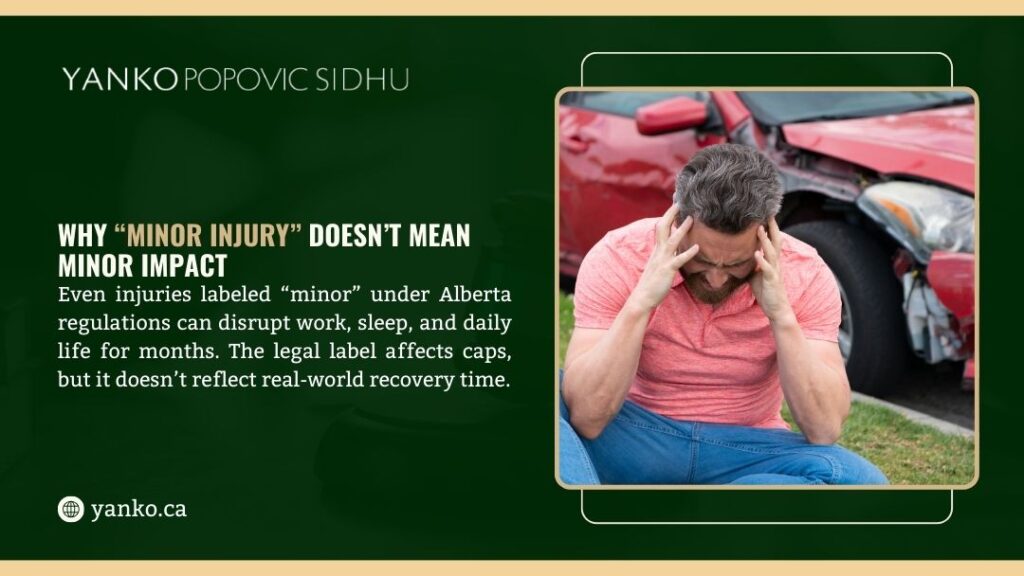
Alberta adds another layer. If your injuries fall under the Minor Injury Regulation, your non-pecuniary damages (pain and suffering) may face a cap that changes year to year, including a 2026 amount that the provincial regulator publicly set. That doesn’t mean your whole case is capped, but it can affect what a fair offer looks like.
Why a First Offer Shows Up Fast, and Why That Matters
If you’ve ever wondered why the phone rings so quickly after a crash, it’s because speed benefits the insurance company. Early offers often arrive before the full claims process produces clarity. That timing can matter more than the dollar value.
Right after a motor vehicle accident, lots of costs stay fuzzy. Pain can flare after adrenaline wears off. Doctors may start conservatively, then revise plans once symptoms persist. Work restrictions can stretch. And some injuries, especially back, neck, or concussion-type symptoms, don’t always present cleanly on day one.
So when you ask should I accept first settlement offer car accident, the better question is: do I have enough information to value this claim without guessing? Fully understanding your situation is the difference between a fair settlement offer and a fast exit.
What you give up when you accept an offer
This is the part people underestimate. When you accept an offer, it’s often not just acceptance; it’s closure. Most settlements require you to sign a release. A release can cut off the right to claim more later, even if your condition worsens.
That’s why accepting the first settlement offer car accident isn’t only about the number. It’s about the legal effect of the paperwork.
If your settlement closes your claim and your symptoms become long-term, you may have traded away your ability to pursue the compensation you deserve for future care, future income loss, or additional pain and suffering. That’s a brutal trade, and it happens because people assume the first offer includes room for later. It usually doesn’t.
In Alberta, it’s also common for people to confuse Section B accident benefits with the settlement of a tort claim. Section B benefits are no-fault benefits under the Alberta standard auto policy framework. They can help with treatment and disability-related support early, without waiting for the fault to resolve. That can be helpful, but it’s not the same thing as a final car accident settlement.
So if your core question is should I accept first settlement offer car accident, make sure you know whether the insurer is talking about benefits payments or a full settlement that ends your ability to sue for damages.
Signs the First Offer is a Lowball Number
A first offer tends to look suspicious when it ignores categories that show up in almost every serious accident claim: lost income, future treatment, and the real impact of pain and suffering. Another red flag: urgency. If the adjuster pushes you to sign quickly, so the cheque can go out today, that’s not kindness. It’s leverage.
If you’re asking should I accept first settlement offer car accident, and the offer arrived before you finished treatment, before your doctor confirmed a stable prognosis, or before you returned to full duties at work, you’re not negotiating from a place of clarity. You’re negotiating from uncertainty, and insurers love uncertainty.
This also shows up in how the number gets explained. If the adjuster can’t walk you through how the settlement offer accounts for the extent of your injuries, your missed pay, and your out-of-pocket costs, the offer may be more about closing the file than ensuring you receive fair compensation.

Offer a Reality Check for Alberta Accident Claims
| What the offer mentions | What it often skips | What you need before you decide |
| Pain and suffering | Future symptoms, chronic pain risk, long-term limits | Medical notes, treatment plan, symptom timeline |
| Some treatment costs | Future rehab, meds, devices, private therapy | Receipts, recommended care schedule, and prognosis |
| Lost wages (small figure) | Reduced earning capacity, missed overtime, and benefits loss | Employer letter, pay stubs, tax records, job restrictions |
| Quick resolution | Full and final wording that ends claims | Copy of release, time to review, legal representation |
If you’re still stuck on should I accept the first settlement offer, this table gives a simple rule: if the offer skips a category you can prove, don’t treat it as final.
What to Calculate Before You Answer the Insurance Company
Here’s how it works in real life: you can’t evaluate a settlement offer until you translate your injury into costs and consequences. That means math, documentation, and timing.
Start with treatment. Not just what you’ve paid, but what your providers expect you’ll need. Then add lost income. In Alberta accident claims, wage loss isn’t only about days missed. It can include modified duties, reduced hours, missed contracts, and career delays. Then there’s pain and suffering, which is harder to price but still real. It’s not about drama; it’s about how your daily life changed.
This is where accepting the first settlement offer car accident becomes a valuation exercise. If you don’t have the inputs, you can’t trust the output.
A practical step many people skip: write down symptom changes week by week. Insurance adjusters look for consistency. If your records show a clear timeline and the medical chart lines up, your credibility rises, and settlement negotiations shift.
If you’re looking at value and damage categories from a local Alberta perspective, seeing how a personal injury settlement is typically structured can make it easier to understand how the different pieces fit together without having to rely on guesswork.
Alberta-Specific Issues That Change The Decision
If you’re in Alberta, a car accident claim comes with two additional realities: limitation periods and the minor injury cap framework.
First, limitation periods. Alberta’s Limitations Act sets time limits that can cut off claims if you wait too long, and lawyers in Alberta commonly reference the two-year basic limitation period for many personal injury actions. That doesn’t mean you should rush into a settlement. It means you should avoid sleepwalking through the timeline until leverage disappears.
Second, the Minor Injury Regulation. Alberta’s regulator publicly confirms annual changes to the minor injury amount. For 2026, the Superintendent of Insurance materials and listings state an increase effective January 1, 2026, with the minor injury cap amount set at $6,306.
Even more importantly, Alberta sources emphasize that this cap applies to non-pecuniary damages for qualifying minor injuries, not to the full range of losses, such as income loss or treatment costs.
So when you ask should I accept the first settlement offer, Alberta law pushes you toward one careful move: separate the categories. A capped pain-and-suffering number does not automatically mean the rest of your losses are trivial.
How to Respond If You Don’t Accept the First Offer
If you reject it, do it with structure. You don’t need to sound aggressive. You need to sound documented.
A smart response acknowledges the offer, then requests the basis for the valuation and outlines what evidence you have that changes the number. Keep it factual. “Here are my wage records.” “Here is my treatment plan.” “Here are my out-of-pocket costs.” “Here is what my doctor expects over the next X months.”
This is where legal representation can shift the balance. It’s not because lawyers have magic words. It’s because they can package the claim properly, spot gaps, and push back when adjusters blur categories or rush paperwork.
If you’re in Calgary and want a clearer sense of how a proper claim review usually plays out, it can help to look at how a car accident lawyer in Calgary approaches these situations, from assessing fault to understanding what compensation might realistically apply. Seeing the process through a local, real-world lens often makes the options and next steps feel a lot less overwhelming.

A Realistic Alberta Negotiation Timeline (What Happens in Practice)
| Time window | What you should focus on | What insurers often focus on |
| First 2 weeks | Medical assessment, symptom tracking, accident report, photos, notify insurer | Early statements, quick settlement feelers, file triage |
| Weeks 3–8 | Treatment plan, wage proof, functional limits, consistent follow-ups | Testing liability positions, discounting uncertainty |
| Months 2–6 | Prognosis clarity, future care estimates, and documentation of long-term effects | Settlement negotiations, pressure for closure |
| Later stage | If needed, formal dispute steps with stronger evidence | Risk management, cost control, and defense strategy |
If you read this timeline and think, “I’m still in week 3,” then accepting a first settlement offer for a car accident is probably premature.
Accident Benefits vs. A Settlement
A lot of Albertans get tripped up here. They hear benefits, they hear offers, and it blends into one idea.
Section B accident benefits exist to provide support after a crash regardless of fault, within policy limits and rules. A common reference point is that Section B medical and rehabilitation coverage can apply up to specified limits (often discussed as up to $50,000 per person in Alberta summaries of the standard policy structure). Those benefits can help with early care while liability gets sorted.
A tort settlement is different. It attempts to close out damage claims against the at-fault party’s insurer, including pain and suffering, income loss, and other losses.
So, when you ask about accepting the first settlement offer, confirm which bucket you’re in. You can accept benefits payments and still preserve your right to pursue a later settlement for damages, depending on the context. But if the insurer asks for a release, you’re probably not in benefits administration anymore; you’re in final settlement territory.
The Adjuster Tactics That Show Up Again and Again
One common tactic is selective valuation. The adjuster may accept that you missed work, but undervalue what that really cost you. Another is sympathy plus urgency, where the conversation sounds caring but ends with pressure. Another is framing the offer as standard, even when your injuries aren’t standard.
The reason these tactics work is simple: most accident victims don’t live in the claims world. They live in real life, and real life comes with pain, appointments, and bills.
That’s why should I accept first settlement offer car accident should be answered with a pause, a checklist, and a written counter if the evidence supports it.
If the crash involved an impaired driver, the emotional pressure can be heavier, and the legal angles can shift.
Common Mistakes That Shrink Car Accident Settlement Value
One of the fastest ways to lose value is to settle before you have a stable medical picture. Another is to treat pain and suffering as the only number that matters, when lost income and future care can drive the real value. Another is casual communication: offhand comments like I’m fine now can land badly when your medical file says otherwise.
People also forget the long term. A few months of modified work can look small until it turns into a year of reduced output, missed opportunities, or the need for ongoing therapy. If the first settlement offer ignores that, the question should I accept first settlement offer car accident becomes a warning light, not a green light.
If your injuries are severe, brain or spine injuries, for example, early settlement can be especially risky because the trajectory often takes time. For people in Alberta dealing with long-term or life-altering harm, having the right perspective early on matters.
That’s why many turn to experienced professionals who understand the medical and legal complexities involved, including access to brain injury lawyer in Calgary, where cases like these are handled with the patience and depth they require.
Settlement Value Drivers: Most First Offers Underweight
| Value driver | Why it matters | What proof usually strengthens it |
| Extent of your injuries over time | Early symptoms can shift; long-term pain changes valuation | Consistent records, specialist notes, rehab plans |
| Lost income beyond missed days | Reduced capacity can cost more than the initial time off | Employer letters, tax docs, restriction notes |
| Future treatment and care | Future costs can exceed initial bills | Treatment estimates, physician recommendations |
| Pain and suffering impact | Function limits can define quality-of-life loss | Functional assessments, daily activity limits |
Final Thoughts: Where this leaves you, and what to do next
If you came here asking should I accept first settlement offer car accident, here’s the honest takeaway: accepting the first offer is safest only when your medical picture is stable, your losses are fully documented, and the release terms don’t cut you off from what you still need. In every other situation, the first offer is more like a draft than a verdict.
And that’s why it matters. A settlement is not just money. It’s the point where you either protect your future or gamble on it.
If you’re stuck in the “I need answers today” zone, a free consultation with a lawyer who handles accident claims in Alberta can help you fully understand what’s on the table before you accept an offer.
If you’re looking for a firm overview and next steps, follow the practice area that matches your case. Because if you’re still wondering, should I accept first settlement offer car accident, the safest move is to slow the decision down long enough to get the valuation right.