If you rear ended someone who is at fault, or you’re being told you are, Alberta law starts with a presumption, not an automatic verdict. The trailing driver is often deemed at fault in rear-end collisions, but that isn’t the end of the story. Fault determination rules, road conditions, sudden stops, and evidence can shift responsibility. In this guide, we explain how it works in Alberta and what happens next.
Rear ended someone who is at fault
When people search for rear ended someone who is at fault, what they really mean is this: If I rear-end a car, is it automatically my fault? In most rear ended accidents, the trailing driver is presumed responsible. The logic is simple. Drivers must leave enough space to stop safely. If you hit a car from behind, insurers usually assume you failed to maintain a safe following distance. But that’s only the starting point.
In Alberta, being involved in a rear-end accident does not mean fault is permanently assigned. The presumption can be challenged. The insurance company assesses how the collision occurred, whether the brake lights were working, whether the lead vehicle stopped suddenly, and whether a third vehicle triggered the chain reaction. So if you rear ended someone who is at fault, it depends on the facts, not just the position of the vehicles.
Transport Canada data consistently shows rear-end collisions as one of the most common crash types nationwide, largely linked to distraction and inadequate following distance. You can review national collision trends through Transport Canada’s road safety reports. That prevalence explains why insurers default to the trailing driver, but frequency doesn’t eliminate nuance.
According to Alberta’s official collision statistics, the majority of major injury collisions occur in urban areas. Alberta’s 2023 report also shows that followed too closely was one of the reported improper driver actions in fatal and major injury collisions, while earlier Alberta casualty-collision reports identified followed too closely and driver inattention among the most frequently reported contributing factors. That pattern helps explain why insurers often begin with a presumption against the rear driver, but fault still depends on the specific facts of the collision.
What does it mean to rear-end someone?
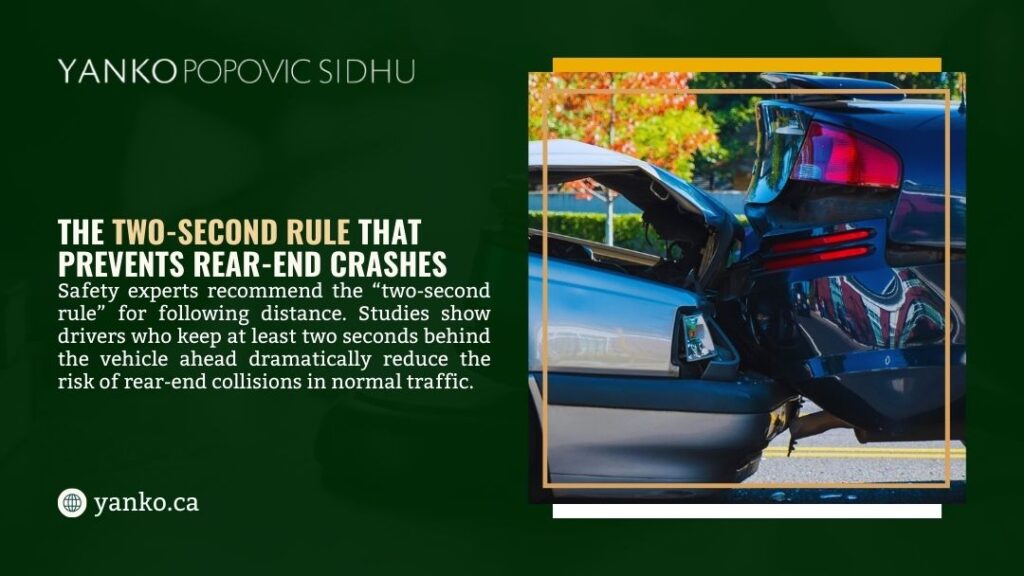
Rear-ended means one vehicle strikes the back of another. A rear-end collision may happen at high speed on a highway or at low speed in stop-and-go traffic. The term rear ending describes the act of striking a car from behind, while car was rear-ended refers to the vehicle that was hit.
In most rear ended car accident scenarios, the trailing driver bears responsibility because they control the following distance. However, who is at fault in a rear-end collision is not determined by impact position alone. The law asks whether a reasonable driver in the same circumstances could have avoided the crash.
Who is at fault in a rear-end collision in Alberta?
In Alberta, fault in rear-end collisions is assessed under negligence principles. The trailing driver is often deemed at fault because drivers must anticipate traffic slowdowns. If you rear ended a car, insurers may initially assign you responsibility.
However, Alberta also applies contributory negligence principles. That means more than one driver can be partially at fault. If the lead vehicle acted unpredictably, slammed on brakes without reason, reversed unexpectedly, or had no functioning brake lights, the analysis changes.
Alberta’s insurance system also separates property damage from bodily injury. Since the introduction of Direct Compensation for Property Damage (DCPD), drivers claim vehicle damage through their own insurer when another driver is at fault. That administrative process doesn’t replace the need to determine fault; it simply changes how repairs are paid.
So when someone asks, rear ended, who is at fault? the answer is this: usually the rear driver, but not always.
When is a rear-end collision not your fault?
A rear-ended collision may not be your fault when the lead vehicle stops suddenly for no valid reason. If a driver brake-checks you out of anger or stops in flowing traffic without hazard, the presumption can shift.
Another scenario involves a chain reaction. If a third driver hits you from behind and pushes your car into the lead vehicle, you may not be responsible for the impact in front. Courts and insurers examine who initiated the force that caused the crash.
Fault can also shift if the lead vehicle reverses unexpectedly. In parking lots, for example, a driver who backs into a stationary trailing vehicle may bear responsibility.
Mechanical issues matter too. If brake lights were not functioning, the trailing driver’s reaction time may have been compromised. Road conditions can play a role, but Alberta courts generally expect drivers to adjust speed for ice or snow. Simply blaming the weather rarely absolves a rear driver. The table below outlines common rear ended accident scenarios and likely fault outcomes.
| Scenario | Likely Fault Assessment | Notes on Evidence |
| Stop-and-go traffic, the trailing driver fails to stop | The rear driver is at fault | Skid marks, dashcam, distance between vehicles |
| Suddenly, an unnecessary stop by the lead vehicle | Shared or lead driver fault | Witnesses, dashcam, traffic flow context |
| The third vehicle pushes you into the car ahead | Rear-most driver at fault | Impact pattern analysis |
| Lead vehicle reverses unexpectedly | Lead driver at fault | Parking lot footage, vehicle position |
| Brake lights not working | Shared fault possible | Mechanical inspection, repair records |
If you rear ended someone who is at fault under one of these exceptions, proving it requires evidence. Insurers will not assume the exception without support.
Rear-end accident fault vs traffic tickets
People often assume that if they receive a ticket after a rear-end accident, the issue of fault is settled. It isn’t. A traffic citation and civil fault serve different purposes under Alberta law. One addresses compliance with traffic regulations. The other determines financial responsibility between drivers and insurers.
A police officer at the scene may issue a ticket for following too closely. That decision is based on roadside observations and traffic statutes. Insurers, however, apply fault determination rules that weigh broader evidence, including statements, vehicle damage patterns, road conditions, and third-party involvement.
In other words, you can receive a ticket and still argue that the lead vehicle contributed to the collision. Likewise, you might avoid a citation yet still be deemed partially at fault by an insurance company. The distinction becomes clearer when you compare the two side by side.
| Issue | Traffic Ticket Assessment | Insurance Fault Determination |
| Purpose | Enforces traffic laws | Assigns financial responsibility |
| Decision Maker | Police officer | Insurance adjuster |
| Evidence Considered | Immediate observations, driver conduct | Statements, vehicle damage, dashcam, witnesses, road conditions |
| Standard Applied | Highway Traffic Safety Act provisions | Provincial fault determination rules |
| Effect on Driver | Fine, demerit points, possible court appearance | Premium impact, deductible, compensation rights |
| Ability to Dispute | Through traffic court | Through insurer review, dispute resolution, or legal action |
This separation matters because fault in rear-end collisions affects compensation rights. If you believe the rear-end accident fault finding is inaccurate, especially where shared liability may apply, it is worth reviewing the insurer’s reasoning before accepting the decision.
How Alberta insurance handles a rear end accident
Under Alberta’s DCPD system, property damage claims are processed through your own insurance company when another driver is at fault. If you rear ended someone and are deemed at fault, your insurer typically covers the other vehicle’s damage and your own repairs according to your policy.
Bodily injury claims operate differently. Injured parties may pursue compensation through a tort claim against the at-fault driver. Alberta also maintains a cap for certain minor soft tissue injuries, though whether an injury falls under that cap depends on medical evidence and the definition of serious impairment.
For a detailed breakdown of compensation categories in Alberta, including pain and suffering compensation and non-pecuniary damages, to help you understand how these damages are assessed in personal injury claims.
If an insurance company disputes your claim or unfairly assigns fault, information about insurance company blame in Alberta can help you understand how insurers evaluate fault and what factors may influence their decision
Rear-end accident: what to do immediately
If you rear ended someone who is at fault, or believe you were wrongfully blamed, your priority is safety. Check for injuries and call emergency services if needed.
Next, document everything. Photograph vehicle damage, road conditions, and traffic signals. Exchange information with all drivers involved. If witnesses are present, request contact details.
In the hours following the collision, notify your insurance company promptly. Provide factual details without speculation. Avoid statements like It was definitely my fault or I didn’t see them stop. Insurers record conversations, and early assumptions can affect fault determination.
In the days after a rear-end accident, seek medical attention if symptoms appear. Whiplash and soft tissue injuries may not manifest immediately. Early medical documentation supports any future personal injury claims.
Rear-end collision damage and injury realities
A rear-end car accident does not need to look dramatic to cause real harm. In fact, low-speed rear-end collision damage often appears modest on the outside while producing soft tissue strain, neck pain, or back injury internally.
Impact forces transfer differently in rear-end crashes. Even when airbags do not deploy, and body panels show minimal deformation, the rapid forward-backward motion can strain ligaments and muscles. That’s why insurers evaluate injury claims separately from vehicle repair estimates.
The physical damage to the vehicle and the medical impact on occupants do not always move in parallel.
| Collision Characteristic | Vehicle Damage Pattern | Potential Injury Outcome |
| Low-speed urban impact | Minor bumper compression | Whiplash, neck strain |
| Stop-and-go traffic collision | Trunk or rear panel denting | Soft tissue back injury |
| Highway rear-end crash | Frame distortion, airbag deployment | Concussion, spinal trauma |
| Chain reaction rear-end collision | Multi-point impact damage | Compounded musculoskeletal injury |
| Hit from behind while stationary | Limited exterior damage | Delayed onset pain symptoms |
Because symptoms can appear hours or days later, early medical documentation is critical. Alberta’s regulatory framework distinguishes between minor injury classifications and more serious impairments. Understanding that distinction affects entitlement to compensation and long-term recovery planning. Rear-end accidents may look routine on the surface. The consequences rarely are.
If someone rear-ends you, who is at fault?
When your car was rear-ended, the default assumption is that the rear driver is responsible. If someone hits you from behind in ordinary traffic conditions, insurers typically assign fault to the trailing driver.
However, if you stopped abruptly without cause, reversed unexpectedly, or had non-functional brake lights, the analysis can change. So if you get rear-ended, who is at fault depends on whether your own conduct contributed.
The following table compares typical liability outcomes when a car accident occurs from behind.
| Situation | Who is at fault in rear end collision? | Typical Outcome |
| Stopped at a red light, hit from behind | Rear driver | The rear driver is fully liable |
| Slams brakes in clear roadway | Possibly shared fault | Investigation required |
| Hit from behind and pushed into another car | Rear-most driver | Rear-most driver liable |
| Parking lot reverse impact | Lead reversing driver | Reversing the driver liable |
What happens when you rear-end someone?
If you rear-end someone, your insurer will open a claim file. They will investigate liability, assess vehicle damage, and determine whether you were deemed at fault. If you are found responsible, your premiums may increase.
If the other driver claims injury, a bodily injury claim may follow. In that situation, consulting a car accident lawyer Calgary residents trust can help protect your rights. Where injuries are serious, such as traumatic brain or spinal cord damage, specialized legal guidance may be necessary.
Evidence that can change fault determination
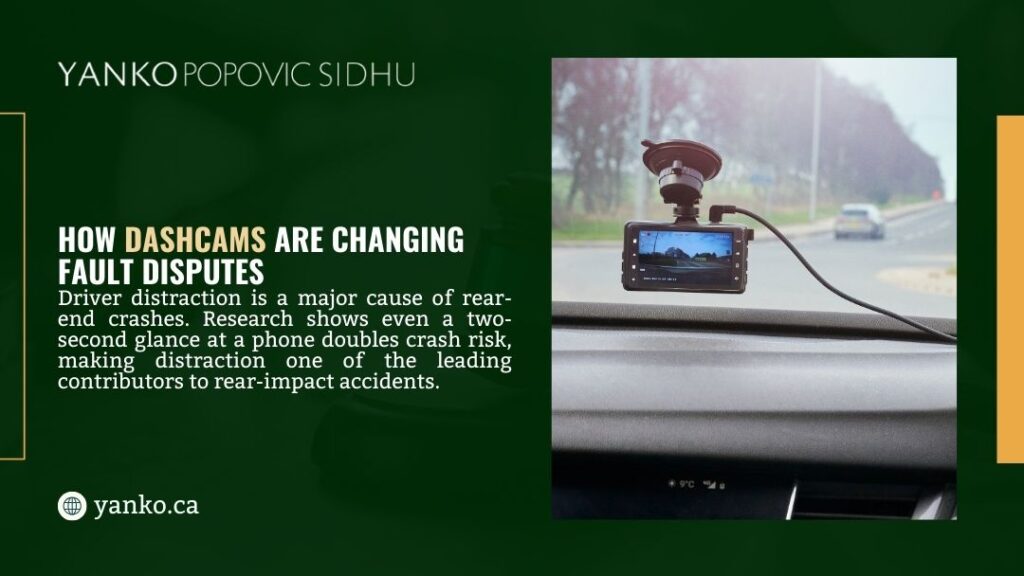
Fault in rear-end collisions often hinges on proof. Dashcam footage, skid marks, vehicle positioning, witness statements, and brake light functionality can shift responsibility.
| Evidence Type | Why It Matters | Impact on Fault |
| Dashcam video | Shows sudden stop or unsafe cut-in | Can rebut presumption |
| Witness statements | Independent corroboration | Supports shared fault claim |
| Mechanical inspection | Confirms brake light failure | May reduce rear driver liability |
| Impact damage pattern | Establishes initial collision source | Key in a chain reaction |
Without evidence, the presumption that the rear driver caused the rear-end collision often stands.
FAQs About Rear-Ending Someone Who Is at Fault
Is the person who rear ends always at fault?
No. The rear driver is usually presumed at fault, but exceptions apply if the lead vehicle stopped suddenly without reason, reversed unexpectedly, or if a third vehicle caused a chain reaction.
If I rear ended someone, is it automatically my fault?
Not automatically. While insurers often start with that assumption, fault depends on evidence, road conditions, brake light function, and driver conduct.
If someone hits you from behind, whose fault is it?
In most ordinary traffic situations, the trailing driver is responsible. However, shared fault may apply if the lead driver contributed to the crash.
What happens if I rear end someone in Alberta?
Your insurer will investigate and assign fault. Property damage is handled under Alberta’s DCPD system. If injuries are involved, a separate bodily injury claim may arise.
Can you be partially at fault in a rear end accident?
Yes. Alberta recognizes contributory negligence, meaning liability can be divided between drivers based on the percentage of responsibility.
Does getting a ticket mean I am at fault?
No. A traffic ticket addresses traffic law violations. Insurance fault determinations are separate and may consider additional evidence.
How long do I have to make a claim after a rear end collision?
In Alberta, the general limitation period for personal injury claims is two years from the date you knew or ought to have known about the injury and its connection to the accident.
Protect Your Rights After a Rear End Collision
Rear-ending someone who is at fault is rarely answered in a single sentence. The presumption often favors the lead vehicle, yet real-world collisions introduce nuance. Traffic tickets do not automatically define civil liability. Property damage does not measure physical harm. Insurance companies apply structured rules, but those rules depend on facts.
If a rear-end accident fault decision is wrong, it can affect your deductible, your premiums, and your right to pursue compensation. If your car was rear-ended and the insurer shifts blame onto you, your recovery may suffer unnecessarily.
This is where informed legal guidance becomes essential. Yanko Popovic Sidhu provides direct lawyer-to-client representation, no case managers, no hand-offs. From the first consultation through resolution, experienced counsel evaluates fault, challenges incorrect insurance determinations, and advances your claim with precision.
If you are uncertain about liability after a rear-end collision, or if an insurance company has attributed fault unfairly, consider speaking with a rear-end collision lawyer in Calgary who understands Alberta’s framework and applies proven strategies tailored to your situation. The right advice at the right time can change the outcome.