A left turn accident who is at fault question often sounds simple. In many cases, the left-turning driver bears responsibility. Yet Alberta law allows for shared fault, exceptions, and detailed fault determination rules that can significantly change compensation outcomes.
This guide explains how liability works, when the oncoming driver may share blame, and how insurance companies assess claims after a left turn collision.
Left Turn Accident Who Is at Fault
When people search for who is at fault in a left-turn accident, they’re usually looking for a straight answer. Under Alberta traffic law, a driver turning left must yield to oncoming traffic that constitutes an immediate hazard. That legal obligation places a heavy responsibility on the left-turning vehicle.
The Alberta Traffic Safety Act requires a left-turning driver to wait until the movement can be made safely. If a collision occurs during an unprotected left turn, fault often begins with that driver. But here’s the problem: fault determination is rarely automatic.
Intersection collisions are not rare events. Transport Canada reports that intersections account for roughly 30% of total collisions nationwide, with left turn accidents forming a significant portion of serious crashes. So while many assume the answer to left turn accident who is at fault in a left turn accident is that the turning driver is always at fault, Alberta courts examine more than the angle of impact.
Is the Person Turning Left Always at Fault?
No. The left-turning driver carries a legal burden to yield, but Alberta follows contributory negligence principles. That means fault can be shared.
If the oncoming driver was speeding, distracted, ran a red light, or entered the intersection unlawfully, liability may shift. Courts look at whether the oncoming driver constituted an immediate hazard and whether their conduct contributed to the left turn collision.
Alberta law does not treat intersection crashes as automatic liability cases. Instead, fault percentages are assigned. Understanding contributory negligence affects car accident claims in Alberta helps you because compensation is reduced by your percentage of fault.
Who Has the Right of Way When Making a Left Turn?
Right-of-way rules are central to any analysis of a left-turn accident to determine who is at fault. If a vehicle turning left faces a solid green light without an arrow, that is an unprotected left turn. The driver must yield to oncoming traffic.
If there is an advanced green arrow, the turn is protected. A left turn is considered protected when the traffic light displays a directional arrow granting exclusive movement. Under Sections 36 and 37 of the Alberta Rules of the Road Regulation, a driver must not turn left unless it can be completed safely and without interfering with oncoming traffic.
Failure to yield when turning left is one of the most common causes of intersection collisions. However, when the oncoming driver runs a red light, engages in excessive speeding, or attempts a dangerous pass, the analysis changes.
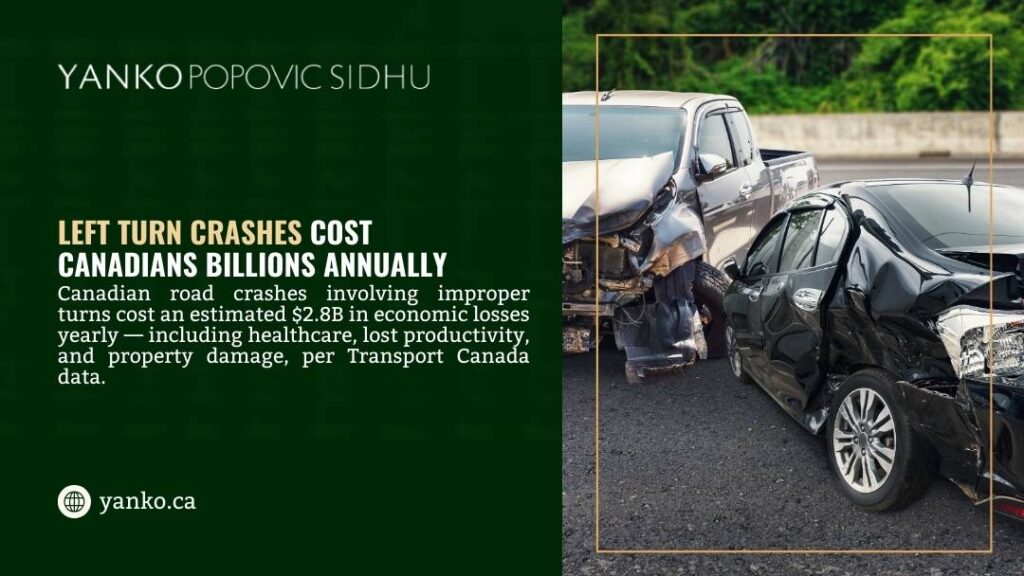
Common Left Turn Car Accident Scenarios and Fault Analysis
The phrase left turn car accident scenarios reflects the confusion drivers face. Below is a structured breakdown.
| Scenario | Likely Fault | Shared Fault Possible |
| T-boned while turning left on green | Left-turning driver | Yes |
| Unprotected left turn accident with a speeding oncoming driver | Shared fault | Yes |
| Rear-ended while turning left | Following driver | Rare |
| A passing car hits a car turning left | A passing driver is often liable | Yes |
| Illegal left turn crash | Turning driver | No |
| Green green light accident (both claim green) | Fact-dependent | Yes |
If you were rear ended while turning left, the fault may rest with the following driver. But if you initiated a sudden stop without signalling, liability may shift. If a passing car hits a car turning left, courts assess whether the passing manoeuvre was lawful. Each left-hand turn accident is fact-specific.
What Is a Protected Left Turn?
Drivers often misunderstand traffic signals. A left turn yield on green sign meaning is simple: you must yield unless an arrow grants priority. A vehicle turning left with a green light must still yield unless protected by a directional arrow.
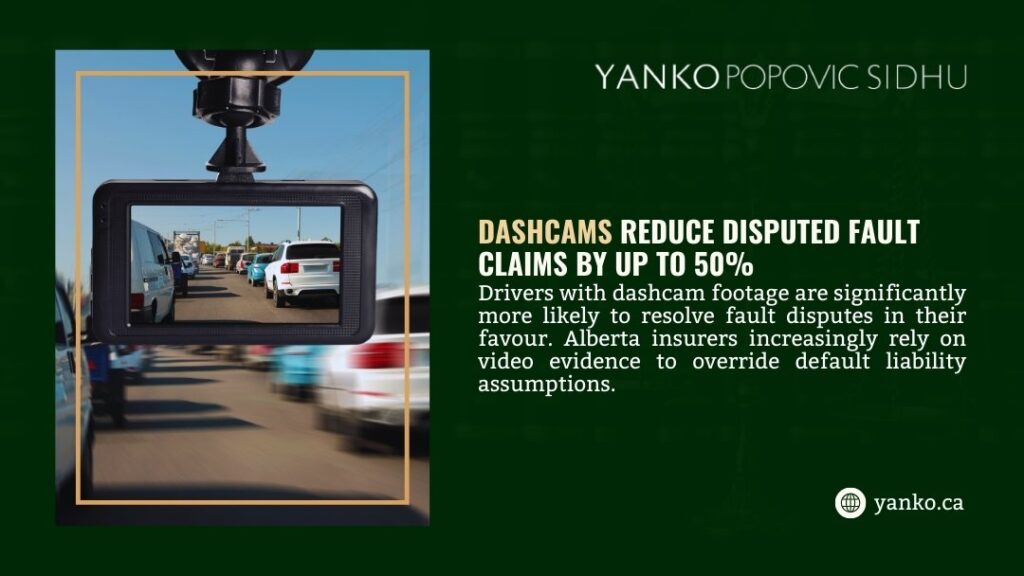
An unprotected left-turn accident usually places primary responsibility on the left-turning driver. But here’s what often changes the outcome: evidence. Dash cam footage, traffic light timing data, and independent witnesses can rebut assumptions about fault.
Unprotected Left Turn Accident and Shared Liability
Many clients ask whether a left-turn accident not at fault claim is possible. Yes, but only with evidence. Consider this situation: you begin your turn after confirming the intersection is clear. An oncoming driver accelerates aggressively to beat a yellow light and strikes your vehicle. That driver may have created the immediate hazard.
This becomes a question of contributory negligence. In Alberta, even if you are 25 percent responsible, you can still recover damages reduced by that percentage. Here’s how shared fault affects recovery.
| Fault Percentage | Impact on Compensation | Example |
| 0% | Full recovery | $100,000 awarded |
| 25% | Reduced by 25% | $75,000 recovery |
| 50% | Reduced by half | $50,000 recovery |
| 75% | Minimal recovery | $25,000 recovery |
You can explore a deeper explanation of shared liability by understanding the 50/50 fault car accident settlement.
Left Turn Accident Damage and Compensation in Alberta
When asking left turn accident, who is at fault, most people are really asking how it affects compensation. Damages in Alberta fall into two categories: pecuniary and non-pecuniary.
Pecuniary damages include income loss and medical costs. Non-pecuniary damages compensate for pain and suffering.
Alberta also applies a minor-injury cap to certain soft-tissue injuries. Details about the whiplash settlementcap in Alberta explain how compensation limits apply to eligible minor injuries under current provincial regulations. Serious impairment cases, including traumatic brain injury or spinal cord injury, may exceed the cap entirely.
If you’re assessing possible recovery, the details of car accident compensation in Alberta describe how claims are evaluated and how compensation amounts are determined.
Insurance Company Blaming Me for the Accident in Alberta
Insurance companies frequently argue that the left-turning driver failed to yield. That strategy is common. It’s easier to assign fault to the turning vehicle than to analyze speeding or distraction.
If you’re facing an insurer claiming you were entirely responsible, it’s important to understand how insurance companies determine fault after an accident in Alberta and how that decision can affect your claim.
Adjusters may also use recorded statements to create inconsistencies. Understanding insurance adjuster tactics in Alberta can help protect your position. Fault determination affects not only liability but negotiation leverage.
Evidence That Influences Fault Determination
| Evidence Type | Why It Matters | Effect on Liability |
| Dash cam footage | Shows signal status and speed | Can rebut failure to yield claims |
| Intersection cameras | Confirms traffic light phase | Critical in green green light accident |
| Witness testimony | Supports the version of events | Influences percentage fault |
| Vehicle damage pattern | Indicates angle and force | Supports reconstruction analysis |
| Electronic data recorders | Records breaking and speed | Establishes hazard timing |
The phrase car hit me while I was turning left often leads to disputes. Without independent evidence, insurers default to the presumption against the left-turning driver. That’s why early evidence preservation matters.
How to Win a Left Turn Accident Claim
If you are asking how to win a left turn accident case, here’s how it works. Document everything immediately. Preserve dash cam footage. Avoid recorded statements without legal advice. Seek medical care promptly.
Legal counsel can reconstruct the sequence, analyze timing, and challenge assumptions. If you require experienced representation, consult a car accident lawyer in Calgary who understands Alberta intersection liability rules. Early involvement often changes negotiation posture.
When to Speak With a Left Turn Accident Lawyer
Not every accident requires litigation. But when injuries are significant or liability is disputed, legal guidance protects your recovery. Personal injury law in Alberta involves statutory limits, medical thresholds, and insurance protocols. An experienced personal injury lawyer can assess fault determination and compensation exposure.
Many injury lawyers offer free consultations to evaluate your claim. If you suffered serious impairment or permanent injury, additional information on personal injury claims in Alberta can help clarify the next steps involved in pursuing compensation.
Protect Your Rights After a Left Turn Collision
The question of who is at fault rarely has a one-line answer. While the left-turning driver often bears responsibility, Alberta law recognizes shared liability and the need for fact-based analysis. Fault percentages influence settlement value, insurance strategy, and litigation outcomes.
If you are dealing with a disputed intersection crash, legal guidance can help preserve evidence, counter insurer assumptions, and secure fair compensation.
Understanding left turn accident who is at fault is the first step. Protecting your rights is the next step. For experienced representation tailored to Alberta law, consider speaking with a qualified legal professional before accepting any settlement offer.