Caring for a child with cerebral palsy changes everything about a family’s future. When the condition may have been caused by medical negligence during pregnancy, labor, or delivery, a cerebral palsy settlement can provide the financial support needed for lifelong care, therapies, and quality of life.
This guide explains how cerebral palsy settlements work in Calgary and across Alberta, which factors influence compensation, what Canadian case law shows about settlement and verdict values, and how an experienced cerebral palsy lawyer can help you navigate a complex medical malpractice claim.
Understanding a cerebral palsy settlement in Alberta
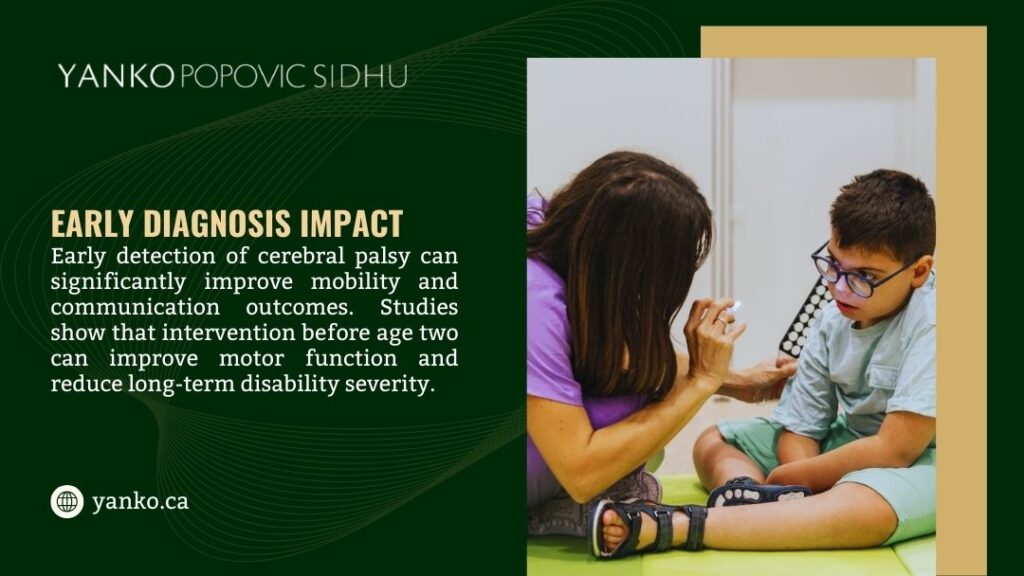
Cerebral palsy is a group of permanent disorders that affect movement and posture, usually caused by non-progressive brain injury or abnormal brain development in early life. It is the most common cause of physical disability in children.
In high-income countries, the birth prevalence averages around 1.6–2.1 cases per 1,000 live births. In Northern Alberta specifically, researchers estimated a cerebral palsy rate of about 2.2 per 1,000 children, with most cases arising around birth rather than later in childhood.
A cerebral palsy settlement is a negotiated resolution of a legal claim where healthcare providers, hospitals, or their insurers agree to pay compensation because medical negligence contributed to a child’s brain injury.
That settlement can follow a cerebral palsy birth injury lawsuit or be reached during pre-trial negotiations. In Alberta, many families pursue a cerebral palsy compensation claim as a type of medical malpractice lawsuit when they learn that avoidable errors likely caused or worsened their child’s injury.
Not every diagnosis of cerebral palsy involves negligence. Some cases are linked to genetic causes or unavoidable complications. However, many CP lawsuits arise from preventable problems such as failure to monitor fetal heart rate, delayed cesarean section despite clear signs of fetal distress, mismanaged labor with prolonged lack of oxygen, improper use of forceps or vacuum devices, or failure to treat severe jaundice leading to kernicterus and brain damage. When avoidable mistakes like these cause brain injury, a cerebral palsy negligence case may support a claim for cerebral palsy compensation.
Why cerebral palsy settlements matter for Calgary and Alberta families
Cerebral palsy often requires intensive lifelong support. Canadian public health research estimates that direct health-care costs for young children with cerebral palsy are almost twenty times higher than for children without the condition. One study found annual direct health-care costs of about CAD 11,700 for children aged 1 to 4 with cerebral palsy, compared to around CAD 600 for peers without the condition.
Another analysis from Ontario’s brain-health data suggests that yearly health-system costs for a child with cerebral palsy can be 15X higher than for the average child.
When researchers modeled Canadian lifetime costs associated with disability, they estimated that people with severe mobility and care limitations face additional lifetime expenses between roughly CAD 908,755 and CAD 1,036,592, depending on the severity of their limitations.
Global estimates are even higher; international reviews suggest lifetime care costs for cerebral palsy can reach the equivalent of more than USD 1.6 million per person.
These numbers help explain why cerebral palsy compensation claims can reach very high amounts. A fair CP settlement must account for:
- Ongoing medical care and therapies.
- Mobility aids and assistive technology.
- Home and vehicle modifications.
- Personal care support.
- Special education and training.
- The child’s lost future earning capacity.
- Reduced earning capacity for parents who cut back work to provide care.
Without compensation through cerebral palsy settlements or verdicts, many families struggle to fund even basic therapy, let alone full lifetime care.
Key factors that influence cerebral palsy settlement value in Alberta
| Factor | What it means in a CP case | Typical impact on compensation |
| Severity of cerebral palsy | Level of motor impairment, need for mobility aids, cognitive and communication issues | More severe disability usually leads to higher cerebral palsy settlements and verdicts |
| Lifetime medical and care needs | Therapies, surgeries, equipment, home care, respite, supported housing | Detailed life-care plans support higher CP settlement values |
| Evidence of negligence | Proof of breach of the standard of care, such as ignored fetal distress or delayed C-section | Clear medical malpractice often strengthens cerebral palsy lawsuit cases and increases settlement pressure |
| Causation strength | Medical experts link a lack of oxygen or trauma to a child’s cerebral palsy | Strong causation opinions make it harder for defendants to deny liability |
| Life expectancy | Medical estimates of how long the child will live with cerebral palsy | Longer life expectancy increases the cost of care and compensation |
| Family economic losses | Lost parental earnings, reduced career options, out-of-pocket costs | Can significantly increase pecuniary damages in a cerebral palsy compensation claim |
| Non-pecuniary harm | Pain, suffering, loss of enjoyment of life | In Canada, capped but still substantial for catastrophic injuries |
Medical malpractice, negligence, and cerebral palsy in Alberta
Not every cerebral palsy lawsuit arises from dramatic errors in the delivery room. Many cerebral palsy malpractice claims focus on patterns of substandard care rather than single events.
Common themes in Alberta birth injury cases include poor monitoring of fetal heart rate, slow reaction to signs of fetal distress, failure to escalate to cesarean section, misinterpretation of abnormal tracings, and inadequate response to maternal conditions like infection or high blood pressure that raise the risk of fetal hypoxia.
Hypoxic-ischemic encephalopathy (HIE) is a frequent mechanism in cerebral palsy negligence cases. When a baby’s brain does not receive enough oxygen and blood for a prolonged period, brain cells die. If the medical team fails to respond quickly to signs of fetal distress, continues labor too long, or delays an emergency C-section, that lack of oxygen can lead to permanent brain injury and later diagnosis of cerebral palsy.
Traumatic brain injury at birth is another pathway. Incorrect forceps placement, excessive traction, or misuse of vacuum extractors can cause skull fractures, bleeding, and direct brain damage. If experts conclude that a more careful delivery or a timely cesarean section would likely have avoided these injuries, a cerebral palsy birth injury lawsuit may arise.
Sometimes, problems appear after delivery. Untreated severe jaundice can cause kernicterus, a form of brain injury that often leads to cerebral palsy. Infection, untreated seizures, or failure to address respiratory distress can also contribute to preventable brain damage.
In all these scenarios, lawyers review prenatal records, labor and delivery notes, fetal monitoring strips, neonatal charts, and imaging studies to determine whether the standard of care was breached and whether that breach caused the child’s condition.
The legal process for a cerebral palsy lawsuit in Calgary and Alberta
Families in Calgary and Southern Alberta who suspect medical negligence usually follow a series of steps before any cerebral palsy settlement occurs.
The process often begins with a free consultation with an experienced cerebral palsy lawyer. A firm with a dedicated birth injury team can review the basic facts, explain Alberta malpractice law, and give an initial view on whether a cerebral palsy lawsuit might succeed.
If the case appears practicable, the lawyer obtains full medical records, including prenatal visits, labor and delivery notes, fetal monitoring strips, neonatal intensive care charts, and imaging studies. These records go to independent medical experts, often obstetricians, neonatologists, pediatric neurologists, and neuroradiologists, who assess whether there was a violation of the standard of care and whether that breach caused the brain injury.
When experts support the claim, the legal team prepares and files a medical malpractice claim. This step formally starts the cerebral palsy birth injury lawsuit, which names the hospital, doctors, nurses, or other providers believed responsible. The defendants file statements of defense, often denying negligence or causation.
During litigation, both sides exchange documents and conduct examinations for discovery. Expert witnesses provide reports on liability and damages. Settlement talks can happen at many stages, from early negotiations to mediation just before trial. Many cerebral palsy lawsuits settle before a judge or jury hears the evidence. When negotiations fail, the case will proceed to trial, and the court will decide liability and compensation.
Alberta’s limitation rules are important. In general, Alberta has a two-year limitation period for personal injury and medical malpractice claims, measured from when the person knew or should have known they had a claim, plus a ten-year “ultimate” limit from the date of the negligent act.
For children, the law is more generous. In birth injury cases, the limitation period for the child’s claim is suspended while the child is a minor, then usually runs for two years from their eighteenth birthday.
That means a person with cerebral palsy can often start a claim up to about age twenty, and sometimes longer if they remain incapable of managing their affairs as an adult. Because the limitation law can be complicated, families should seek legal advice as soon as possible.
How cerebral palsy settlements are structured in Alberta
A cerebral palsy settlement in Alberta can take different forms. Some families receive a lump-sum payment that covers both past losses and an estimate of future care and income loss. Others agree to structured settlements that pay money over time, often with inflation protection and guaranteed periods to match a child’s anticipated needs.
Alberta firms that focus on catastrophic injury regularly use structured settlements for children with cerebral palsy because long-term stability of funds matters more than a one-time payout.
Canadian law distinguishes between pecuniary (financial) and non-pecuniary (pain and suffering) damages. Pecuniary damages include future care costs, lost earning capacity, and out-of-pocket expenses. Non-pecuniary damages compensate for pain, suffering, loss of enjoyment of life, and loss of amenities.
A line of Supreme Court of Canada decisions known as the “trilogy” put a cap on non-pecuniary damages, now adjusted for inflation to roughly CAD 465,000–470,000 for the most catastrophic injuries. Cerebral palsy lawsuits involving severe brain injury often reach or approach that cap, on top of large pecuniary awards.
Alberta also maintains a much smaller “minor injury” cap that applies mainly to soft-tissue injuries from car accidents. At present, that cap is just over CAD 6,000 and does not apply to catastrophic conditions like cerebral palsy. Birth-injury cerebral palsy cases are assessed on their own merits, not squeezed into minor injury limits.
When a settlement is reached for a child, courts often review the agreement to ensure it is in the child’s best interests. Settlement funds may be held in trust, managed by a trustee or public guardian, or structured through annuities so that money cannot be misused and will last for the child’s lifetime.
Practical steps for families in Calgary and Southern Alberta
Families who suspect medical malpractice caused their child’s cerebral palsy often feel overwhelmed. Still, a few practical steps can protect their rights and support a stronger cerebral palsy compensation claim.
First, request and keep copies of all medical records. That includes prenatal charts, hospital notes, discharge summaries, imaging reports, and follow-up assessments. Maintain a detailed log of your child’s diagnoses, medications, therapies, and out-of-pocket expenses. This record becomes vital evidence in any cerebral palsy lawsuit cases.
Second, seek early legal advice from a firm that focuses on birth injury, cerebral palsy negligence, and catastrophic injury. A focused practice, such as a birth injury lawyer in Calgary or a medical malpractice lawyer in Calgary, understands the standards of care in Alberta hospitals and has relationships with the expert witnesses needed for cerebral palsy lawsuit settlements. Many firms, including cerebral palsy lawyers in Calgary practices, work on a contingency basis, with no fees unless the case succeeds.
Third, address the broader injury picture. Brain injury from lack of oxygen at birth can lead not only to cerebral palsy but also to other long-term issues. Severe cases may also involve seizures, intellectual disability, or spinal cord symptoms. Working with a team that understands overlapping catastrophic injuries, such as a brain injury lawyer or catastrophic injury lawyer in Alberta, can help ensure that all consequences are accounted for in any CP settlement.
Finally, be realistic yet firm. No settlement can undo the harm, and even a million-dollar cerebral palsy settlement will not make life simple. But a carefully prepared cerebral palsy compensation claim can secure therapies, equipment, respite, and financial stability that public systems do not fully provide.
FAQs about cerebral palsy settlements in Alberta
Is every child with cerebral palsy entitled to compensation?
No. A cerebral palsy compensation claim depends on proof of negligence. Many cases have no link to medical malpractice. Genetic factors, unavoidable complications, and premature birth can all cause cerebral palsy without any wrongdoing. A cerebral palsy lawsuit usually requires expert evidence that the medical team fell below the standard of care and that this failure caused or materially contributed to the child’s brain injury.
What is the average settlement for cerebral palsy in Alberta?
There is no official average settlement for cerebral palsy in Alberta. Reported Canadian cerebral palsy lawsuit settlements span a wide range, from under a million dollars for less severe cases to more than CAD 10–15 million in the most severe, fully dependent cases. Alberta-specific guidance from local firms suggests that many cerebral palsy settlement values fall in the range of about CAD 1.5–3 million or more, depending on care needs and life expectancy.
How long do cerebral palsy lawsuits take in Alberta?
Cerebral palsy lawsuits are complex. Investigating the medical care, obtaining expert opinions, and calculating lifetime costs takes time. Many CP lawsuits resolve in roughly two to four years, though some finish sooner and others take longer, particularly if the case will proceed to trial. The need for multiple expert witnesses, detailed life-care plans, and sometimes appeals means that families should prepare for a long process, even if the aim is a negotiated cerebral palsy settlement rather than a verdict.
Will a cerebral palsy case always settle, or will we have to go to trial?
Many cerebral palsy lawsuits in Canada end in settlement rather than a full trial. Defendants and insurers often prefer to negotiate once they see strong expert evidence of negligence and high lifetime costs. However, if liability is disputed or the parties differ sharply on cerebral palsy case values, the case may go to trial. Some of the largest reported cerebral palsy case verdicts in Canada, such as the 14.9-million-dollar Ontario case, arose after trial and appeals, not from early settlement.
Can families still bring a claim years after birth?
Often, yes. Because Alberta suspends limitation periods for minors, a child’s claim for cerebral palsy compensation usually remains open until at least age twenty, sometimes longer if the person remains legally incapable. That said, early action helps. Evidence becomes harder to gather with time, and courts expect families to act once they reasonably suspect negligence.
Moving forward after a cerebral palsy settlement in Alberta
A cerebral palsy settlement cannot erase what happened in the delivery room. It can, however, give families in Calgary and Southern Alberta a measure of security in the face of lifelong needs.
Canadian research shows that children with cerebral palsy face higher health-care costs, longer periods of poor health, and substantial functional limitations compared to their peers. A fair cerebral palsy settlement recognizes these realities and provides resources for therapy, equipment, education, and support well into adulthood. For families who believe medical negligence played a role in their child’s diagnosis, contact with an experienced cerebral palsy lawyer about a potential cerebral palsy settlement is not about blame alone. It is about securing the funding required for the child’s medical care and quality of life and holding the system accountable so that future children face less risk.