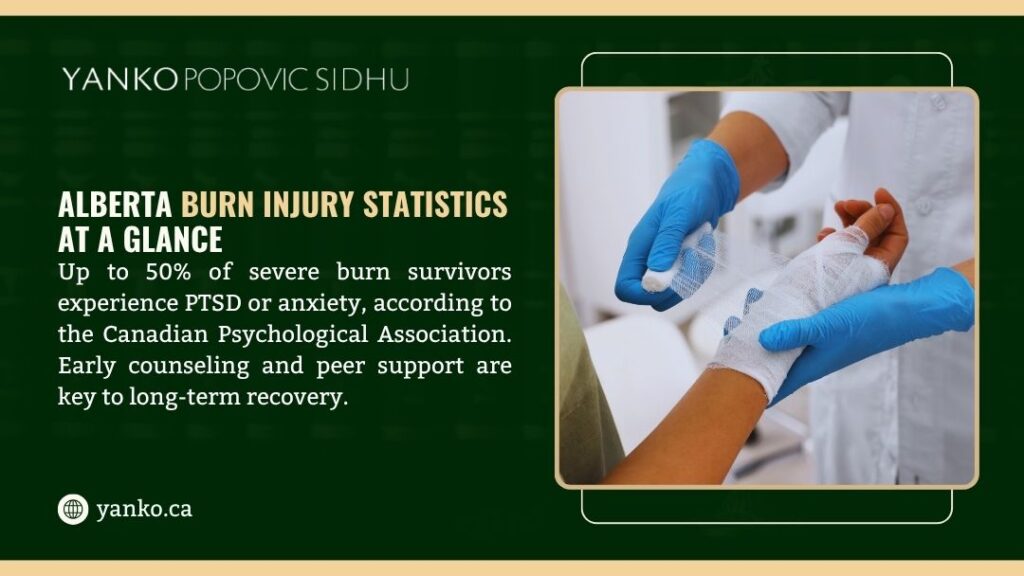
Across Alberta, burn injuries account for approximately 7,000 emergency admissions every year, according to the Canadian Burn Registry. Many of these cases result from workplace accidents, motor vehicle collisions, and defective products.
When negligence causes such harm, victims may seek a burn injury settlement, a negotiated amount paid to cover medical expenses, lost income, and long-term suffering.
In Calgary, settlement amounts vary widely, from under $100,000 for minor burns to over $1 million for catastrophic injuries involving disfigurement or permanent disability. The process depends on liability proof, medical evidence, and Alberta’s unique legal framework, which distinguishes between tort claims and workers’ compensation claims.
This article explains in depth how burn injury settlements work in Calgary and Southern Alberta, what determines their value, what timelines and costs to expect, and why working with a local law firm experienced in Alberta personal injury law makes a substantial difference.
What Is a Burn Injury Settlement?
A burn injury settlement is a legally binding financial resolution between an injured party (the plaintiff) and a negligent party (the defendant or insurer). It compensates the victim for physical damage, financial losses, and emotional hardship caused by the incident. Settlements often occur after negotiations between the plaintiff’s legal team and the insurer, though some proceed to trial if agreement fails.
In Canada, settlements may include both economic damages (medical treatment, lost wages, rehabilitation) and non-economic damages (pain, suffering, disfigurement). Unlike the U.S., Alberta courts rarely award punitive damages, so the settlement value typically focuses on measurable and foreseeable harm.
Typical burn sources in Calgary include:
- Chemical burns from industrial sites or cleaning agents.
- Thermal burns from fires, hot liquids, or machinery.
- Electrical burns from unsafe wiring or faulty products.
- Friction burns in traffic or construction accidents.
The Canadian Institute for Health Information (CIHI) notes that severe burns frequently require hospital stays exceeding 30 days and average treatment costs of $90,000–$150,000 CAD per patient. When another’s negligence is proven, a settlement aims to restore those losses and compensate for enduring consequences such as permanent scarring or psychological trauma.
Key Factors That Impact How Much a Burn Claim Is Worth
Valuing a burn injury claim requires more than medical bills. Alberta law allows compensation for all measurable losses tied to the incident, including projected future care and pain. Courts and insurers evaluate the extent, cause, and consequence of each injury.
| Factor | Explanation |
| Severity and classification | First-degree burns may resolve quickly, while second- and third-degree burns cause tissue loss, nerve damage, and lasting disability. The deeper the burn, the higher the compensation potential. |
| Medical treatment intensity | Skin grafts, reconstructive surgery, and long-term rehabilitation increase settlement values because they show ongoing harm and cost. |
| Permanent impairment and scarring | Burns to visible areas, face, hands, or neck, raise non-economic damages for disfigurement and social impact. |
| Lost income and earning capacity | Claimants can recover both past lost wages and future loss of income if the injury prevents full return to work. |
| Psychological effects | Anxiety, PTSD, or depression following severe burns justify higher general damages in Alberta tort cases. |
| Liability clarity | When the fault is obvious (e.g., a faulty heater or a negligent employer), insurers are more likely to settle quickly and fairly. |
| Insurance policy limits | Compensation may be restricted by the at-fault party’s coverage unless other defendants share liability. |
After these variables are analyzed, lawyers apply prior case law and actuarial data to estimate fair value. A 2023 Thomson Reuters Westlaw survey of Canadian tort cases showed that severe burn awards often exceed $600,000 CAD, while moderate cases average $250,000–$400,000 CAD.
For victims, understanding these drivers helps set realistic expectations before entering negotiations.
Typical Settlement Ranges and Studies on Burn Injury Compensation
Burn injury settlement amounts vary greatly, but evidence from Canadian and North American data helps illustrate potential outcomes.
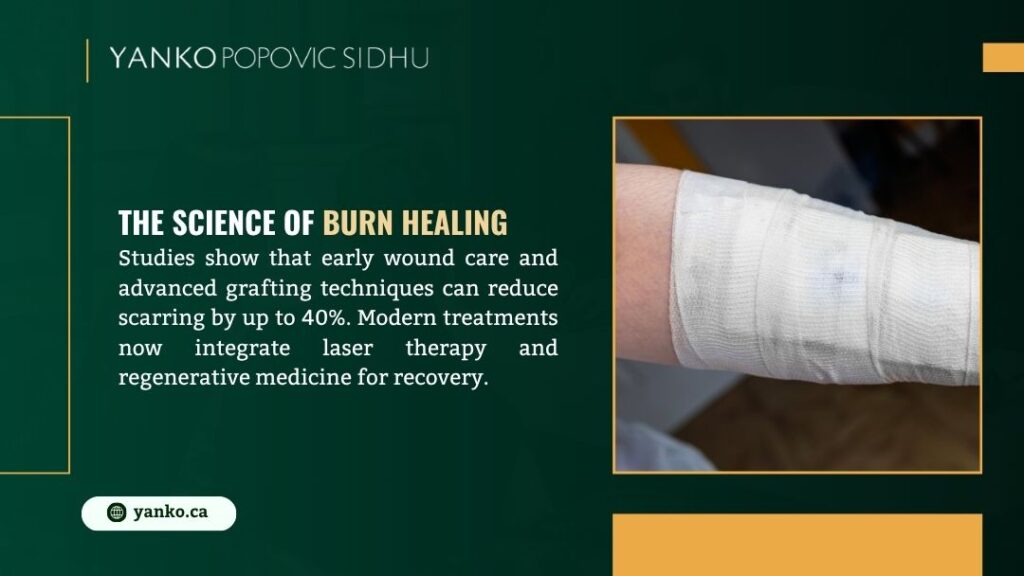
A 2022 Journal of Burn Care & Research study reviewing 320 civil burn cases found that settlements correlated most strongly with total body surface area (TBSA) burned and visible disfigurement. Claimants with over 30% TBSA involvement received, on average, 2.8 times higher compensation than those with minor burns.
In Alberta, legal research shows courts consider both tangible losses and loss of life enjoyment. Based on compiled case data and verdict analyses:
| Injury Severity | Typical Characteristics | Settlement Range (CAD) |
| Minor (first-degree) | Localized redness, minimal treatment, no scarring. | $10,000 – $50,000 |
| Moderate (second-degree) | Blistering, possible grafting, visible scarring, short-term work loss. | $150,000 – $400,000 |
| Severe (third-degree or chemical) | Permanent disfigurement, long hospitalization, chronic pain, and major income loss. | $600,000 – $1.5 million+ |
| Catastrophic (extensive or multiple) | Over 30% TBSA, reconstructive surgeries, psychological trauma, and lifelong care needs. | $1 million – $3 million+ |
These figures are supported by settlements reported in Canadian provinces with comparable legal standards. Victims with catastrophic burns requiring skin grafts, prosthetics, or full-time assistance often reach or exceed the seven-figure threshold.
Ultimately, a settlement reflects how fully the injury disrupted the claimant’s life, not only physical suffering but also social and occupational impact.
Why Calgary-Area Burn Injury Victims Benefit from a Local Firm
Local representation provides both legal and practical advantages. Alberta’s personal injury system has unique procedural and regulatory rules that differ from other provinces. Working with a Calgary-based law firm such as Yanko Popovic Sidhu means counsel who understands regional court practices, insurer behavior, and provincial legislation.
| Comparison Aspect | Local Alberta Firm (e.g., Yanko Popovic Sidhu) | Out-of-Region or National Firm |
| Knowledge of Alberta law | Familiar with Alberta Tort-Feasors Act, Minor Injury Regulation, and regional precedents. | May generalize from other provinces’ statutes, risking procedural gaps. |
| Access to local experts | Works with Calgary medical specialists, reconstruction surgeons, and vocational experts for accurate assessments. | Often must outsource experts, slowing case progress. |
| Court familiarity | Regularly appears before the Court of King’s Bench and the Provincial Court of Alberta. | Limited on-ground experience with Alberta judges or mediators. |
| Community presence | Recognized reputation and Consumer Choice Awards since 2014 have built insurer trust. | Lacks local recognition; adjusters may be more adversarial. |
| Client accessibility | In-person meetings for updates and document signing. | Remote-only contact, which may feel impersonal. |
For burn victims coping with trauma, proximity and accessibility matter. Local counsel can coordinate hospital visits, photograph injuries promptly, and manage communications directly with Calgary-area insurance adjusters, factors that expedite resolution and increase claim value.
The Legal Process for a Burn Injury Claim in Alberta
A burn injury claim proceeds through several structured stages under Alberta civil procedure. Each phase serves to establish fault, quantify damages, and reach a resolution.
| Stage | Description | Typical Duration |
| 1. Case Intake and Medical Review | The lawyer reviews incident facts, hospital records, and physician reports to confirm liability potential. | 1–2 months |
| 2. Evidence Gathering | Witness statements, safety inspections, employer logs, and product analyses were collected to prove negligence. | 2–6 months |
| 3. Damages Assessment | Calculation of medical expenses, rehabilitation costs, loss of income, and non-economic damages using expert reports. | 3–8 months |
| 4. Demand and Negotiation | Counsel issues a demand letter to the insurer; settlement discussions and mediation follow. | 6–12 months |
| 5. Litigation (if needed) | If negotiation fails, the lawyer files a Statement of Claim under the Alberta Rules of Court. Discovery and expert testimony follow. | 1–2 years |
| 6. Resolution and Payment | Settlement agreement executed or judgment enforced; client receives funds minus disbursements and legal fees. | Variable |
This process can appear lengthy, but legal strategy and prompt medical documentation often shorten timelines. The earlier the evidence is preserved, the stronger the negotiating position.
Specific Alberta Considerations
Alberta law contains several nuances relevant to burn injury settlements:
- Statute of Limitations: Under the Limitations Act, RSA 2000, claimants generally have two years from the date of discovery to file a lawsuit. Delay beyond that may forfeit the claim.
- Motor Vehicle Burn Injuries: If the burn stems from a car crash, the Minor Injury Regulation caps damages only for “minor soft-tissue injuries.” Burns—being external trauma—almost always exceed this threshold, so no cap applies.
- Workplace Burns and WCB: Employees injured at work must first claim through the Workers’ Compensation Board – Alberta (WCB), which covers treatment and income replacement. However, if a third party (e.g., equipment manufacturer) shares fault, an additional tort claim may proceed.
- Comparative Negligence: If the victim is partly at fault (e.g., unsafe conduct contributing to the accident), Alberta applies proportionate reduction under the Contributory Negligence Act, RSA 2000.
A lawyer versed in Alberta statutes ensures proper coordination between these regimes so clients do not lose benefits or limitation rights.
Why Burn-Injury Claims Differ from Other Personal-Injury Cases
Burn injuries present distinct legal and evidentiary challenges compared to other forms of trauma.
| Distinction | Burn-Injury Cases | Typical Injury Cases |
| Nature of harm | Involves skin destruction, nerve damage, and systemic complications requiring ongoing care. | Often limited to fractures or soft-tissue injuries with predictable healing. |
| Evidence complexity | Requires medical imaging, burn-depth evaluation, and expert prognosis on graft success and scarring. | Relies mainly on X-rays and physician statements. |
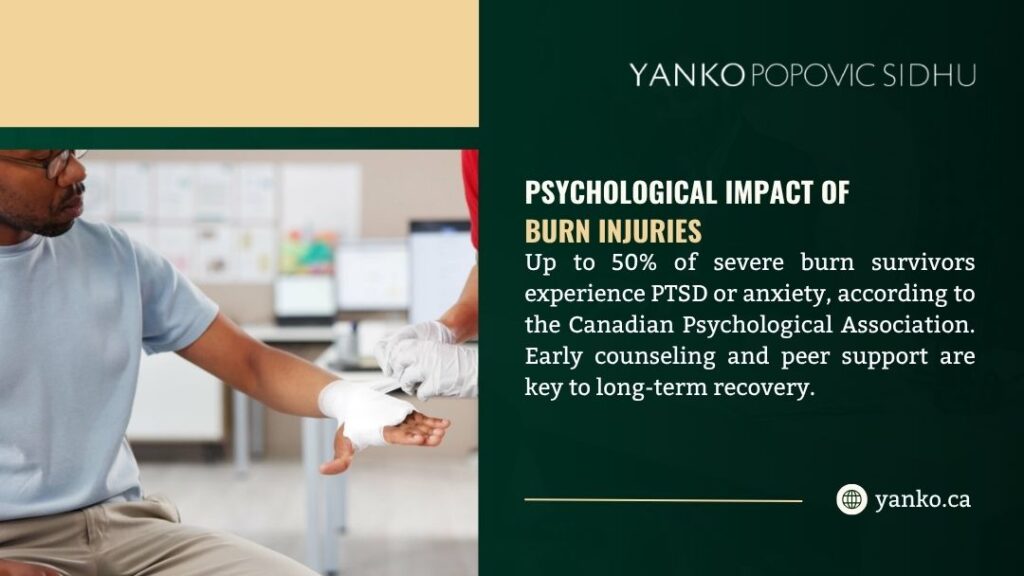
| Psychological element | High incidence of PTSD and depression from disfigurement; needs psychological expert input. | Psychological impact is usually secondary. |
| Damages longevity | Long-term costs include reconstructive surgery, therapy, and assistive devices. | Most costs end after a short recovery. |
| Settlement variability | Wide range due to severity scale; insurance adjusters often require specialized documentation. | More standardized across case types. |
Because of these factors, settlement negotiations demand extensive medical and actuarial documentation, something seasoned personal-injury lawyers prepare from the outset.
Examples of Real-World Burn Injury Settlement Scenarios
| Scenario | Key Facts | Likely Value Band (CAD) |
| Chef in Calgary restaurant suffers second-degree burns on arms and hands from hot oil; clear employer negligence; several weeks hospitalized. | Moderate scarring, partial function loss, six-month income interruption. | 300,000 – 500,000 |
| Construction worker sustains third-degree chemical burns from equipment malfunction; multiple surgeries and permanent hand limitation. | High impairment, ongoing care, lost trade income. | 700,000 – 1.5 million+ |
| A home appliance defect causes a first-degree facial burn with full recovery. | Minor medical bills, no lasting effect. | Below 100,000 |
These examples reflect real patterns seen in Canadian case law and illustrate how burn type, liability, and impact on livelihood shape outcomes.
How Long It Takes and What It Costs
The duration and expense of a burn injury claim depend on case complexity and insurer cooperation.
- Average duration: Straightforward cases may settle in 12–18 months; complex or catastrophic cases often extend to two to three years due to medical prognosis monitoring.
- Legal fees: At Yanko Popovic Sidhu, clients pay no upfront fees. Legal costs are drawn from the settlement only after funds are recovered, under a contingency agreement typically ranging from 25–33 percent, depending on complexity.
- Disbursements: Medical expert reports, imaging, and filing costs are advanced by the firm and reimbursed from proceeds, ensuring clients avoid out-of-pocket burdens.
Given that severe burns can involve six-figure medical expenses and future care projections, professional representation is essential to prevent under-valuation of claims by insurers seeking early closure.
Steps to Strengthen Your Burn Injury Settlement Claim Now
- Obtain full medical documentation and ongoing updates from specialists.
- Preserve photo and video evidence of the injury’s progression.
- Keep all receipts and records of financial loss.
- Avoid premature settlement discussions before maximum medical recovery is known.
- Consult an Alberta personal injury lawyer promptly to protect limitation rights.
Acting early strengthens leverage and increases the likelihood of a fair result.
Taking the Next Step Toward Recovery and Fair Compensation
For anyone coping with the aftermath of a serious burn injury in Calgary or Southern Alberta, informed legal action can determine long-term financial stability. Yanko Popovic Sidhu, a Consumer Choice Award-winning firm with over 40 years of exclusive personal-injury experience, provides comprehensive guidance through every phase of a burn injury settlement, from evidence collection to negotiation or trial.
You can learn more about their dedicated representation on the firm’s Burn Injury Lawyer Calgary page, where detailed information about case handling, compensation strategy, and Alberta-specific injury laws is available.
A confidential consultation with Yanko Popovic Sidhu allows victims to assess the value of their case, understand Alberta’s legal process, and pursue the compensation necessary to rebuild their lives with clarity and confidence.