Birth injury settlements exist to help families manage the financial and medical consequences when a newborn suffers a preventable injury during labour or delivery. In Alberta, these claims are governed by strict rules regarding medical negligence, causation, and the standard of care owed by doctors, nurses, and hospitals.
Parents often face a complicated legal process, especially when the injury creates lifelong challenges such as hypoxic ischemic encephalopathy (HIE) or cerebral palsy. Understanding how these claims work, how compensation is calculated, and what legal steps follow can help families make informed decisions in their child’s best interest.
What a Birth Injury Settlement Means Under Alberta Law
A birth injury settlement is a negotiated financial resolution that compensates a child and family for harm caused by medical negligence during labour or delivery. In Alberta, a settlement resolves the dispute without needing a trial, though the legal action still follows the rules governing medical malpractice.
These cases depend on whether a medical professional failed to meet the standard of care expected in the circumstances. That standard is measured objectively through expert medical testimony rather than personal opinion.
Medical records form the backbone of a birth injury case. They reveal whether the care team responded appropriately to signs of distress and whether decisions were reasonable. Lawyers work with obstetric, neonatal, and nursing experts to determine if the injury resulted from a preventable error or whether it occurred despite proper care.
Most claims are settled out of court because medical malpractice trials are long, expensive, and unpredictable. A settlement avoids these risks while ensuring the child receives essential financial resources.
When a Birth Injury May Qualify for Compensation
A birth injury may qualify for compensation when the evidence shows that the injury resulted from a preventable medical error. Alberta law requires proof that the doctor, nurse, or hospital failed to meet the expected standard of care and that this failure caused the newborn’s condition. Alberta courts depend heavily on expert testimony, medical records, and a detailed timeline of labour and delivery events.
Common Birth Injury Types Linked to Potential Negligence
| Type of Birth Injury | Description / Why It May Indicate Negligence |
| Hypoxic Ischemic Encephalopathy (HIE) | Caused by oxygen deprivation; can result from delayed C-section or ignored fetal distress. |
| Cerebral Palsy | Often linked to asphyxia, trauma, or improper delivery techniques. |
| Brachial Plexus Injury / Erb’s Palsy | Nerve damage from excessive traction on the baby’s head or neck. |
| Skull Fractures | It may occur due to improper forceps or vacuum use. |
| Brain Bleeds (Intracranial Hemorrhage) | It can indicate traumatic or poorly managed instrument-assisted delivery. |
| Untreated Maternal Infection | Failure to recognize or treat infection can harm a newborn’s brain or organs. |
| Shoulder Dystocia Injuries | It occurs when clinicians mishandle a stuck shoulder during delivery. |
Parents who believe the injury resulted from negligence can speak with an experienced birth injury lawyer in Calgary.
Common Medical Errors That Lead to Birth Injury Claims
Birth injury claims in Alberta commonly stem from medical mistakes that could have been avoided with proper monitoring and timely action. These errors often involve misinterpreting warning signs or applying delivery techniques incorrectly. When these situations occur, the newborn may suffer long-term physical or neurological harm.
The most frequently seen errors in Alberta cases include failure to monitor fetal distress, which happens when clinicians overlook concerning heart rate patterns that signal oxygen loss. Another major cause is delayed C-section, where the team waits too long to proceed despite clear indicators that the baby is in danger. Improper use of forceps or vacuum tools can also lead to fractures, nerve injuries, or bleeding in the brain when the tools are applied with too much force or at the wrong angle.
Additional errors include failure to treat maternal infections, mismanagement of shoulder dystocia, incorrect administration of medication, ignoring fetal movement concerns, and poor communication among the delivery team. Each of these errors reflects a breakdown in care that may justify a birth injury claim when they result in harm.These situations fall under the broader category of medical malpractice in Canada, where the burden of proof is high and requires detailed expert analysis. Families seeking broader legal support often depend on resources from a medical malpractice lawyer in Calgary.
How Birth Injury Settlements Are Calculated in Alberta
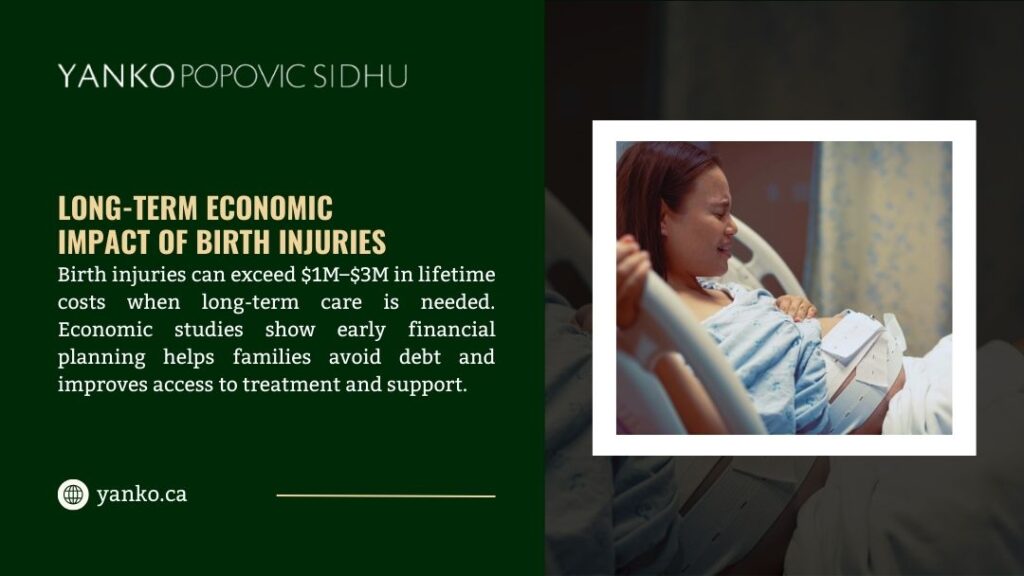
Determining the value of a birth injury settlement in Alberta requires an in-depth analysis of how the injury will affect the child’s life. These calculations follow a structured approach that considers both economic and non-economic losses.
Economic damages include medical expenses, mobility equipment, therapy, home modifications, and the cost of lifetime care. In severe HIE or cerebral palsy cases, this often forms the largest part of a settlement because a child may require assistance for decades. Financial experts, occupational therapists, and life-care planners prepare detailed projections outlining the cost of care from infancy through adulthood.
Non-economic damages cover pain, suffering, and loss of enjoyment of life. In Canada, these damages are capped under Supreme Court precedent. Lawyers use expert reports, diagnostic findings, and long-term forecasts to determine the appropriate amount within this limit. Together, these components form the foundation of a birth injury settlement, ensuring the child receives the necessary resources for long-term well-being.
Key Alberta Legal Rules Affecting Birth Injury Settlements
| Legal Rule | Explanation |
| Two-Year Limitation Period | A medical malpractice claim must be filed within two years of discovering the injury. For infants, the limitation period may pause until the injury becomes known or reasonably apparent. |
| Discoverability Rule | Parents may not know immediately that negligence caused the injury. The limitation period starts when a reasonable person would recognize that the medical team may have caused harm. |
| Cap on Non-Pecuniary Damages | Pain and suffering damages follow Canada’s national cap. This cap does not apply to the cost of future care. |
| High Burden of Proof | Alberta requires strong evidence demonstrating that negligence directly caused the injury. Expert medical testimony is essential. |
| Public Healthcare Impact | While Alberta Health covers some treatment, many therapies and equipment costs fall outside public programs. These out-of-pocket needs increase the settlement value. |
| Expert Medical Evidence Requirement | Claims cannot proceed without qualified experts supporting that the care fell below the standard and caused the injury. |
 The Birth Injury Claim Process in Alberta
The legal process for pursuing a birth injury settlement has several defined steps. Each stage involves thorough investigation, expert review, and communication between both sides. Understanding the structure helps families know what to expect.
Birth Injury Claim Process in Alberta
| Stage | Description |
| Initial Consultation | Families meet with a lawyer to discuss concerns and review early signs of negligence. |
| Medical Record Collection | All prenatal, labour, and delivery records are obtained and reviewed. |
| Expert Review | Specialists examine the records to determine whether the standard of care was breached. |
| Statement of Claim Filed | A lawsuit is formally filed against the responsible medical professionals or institutions. |
| Questioning (Discovery) | Both parties question witnesses and exchange expert reports. |
| Negotiation and Mediation | Settlement discussions begin with the support of experts and financial projections. |
| Resolution or Trial | Most claims settle; if not, the matter proceeds to trial for a court decision. |
Each case proceeds at its own pace, often influenced by the complexity of the injury and the number of experts required. Early legal involvement ensures evidence is preserved and the child’s long-term needs are fully evaluated.
How Long Birth Injury Settlements Take in Alberta
Birth injury cases rarely resolve quickly. Investigations alone may take several months, followed by expert reviews that can span a year or more. Once the lawsuit begins, scheduling medical and legal experts adds more time. Complex cases involving cerebral palsy or HIE often take between 2 and 5 years from consultation to settlement.
Insurers and defence lawyers sometimes adopt delay tactics, hoping the family will accept a lower offer. Early settlement proposals tend to undervalue long-term costs. Families who wait for full expert analysis usually secure more accurate compensation that reflects the child’s lifelong needs.
The Role of a Birth Injury Lawyer in Securing Compensation
A birth injury lawyer’s work extends far beyond filing paperwork. These cases demand a deep understanding of obstetrics, neonatal medicine, and the interplay of medical standards. Lawyers identify where the standard of care failed, obtain expert support, and build a case strong enough to survive the defence’s scrutiny. They calculate future losses with precision and ensure the settlement accounts for the child’s lifetime needs.Parents often feel overwhelmed by the legal process. An experienced birth injury lawyer shields them from insurance adjusters, hospital legal teams, and defence tactics designed to reduce compensation. Alberta families are looking for broader legal representation across related injuries, such as brain injury or spinal cord injury.
When Parents Should Contact a Birth Injury Lawyer in Alberta
Parents should reach out to a lawyer as soon as they suspect a preventable error occurred during labour or delivery. Early action allows a legal team to secure medical records before they become harder to interpret and ensures the claim meets Alberta’s strict timelines.
Warning signs may include a difficult delivery that required urgent intervention, unexpected NICU admission, seizures shortly after birth, or a diagnosis like HIE or brachial plexus injury.
Contacting a lawyer early also provides clarity during a stressful time. A knowledgeable legal representative explains whether the medical team failed to meet the standard of care and outlines whether a claim is possible.
Parents often underestimate how quickly evidence becomes difficult to obtain, making timely legal advice essential for a strong case.
Conclusion: Understanding Birth Injury Settlements in Calgary and Alberta
Birth injury settlements help families secure the financial compensation needed to support a child who suffered harm because a medical professional failed to meet the standard of care. Alberta’s legal process demands strong evidence, expert testimony, and detailed analysis of long-term needs. A knowledgeable birth injury lawyer can guide families through this complex system and help ensure their child receives the resources required for a safe and supported future. Speaking with a qualified legal team allows parents to understand their options and pursue a birth injury settlement with clarity and confidence.